Hunting for New Worlds: How Scientists Discover Planets Beyond Our Solar System
The first confirmed detection of a planet orbiting a sun-like star outside our solar system came in 1995 — and it was nothing like anyone expected. The planet, 51 Pegasi b, was a gas giant roughly half the mass of Jupiter, orbiting its star in just four days. That discovery shattered the assumption that solar systems like ours were the default template for the universe. Since then, scientists have confirmed thousands of exoplanets, and the methods used to find them are more ingenious — and more indirect — than most people realize.
What Is an Exoplanet, Exactly?
The Basic Definition — and Why It Gets Complicated
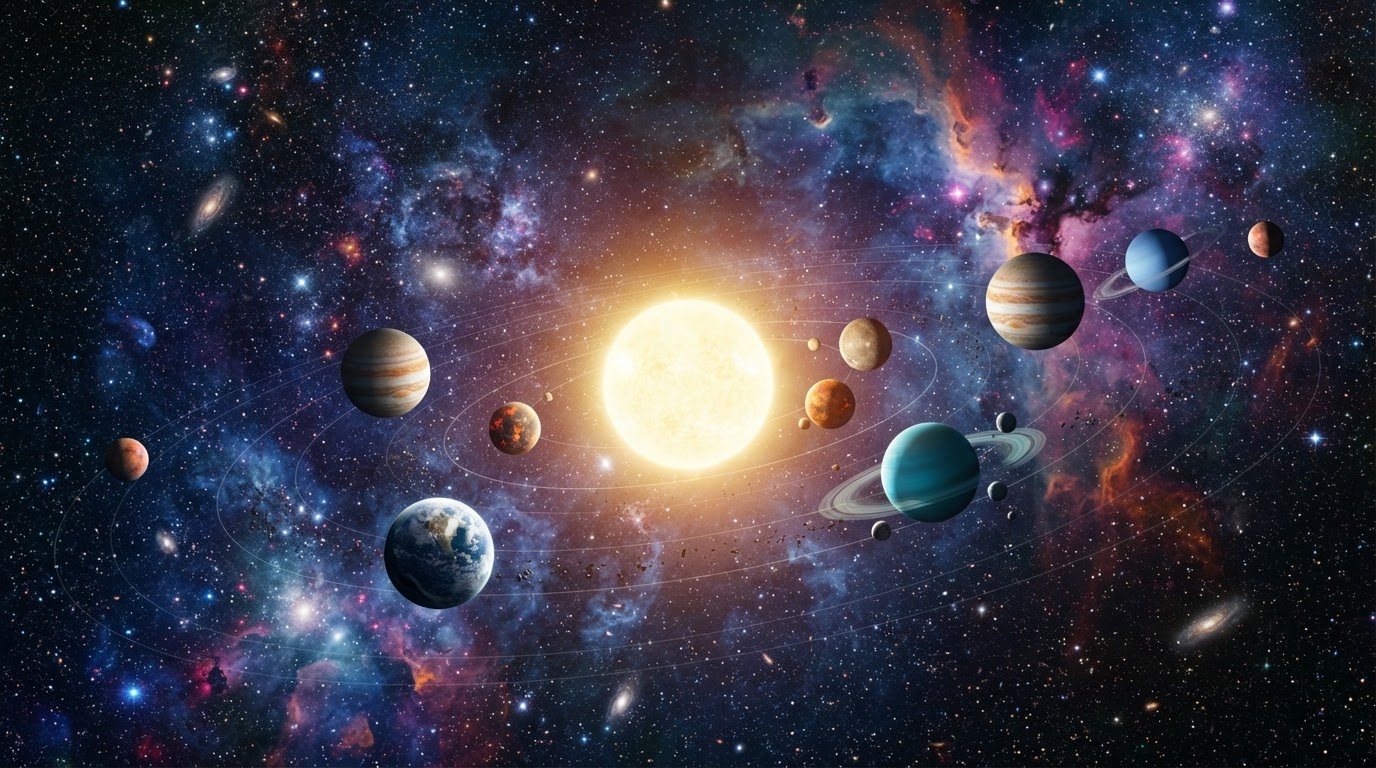
An exoplanet is simply any planet that orbits a star other than our Sun. That sounds straightforward until you realize that 'planet' itself is a contested term — astronomers still argue about where the line sits between a large planet and a small brown dwarf star. The working definition used by most researchers involves an object massive enough to be rounded by its own gravity but not massive enough to sustain nuclear fusion.
The real challenge is that planets don't emit their own light. They're dim, small, and sitting right next to objects — stars — that are blindingly bright by comparison. Trying to directly photograph an exoplanet from Earth is a bit like trying to spot a firefly hovering next to a searchlight from several miles away. Most detection methods work around this problem by measuring what the planet does to its star, rather than looking at the planet itself.
How the Transit Method Became the Workhorse of Exoplanet Science
Measuring a Tiny Dimming of Starlight
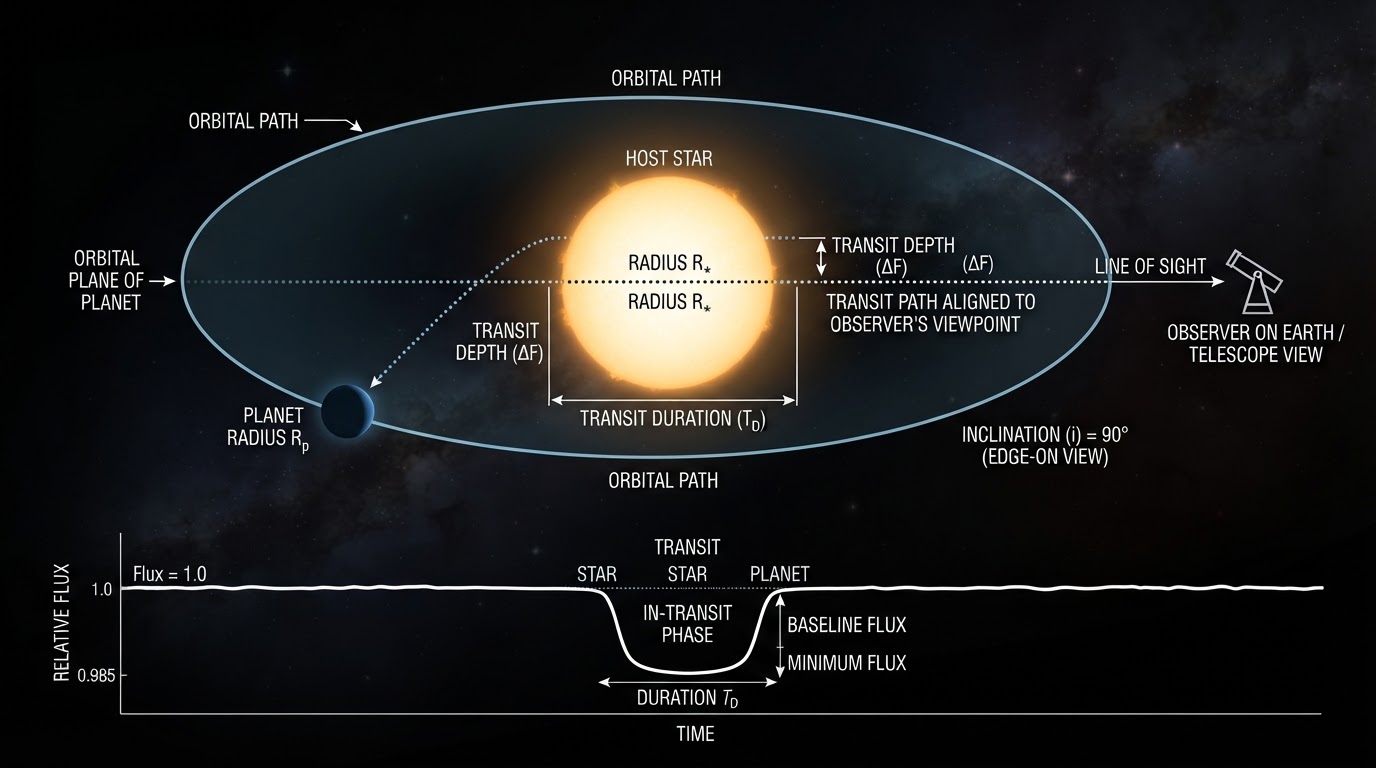
When a planet passes in front of its star from our line of sight — an event called a transit — it blocks a small fraction of the star's light. Sensitive telescopes can detect that dip in brightness. For a Jupiter-sized planet, the dimming might be around one percent of the star's total light. For an Earth-sized planet, it's closer to one-hundredth of a percent. That's an extraordinarily small signal to pull out of noisy data.
NASA's Kepler Space Telescope, launched in 2009, used this method almost exclusively and transformed the field. Over roughly nine years of operation, Kepler confirmed thousands of exoplanets by staring at the same patch of sky and watching for repeated, periodic dips in starlight. The key word is 'repeated' — a single dimming event could be a glitch or a passing object, but a dimming that recurs at precise intervals is a strong signal that something is orbiting that star on a regular schedule.
A planet the size of Earth dims its host star by about the same fraction as a gnat walking across a car headlight — and Kepler detected thousands of them.
The Limitation Nobody Talks About
The transit method has a geometric blind spot that rarely gets mentioned in popular coverage. It only works when the planet's orbital plane happens to be aligned with our line of sight. If a planet orbits its star at even a slight tilt relative to Earth's viewing angle, it never crosses in front of the star from our perspective, and we'd never know it was there. This means transit surveys are almost certainly undercounting the total number of planets — possibly by a significant margin.
How the Radial Velocity Method Detects Planets Through Wobble
Stars Don't Stay Still — Planets Pull Back
Here's something that surprises a lot of people: a planet doesn't orbit its star the way a ball on a string orbits your hand. Both the planet and the star orbit their shared center of mass. For a massive planet like Jupiter, that center of mass can actually sit outside the star's physical surface, causing the star to trace a small but measurable circle in space. For smaller planets, the wobble is far more subtle — but it's still there.
The radial velocity method detects this wobble by measuring Doppler shifts in the star's light. When the star moves toward Earth, its light gets compressed slightly toward the blue end of the spectrum. When it moves away, the light stretches toward the red. By tracking these shifts over time, astronomers can calculate the mass and orbital period of an unseen planet. This is actually how 51 Pegasi b was discovered — the planet's gravitational tug was causing its star to wobble back and forth at roughly 56 meters per second, fast enough to detect with the instruments of the mid-1990s.
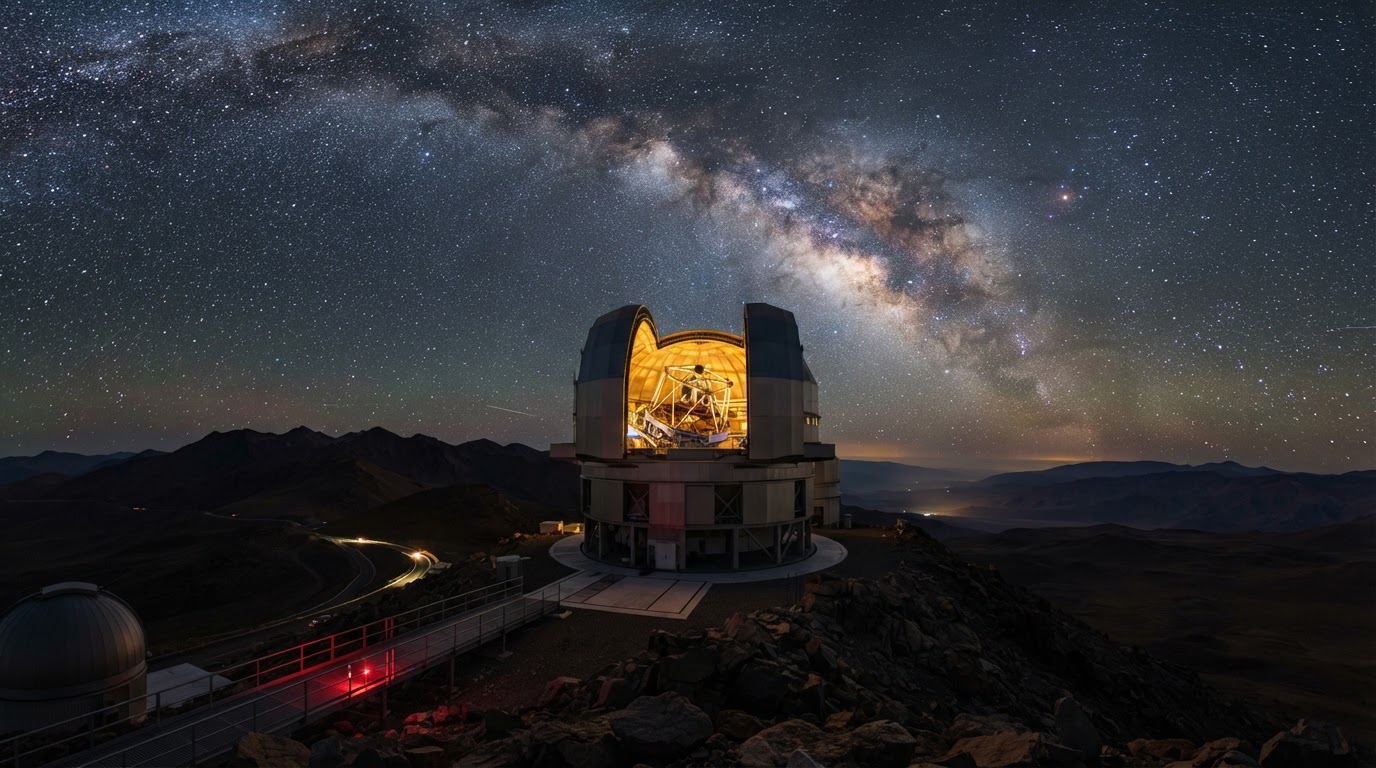
Modern spectrographs can detect stellar wobbles of less than one meter per second. That's slower than a brisk walking pace, measured across light-years of space. The engineering required to achieve that precision is genuinely staggering.
The radial velocity method found the first exoplanet around a sun-like star by detecting a wobble slower than a person walking — measured across 50 light-years of space.
Other Detection Methods — From Gravitational Lensing to Direct Imaging
When Light Bends Around a Planet's Star
Gravitational microlensing is a method that sounds like science fiction but is grounded in Einstein's general relativity. When a star with a planet passes in front of a more distant background star, the foreground star's gravity bends and amplifies the background star's light. If a planet is orbiting the foreground star, it adds a secondary blip to that amplification curve. The whole event might last days to weeks and never repeats — which makes follow-up observation essentially impossible. But microlensing is uniquely powerful for detecting planets at large orbital distances, where transit and radial velocity methods struggle.
Actually Photographing a Planet
Direct imaging — literally taking a picture of an exoplanet — is the most intuitive method and also the hardest. It requires blocking out the star's overwhelming glare using a device called a coronagraph, which masks the star's light so the much dimmer planet can be seen beside it. So far, direct imaging has only worked for large, young, hot planets orbiting far from their stars — conditions that make the planet bright enough and separated enough to distinguish from the stellar glare. The James Webb Space Telescope has pushed this capability further than any previous instrument, but it's still a method suited to a narrow slice of the exoplanet population.
(Opinion: Direct imaging feels like the method that will define the next generation of exoplanet science. There's something qualitatively different about actually seeing a world rather than inferring it from a wobble or a shadow — and as coronagraph technology improves, the planets we can photograph will start to include smaller, cooler, potentially habitable ones.)

What Exoplanet Discoveries Actually Tell Us About the Universe
The Surprising Diversity of Planetary Systems
Before the exoplanet era, the working assumption was that other solar systems would look roughly like ours — small rocky planets close in, gas giants further out. That model collapsed almost immediately. The most common type of planet found so far is something that doesn't even exist in our solar system: the 'super-Earth' or 'mini-Neptune,' a planet with a radius between Earth's and Neptune's. Our solar system, it turns out, may be the unusual one.
Astronomers have found planets orbiting two stars simultaneously — so-called circumbinary planets, like something out of a classic science fiction story. They've found planets with years lasting less than a single Earth day. They've found planets in the habitable zones of their stars, where liquid water could theoretically exist on the surface. Whether any of those planets actually harbor life is a question that current technology can't answer, but the atmospheric analysis tools being developed for the James Webb Space Telescope and its successors are starting to make that question feel less hypothetical.
Reading a Planet's Atmosphere From Light-Years Away
When a planet transits its star, some of the starlight passes through the planet's atmosphere before reaching our telescopes. Different molecules in the atmosphere absorb different wavelengths of light, leaving a chemical fingerprint in the spectrum. This technique, called transmission spectroscopy, has already detected water vapor, carbon dioxide, and methane in the atmospheres of exoplanets. The detection of a biosignature gas — one that could only be produced in significant quantities by living organisms — would be one of the most consequential scientific discoveries in human history. Researchers are actively debating which gases would qualify and how confident we'd need to be before making that announcement.

Frequently Asked Questions
How many exoplanets have been confirmed so far?
As of the mid-2020s, scientists have confirmed more than 5,500 exoplanets, with thousands more candidates awaiting verification. The number grows steadily as data from missions like TESS — the Transiting Exoplanet Survey Satellite — continues to be analyzed. The confirmed count represents only a fraction of the planets that almost certainly exist in our galaxy.
Could we ever visit an exoplanet?
With current and foreseeable propulsion technology, no. The nearest confirmed exoplanet system, Proxima Centauri, is roughly 4.2 light-years away. Even at the speed of the fastest spacecraft ever launched, a journey there would take tens of thousands of years. Concepts like laser-propelled light sails have been proposed for robotic probes, but a crewed mission remains firmly in the realm of speculation for the foreseeable future.
Why do some exoplanet detections get 'unconfirmed' later?
This is a genuinely common source of confusion. A candidate exoplanet detection can be mimicked by other astrophysical phenomena — stellar activity, background eclipsing binary stars, or instrumental artifacts can all produce signals that look like a transiting planet. Confirmation requires ruling out these alternatives, usually through follow-up observations using a different method. Some candidates that initially looked promising turn out to be false positives once that additional scrutiny is applied.
The most unsettling implication of exoplanet science isn't the sheer number of worlds out there — it's what the diversity of those worlds says about our assumptions. Every time astronomers thought they understood what a planetary system should look like, the data proved them wrong. The universe has been building planets in configurations we never imagined, for billions of years longer than our species has existed, and we've only just started reading the catalog.


Comments
Post a Comment