Why Are There Ads on My Smart TV? Understanding Device Monetization
Roku sells some of its TV hardware at prices that would be impossible to sustain on hardware margins alone — and that's entirely intentional. The device sitting in your living room isn't just a product you bought; it's a platform that keeps generating revenue for its maker long after you've carried it home. Smart TV advertising is one of the least-understood corners of the digital ad industry, and it's worth knowing exactly what's happening on that screen before you assume it's just a glitch or a quirk.

What Is Smart TV Advertising, Really?
More Than Just Banner Ads
When most people think of TV ads, they picture the 30-second spots that interrupt a show. Smart TV advertising is a different beast. It includes the banner ads on your home screen, the sponsored tiles in app rows, the video ads that autoplay when you pause content, and even the screensaver-style ads that appear when your TV sits idle. These are served dynamically, meaning they're targeted to your household specifically — not broadcast to everyone watching the same channel.
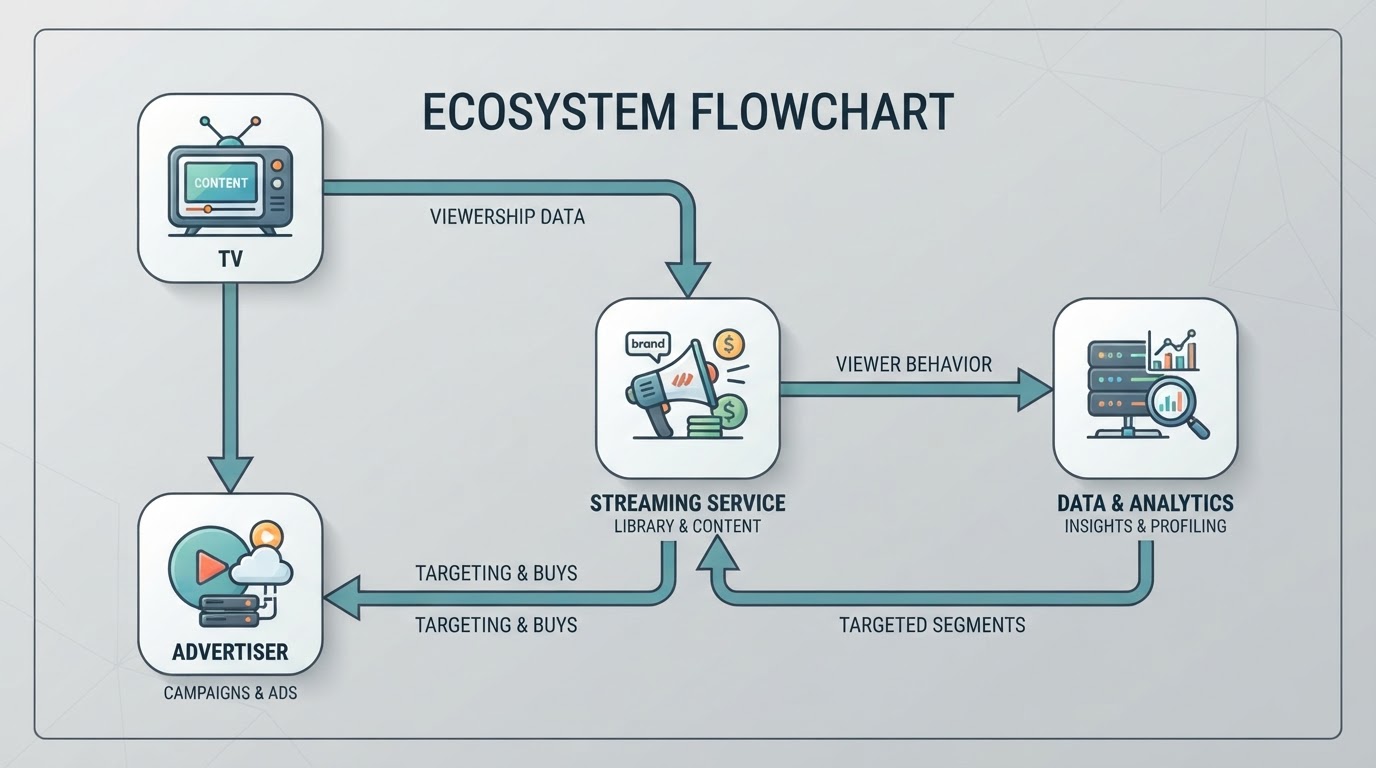
The technical term for the underlying system is ACR, or Automatic Content Recognition. Your TV's software quietly samples what's on screen — whether it's a streaming app, a cable box, or a game console — and matches those samples against a database to identify what you're watching. That data feeds into an ad-targeting profile. It's the same basic idea as a music recognition app, except it's running in the background without you pressing anything.
The Home Screen Is Prime Real Estate
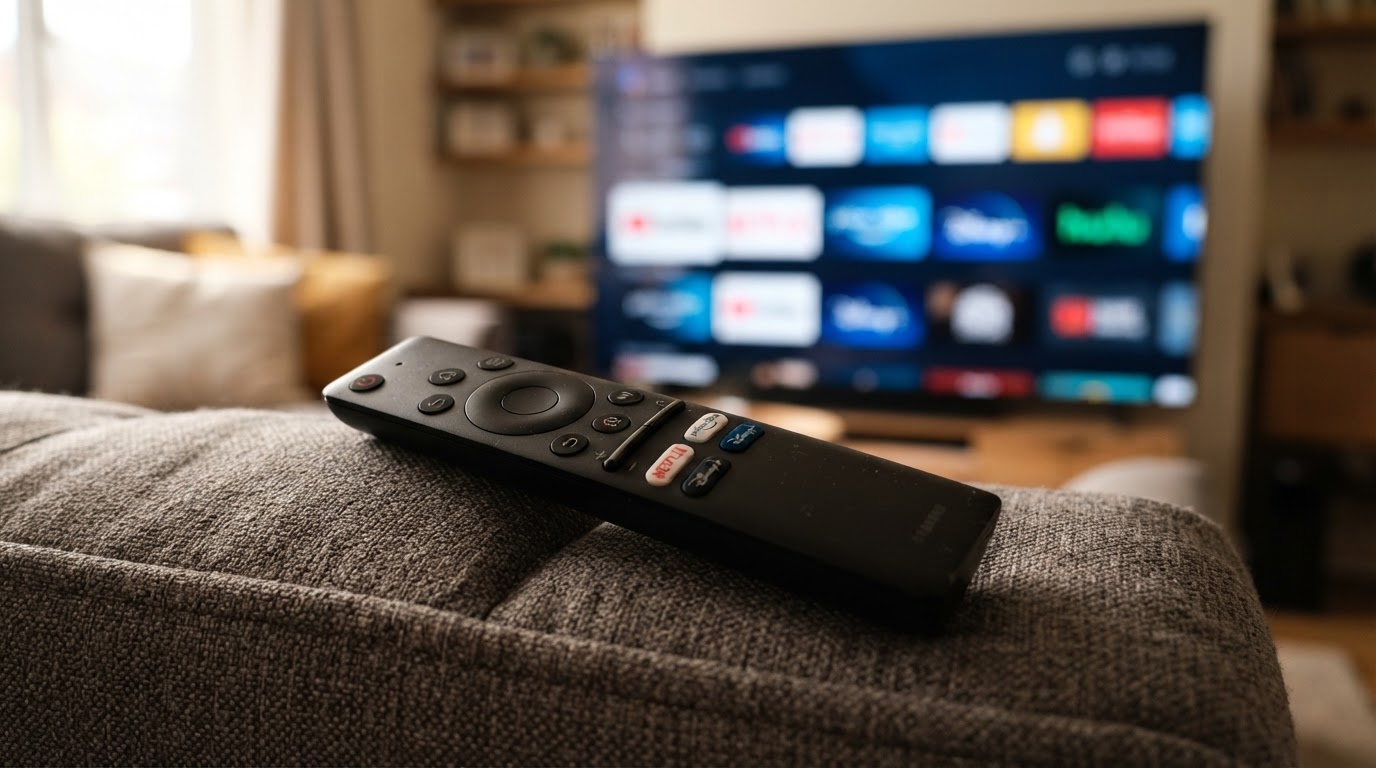
The home screen of a Roku, Fire TV, or LG TV isn't designed purely for your convenience. Those featured rows, spotlight sections, and banner placements are sold to streaming services and advertisers. A streaming platform might pay to have its new show featured prominently in a 'What to Watch' row. That's not a recommendation algorithm at work — it's a paid placement, similar to a grocery store charging brands for eye-level shelf space.
How Device Monetization Actually Works — The Business Model Explained
Hardware as a Loss Leader
Roku's business model made this explicit years ago: the company disclosed that a significant portion of its revenue comes from its 'Platform' segment — advertising, licensing, and revenue-sharing — rather than from selling the physical devices. The hardware gets you in the door. The platform keeps the money flowing. Amazon follows a similar logic with Fire TV sticks, which are frequently discounted to near cost during sales events.
The TV you bought for $200 might be subsidizing itself through ad revenue within a year — which means the manufacturer's real customer isn't you, it's the advertiser.
TV manufacturers like Vizio took this further with a business unit called Platform+ that, for a period, generated more operating income than selling televisions did. Vizio was eventually acquired by Walmart, which had obvious reasons to want a direct advertising channel into living rooms. That deal alone tells you how valuable the data and ad inventory from a smart TV platform can be.
Revenue Sharing With App Developers
When you subscribe to a streaming service through your smart TV's app store, the TV platform typically takes a cut — often around 30%, similar to mobile app stores. This gives platforms like Roku and Fire TV a strong incentive to make subscribing through the TV as frictionless as possible. The easier it is to tap 'subscribe' on your remote, the more revenue flows back to the platform. That's not a coincidence; it's architecture.
The Free Streaming Play
Many smart TV platforms now operate their own free, ad-supported streaming services — Roku Channel, Amazon Freevee (now folded into Prime Video's free tier), Samsung TV Plus, LG Channels. These exist partly because they give the platform a direct inventory of ad slots to sell, without splitting revenue with a third-party app. Every minute you spend watching free content on the TV's built-in service is a minute the platform controls entirely.
What Data Does Your Smart TV Actually Collect?
ACR Data and Viewing Profiles
ACR data is the crown jewel. Because it captures what's on screen regardless of the source, it gives advertisers something cable companies never had: a complete picture of viewing behavior across every input. A household that watches a lot of sports on a cable box, streams cooking shows, and plays video games on weekends generates a detailed profile — all from a single device passively observing the screen.
This data is often sold or licensed to third-party data brokers and advertisers. Some manufacturers have faced regulatory scrutiny over how transparently this is disclosed. In the U.S., the FTC has examined ACR practices, and several TV makers have updated their privacy disclosures in response — though the default setting on most new TVs is still 'on.'
The Opt-Out Problem
You can usually disable ACR. On Samsung TVs it's been called 'Viewing Information Services'; on LG it appears under 'Live Plus'; Vizio called it 'Smart Interactivity.' The names change with firmware updates, which makes it genuinely hard to find. Anyone who has dug through four layers of settings menus looking for a toggle that seems designed to be unfindable knows exactly what this feels like.
Disabling ACR doesn't remove all ads — it just means the ads you see are less targeted, which is arguably worse for advertisers and only marginally better for you.

Why This Matters More Than Most Viewers Realize
The Convergence With Retail Media
Walmart's acquisition of Vizio wasn't just about selling televisions — it was about closing the loop between what you watch and what you buy. If a Walmart customer watches an ad for a product on their Vizio TV and then purchases it at Walmart.com, the retailer can measure that conversion directly. That's an advertiser's dream, and it's something traditional broadcast TV could never offer. The smart TV is becoming a retail media terminal as much as an entertainment device.
Amazon is even further along this path. An ad seen on a Fire TV can link directly to an Amazon product listing. The remote becomes a shopping tool. This is a genuinely new kind of advertising infrastructure, and it's being built into devices that most people think of as passive screens.
What This Means for the Price You Paid
There's a counterintuitive implication here: the ad-supported model has probably made your TV cheaper. Competition among Roku, Amazon, Google, and Samsung to capture living rooms has pushed hardware prices down significantly over the past decade. The trade-off is that you're paying with attention and data rather than purely with money. Whether that's a fair trade depends on how much you value privacy — and how often you actually notice the ads.
(Opinion: The 'cheap hardware, expensive data' model isn't inherently evil, but the lack of transparency is. Most people have no idea their idle TV is sampling their screen or that their home screen recommendations are partly paid placements. A simple, plain-language disclosure at setup — not buried in a 40-page terms document — would be a reasonable minimum standard.)
Frequently Asked Questions
Can I get a smart TV that doesn't show ads?
It's difficult but not impossible. Some higher-end display brands focus more on picture quality than platform revenue, and certain models allow you to use the TV purely as a 'dumb' display by connecting an external streaming device. However, even external devices like Roku sticks or Fire TV sticks carry their own ad ecosystems. The most ad-free experience typically involves a TV used purely as a monitor with a media player you control, like a dedicated home theater PC.
Does paying for streaming subscriptions stop the ads on my TV's home screen?
No — and this surprises a lot of people. Paying for Netflix or any other streaming app removes ads within that app, but it has no effect on the ads your TV's operating system serves on the home screen, in the app launcher, or during idle states. Those ads are controlled by the TV platform, not the streaming service. They're two entirely separate ad systems running on the same device.
Is the data collected by my smart TV shared with other companies?
In most cases, yes — to some degree. TV manufacturers typically share or license ACR data and viewing data with advertising partners and data brokers, though the specifics vary by brand and region. Privacy regulations like GDPR in Europe and various U.S. state laws have imposed some limits, but the data-sharing ecosystem around smart TVs remains complex and not fully transparent to consumers. Checking your TV's privacy settings and opting out of ACR is the most direct step you can take.
The strangest part of all this isn't that smart TVs show ads — it's that the screen you bought to watch content has quietly become one of the most sophisticated data collection terminals in your home, and it sits there in plain sight, doing its job while you watch yours.



Comments
Post a Comment