Physical vs. Digital Games: Understanding the Pros and Cons
A sealed copy of a game you bought fifteen years ago still works. A digital license you purchased from a storefront that shut down? Gone. That asymmetry sits at the heart of the physical vs. digital games debate — and it matters far more than most buyers realize when they're standing at a checkout deciding which version to grab.

The Pros — What Makes Each Format Worth Considering
The Case for Physical Games
Physical games give you something digital purchases fundamentally cannot: a transferable, resalable object. You can lend a disc to a friend, sell it when you're done, or donate it to a charity shop. That flexibility has real monetary value — a used copy of a well-regarded game often retains a surprising percentage of its original price years after launch.
There's also the question of ownership permanence. When you buy a disc, the software on it doesn't disappear because a company restructured or a licensing deal expired. Collectors and preservationists treat physical media as the only reliable archive of gaming history, and they have a point. Several notable digital storefronts have shut down over the years, taking purchased libraries with them or leaving users scrambling to re-download before the deadline.
Physical releases also tend to include extras that digital versions skip — manual inserts, art cards, sometimes even soundtracks or figurines in collector's editions. Anyone who has opened a well-produced collector's box knows the tactile experience is genuinely different from clicking 'purchase' on a menu.
The Case for Digital Games
Digital games win on pure convenience, and that's not a small thing. No disc to lose, no case to scratch, no driving to a store at midnight for a launch. Your entire library travels with you on a single device, and most modern consoles let you access your digital purchases across multiple machines tied to your account.
Preloading is an underrated advantage. You can buy a game days before release and have it fully installed, ready to play the moment it unlocks — no download wait, no day-one patch eating into your evening. For large open-world titles that routinely exceed 100GB, that head start matters.
Digital storefronts also run frequent sales that often undercut physical retail prices significantly. Patience is rewarded: a game that launched at full price can drop to a fraction of that within months on digital platforms, sometimes faster than physical copies hit the bargain bin.
Ownership in the digital era is really a license agreement — and licenses can be revoked, expired, or made inaccessible in ways a physical disc never can.
The Cons — What Could Go Wrong With Each Format
Problems With Physical Games
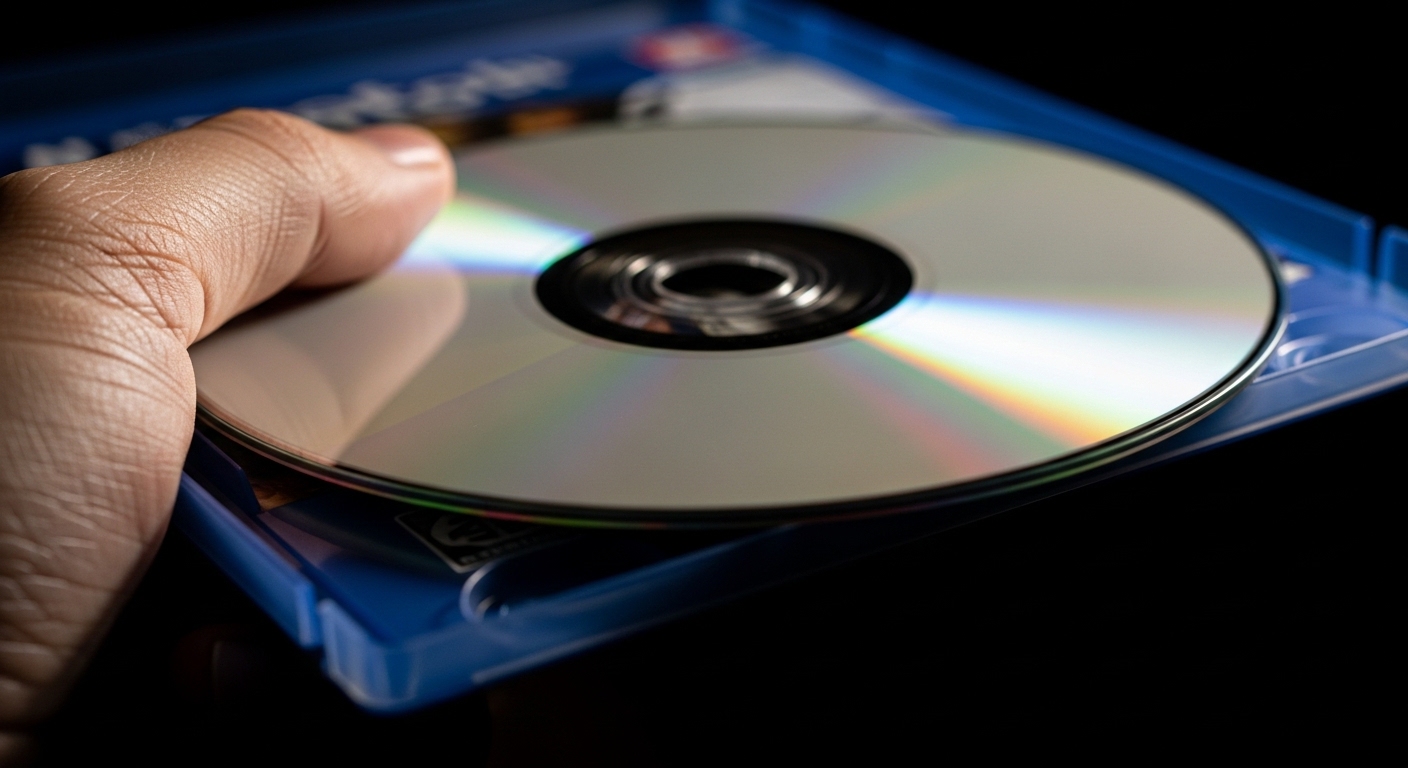
Physical media degrades. Optical discs can develop read errors over time, especially if stored poorly or handled frequently. The 'disc rot' phenomenon — where the reflective layer of older CDs and DVDs deteriorates — has already claimed a measurable portion of gaming history from the 1980s and 1990s. Modern Blu-ray discs are more durable, but they're not immune to damage.
Physical games are also rarely complete at launch anymore. Buying a disc often means installing a day-one patch that's larger than the game data on the disc itself. In some cases, the disc is essentially just a license key in plastic form — the actual game data downloads from the internet regardless. That undermines the 'offline forever' argument considerably.
Storage is another friction point. A shelf of game cases takes up real space, and if you move frequently or live in a smaller home, that accumulation becomes a genuine inconvenience. Losing or scratching a disc means losing access entirely, with no backup.
Problems With Digital Games
The resale problem is the biggest one. Digital games have no resale market. Once you buy it, you own it — or rather, you own the license — and that license dies with you or with the platform. You cannot pass a digital library to a family member the way you can a box of cartridges.
Storage costs are real and often overlooked. Modern games routinely require 50–150GB of space. On consoles where internal storage is limited and proprietary expansion cards are expensive, a large digital library quickly becomes a storage management headache. Physical games at least let you uninstall and reinstall freely without worrying about re-downloading 100GB over a slow connection.
Platform lock-in is subtler but significant. Your PlayStation digital library doesn't transfer to Xbox. Your Steam library doesn't move to Epic. Every digital purchase deepens your dependency on a single ecosystem — and if that ecosystem changes its policies, raises prices, or shuts down, your options are limited.
Who Physical Games Work Best For — and Who They Don't
Physical Is the Right Call If...
You're a collector, a reseller, or someone who plays games intensively for a few weeks and then moves on. The ability to sell or trade completed games meaningfully offsets the higher upfront cost. Over a year of active gaming, a disciplined buy-and-resell habit with physical games can cost substantially less than buying digital at full price.
Physical also makes sense if you share games regularly — with a sibling, a partner, or friends. One disc can travel between households in a way that a digital license simply cannot. Families with multiple players and one shared console often find physical more economical for exactly this reason.
And if you live somewhere with unreliable or slow internet, physical is often the only practical option. A 120GB download on a 10Mbps connection is a multi-day project. A disc installs faster and doesn't depend on your ISP having a good week.
Digital Makes More Sense If...
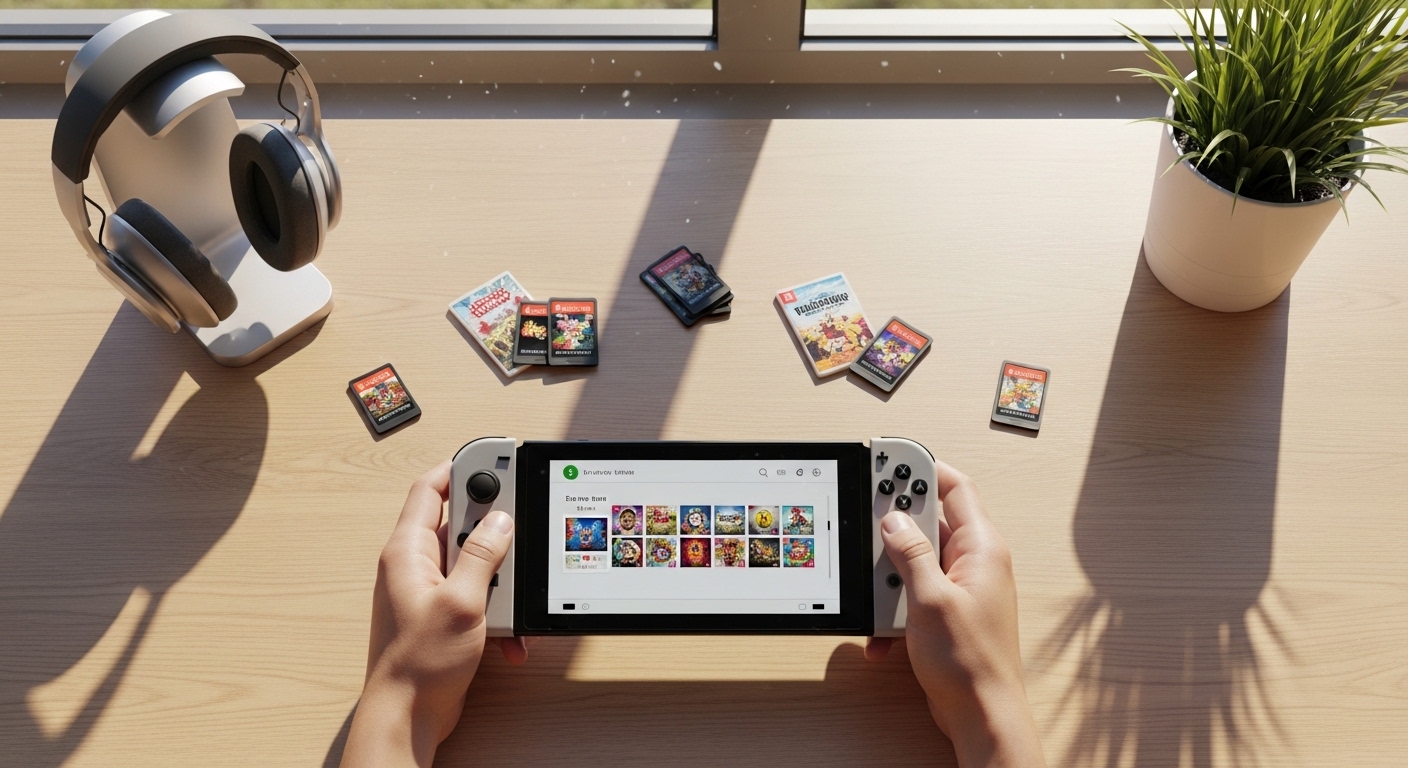
You travel frequently, play on multiple devices, or simply hate managing physical objects. Handheld gaming in particular favors digital — carrying a Switch with a full library in your pocket beats a travel case of game cards by a wide margin.
Digital also suits players who buy games on sale and aren't in a rush to finish them. If you're the type to build a backlog of discounted titles and chip away at them over months, digital storefronts are genuinely better value. The sales cadence on major platforms rewards patience in a way physical retail rarely does.
The players who lose the most money on games are usually those who buy digital at full price on launch day — the worst of both worlds: no resale value, maximum cost.
Our Verdict — Which Format Actually Wins?
The Honest Answer Is: It Depends on How You Play
There's no universally correct answer here, which is frustrating but true. The format that saves you money and frustration depends almost entirely on your habits. A player who finishes games quickly and resells them will almost always come out ahead with physical. A player who buys on sale and plays across multiple devices will almost always prefer digital.
The counterintuitive insight that most buying guides skip: the worst financial decision isn't choosing one format over the other — it's being inconsistent. Buying physical games you never resell, or buying digital games at full launch price, captures the downsides of both formats simultaneously.
(Opinion: The long-term trajectory clearly favors digital, not because it's better for consumers, but because it's better for publishers. No used game market, no price competition from resellers, and a captive audience locked into proprietary ecosystems. Physical media is increasingly a premium niche, not a mainstream default — and that shift has real costs for players that the industry has little incentive to advertise.)
A practical hybrid approach works well for many players: buy physical for games you know you'll finish and resell, and reserve digital purchases for deep-sale titles or games you're confident you'll return to for years. That combination captures most of the financial upside from both formats while minimizing the downsides.
Frequently Asked Questions
Do digital games load faster than physical games?
Generally, no — not in any meaningful way once both versions are fully installed. Both read from the console's internal storage after installation. The disc is mainly used for verification on physical copies, not active data streaming, so load times between the two formats are typically identical or negligibly different.
What happens to my digital games if the platform shuts down?
It depends on the platform's shutdown policy. Some storefronts have allowed users to re-download previously purchased titles even after closing; others have not. In most cases, games already downloaded to your device remain playable offline, but you lose the ability to reinstall them if you delete them or switch devices. There is no industry-wide standard protecting digital purchases after a storefront closure.
Can you share digital games with family members on the same console?
Most major platforms have some form of game sharing for digital libraries — PlayStation's 'Game Sharing' feature and Xbox's 'Home Console' setting both allow a primary account's digital library to be played by other users on the same console. The specifics vary by platform and are subject to policy changes, so it's worth checking current terms before assuming full household access.
The physical vs. digital question will keep shifting as disc-free console models become more common and internet infrastructure improves globally. But the underlying tension — convenience traded against ownership — isn't going anywhere. Every time a storefront closes and someone loses access to a library they paid for, the argument for keeping at least some games on a shelf gets a little harder to dismiss.



Comments
Post a Comment