How Selfie Verification Works: A Simple Explainer
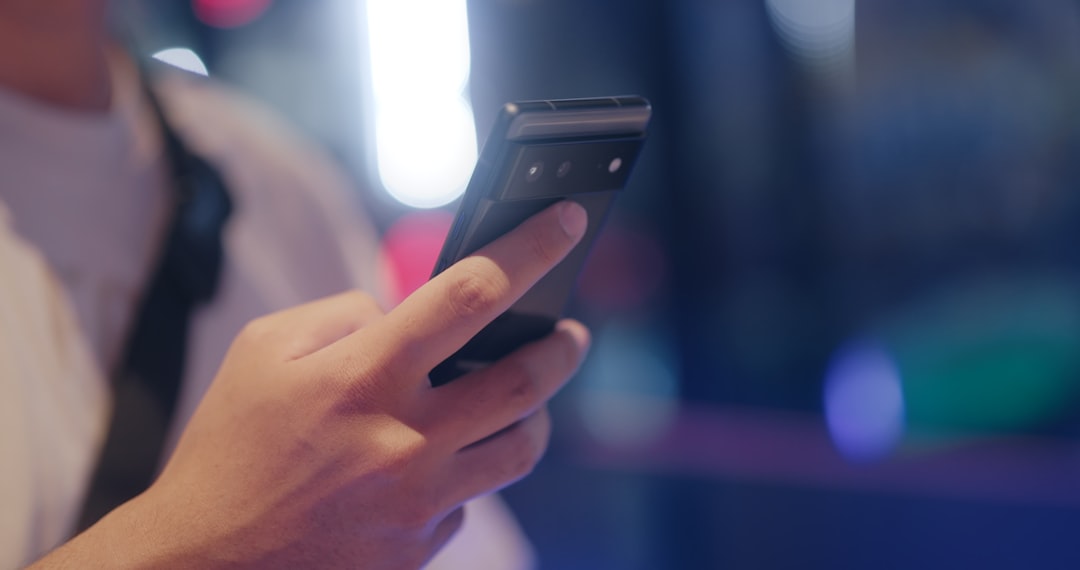
Your face is now a password. Banks, airports, ride-share apps, and government portals increasingly ask you to snap a selfie before granting access — and the process behind that two-second photo is far more sophisticated than most people realize. What looks like a simple camera check is actually a layered pipeline of biometric analysis, liveness detection, and database matching running in near real-time.
What Is Selfie Verification, Really?
More Than Just a Photo Match
Selfie verification — sometimes called facial identity verification — is a process that confirms a live person's face matches a trusted reference image, usually a government-issued ID photo or a previously enrolled biometric template. It's not the same as facial recognition used for surveillance. The goal here is identity proofing: proving you are who you claim to be at a specific moment in time.
The distinction matters more than it sounds. Surveillance facial recognition scans crowds and matches faces against large databases without the subject's active participation. Selfie verification is a one-to-one comparison — your face against your ID — triggered by your own action and typically requiring your explicit consent.
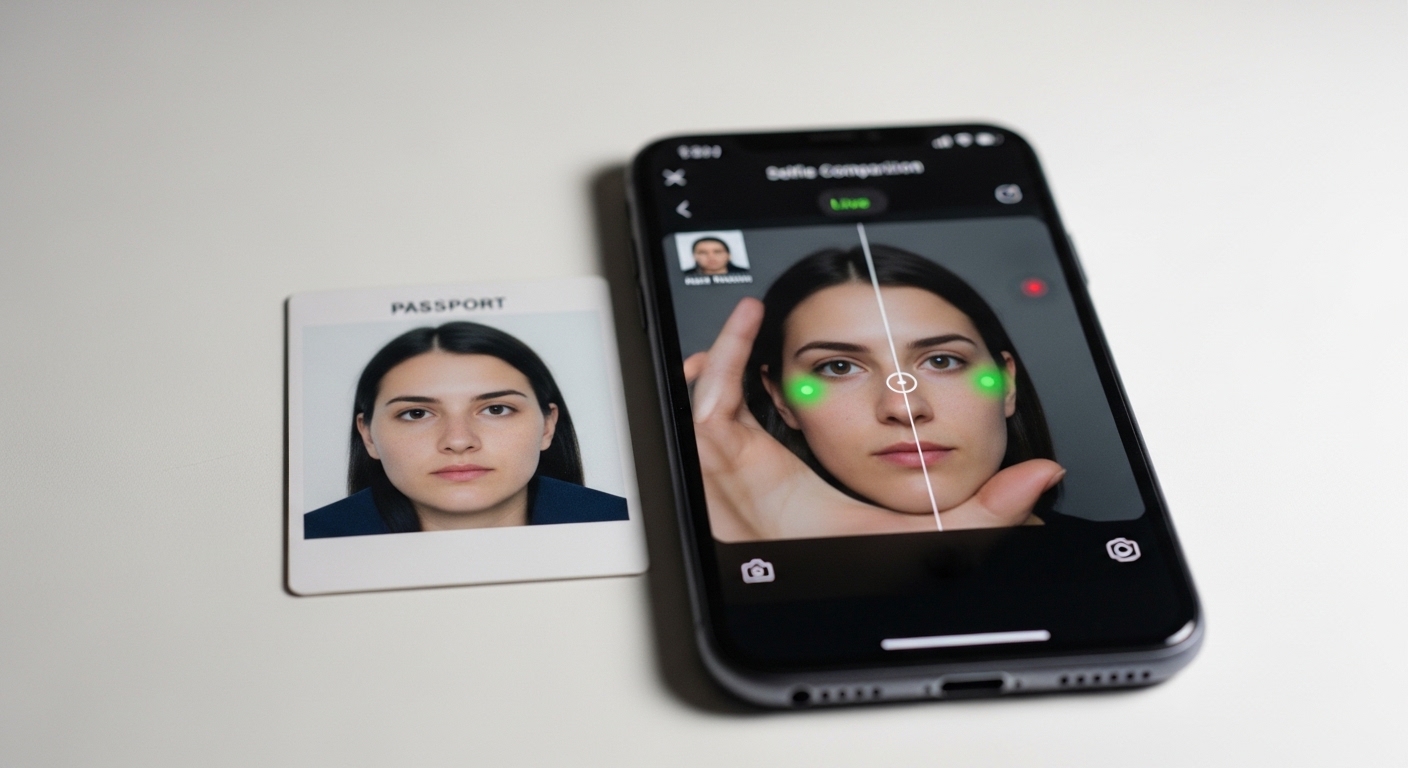
A good real-world example: when you open a new bank account online in many countries, regulations now require what's called 'Know Your Customer' (KYC) checks. Instead of visiting a branch, you upload a photo of your passport and take a live selfie. The system compares the two and decides whether they belong to the same person.
How Does Selfie Verification Actually Work? The Technical Pipeline
Step 1 — Face Detection and Alignment
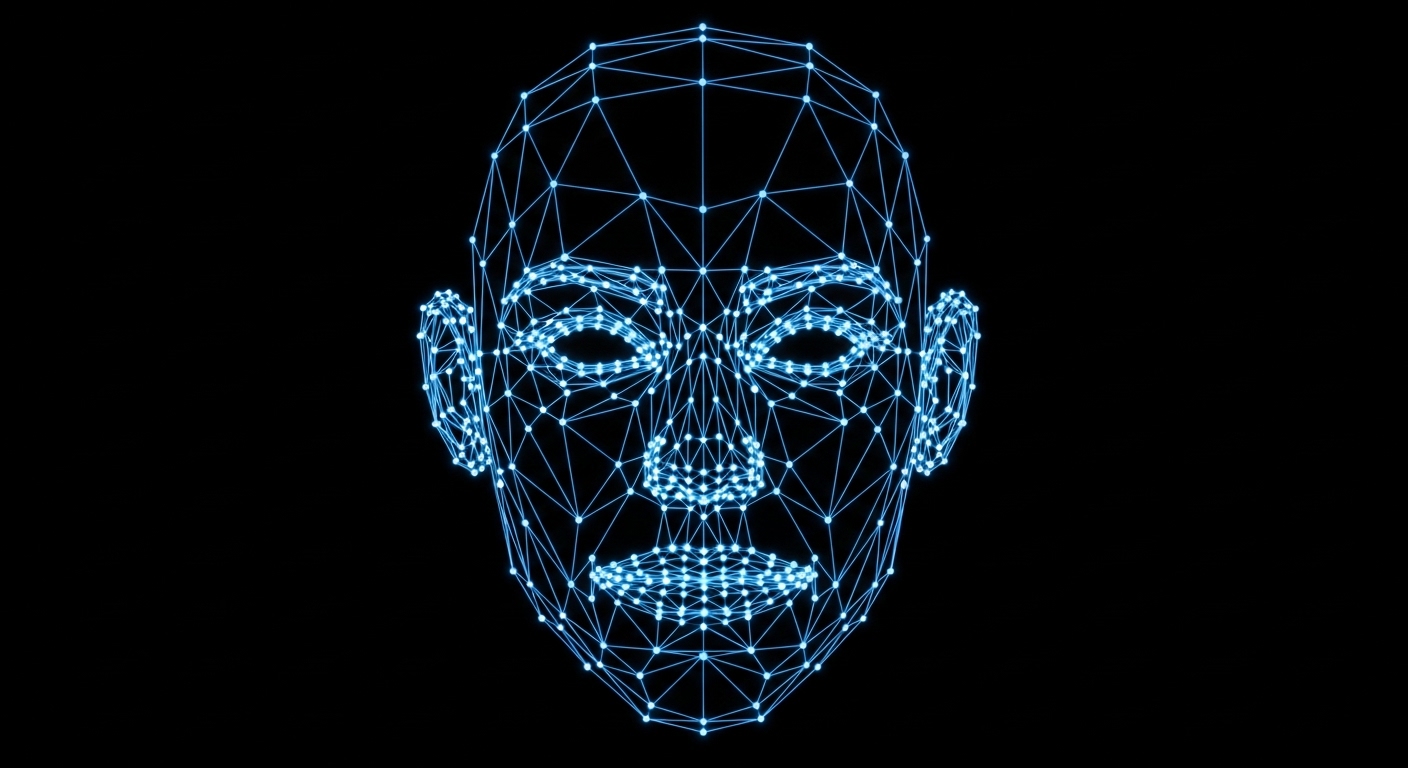
Before any comparison happens, the system needs to find your face in the image. Algorithms scan the frame for facial landmarks — the corners of your eyes, the tip of your nose, the edges of your mouth — typically identifying somewhere between 68 and 500 distinct points depending on the model's precision. These landmarks are used to normalize the image: rotating and scaling it so every face enters the comparison engine in a standardized orientation.
This normalization step is what makes the system robust to tilted heads, different camera angles, or photos taken at varying distances. Skip it, and accuracy drops sharply.
Step 2 — Feature Extraction and Embedding
Once the face is detected and aligned, a deep neural network converts it into a mathematical representation called a 'face embedding' — essentially a long list of numbers (often a vector with hundreds of dimensions) that encodes the unique geometry of that face. Think of it as a fingerprint made of math rather than ink.
The same process runs on the reference image — your ID photo or stored template. The system then calculates the mathematical distance between the two embeddings. If the distance falls below a set threshold, the faces are considered a match. If it's above the threshold, access is denied.
The face embedding doesn't store what you look like — it stores a mathematical signature of your facial geometry. The original image is often discarded after processing.
Step 3 — Liveness Detection
This is the part most people never think about, and it's arguably the most important. A static photo of your face could theoretically fool a basic matching system. Liveness detection — also called 'anti-spoofing' — is designed to confirm that the face in front of the camera belongs to a real, present human being and not a printed photo, a screen replay, or a 3D mask.
Passive liveness detection analyzes subtle cues in a single frame: skin texture, micro-reflections, depth inconsistencies. Active liveness detection asks you to do something — blink, turn your head, smile — and verifies that the response is natural and physically consistent. Some enterprise-grade systems use both layers simultaneously.
Where Selfie Verification Shows Up in Daily Life
Financial Services and Government ID
The clearest everyday example is digital banking onboarding. Fintech companies and traditional banks operating in markets with strict KYC regulations — the EU, UK, US, and many parts of Asia — have largely replaced in-person ID checks with selfie-based verification. You photograph your driver's license or passport, take a live selfie, and the system does the rest in under a minute.
Governments have moved in the same direction. Several national digital identity programs now use selfie verification to authenticate citizens accessing tax portals, benefit systems, or healthcare records. The UK's HMRC and various US federal agencies have piloted or deployed facial verification for account access, though these programs have also attracted debate about privacy and exclusion of people who struggle with the technology.
Travel and Physical Access
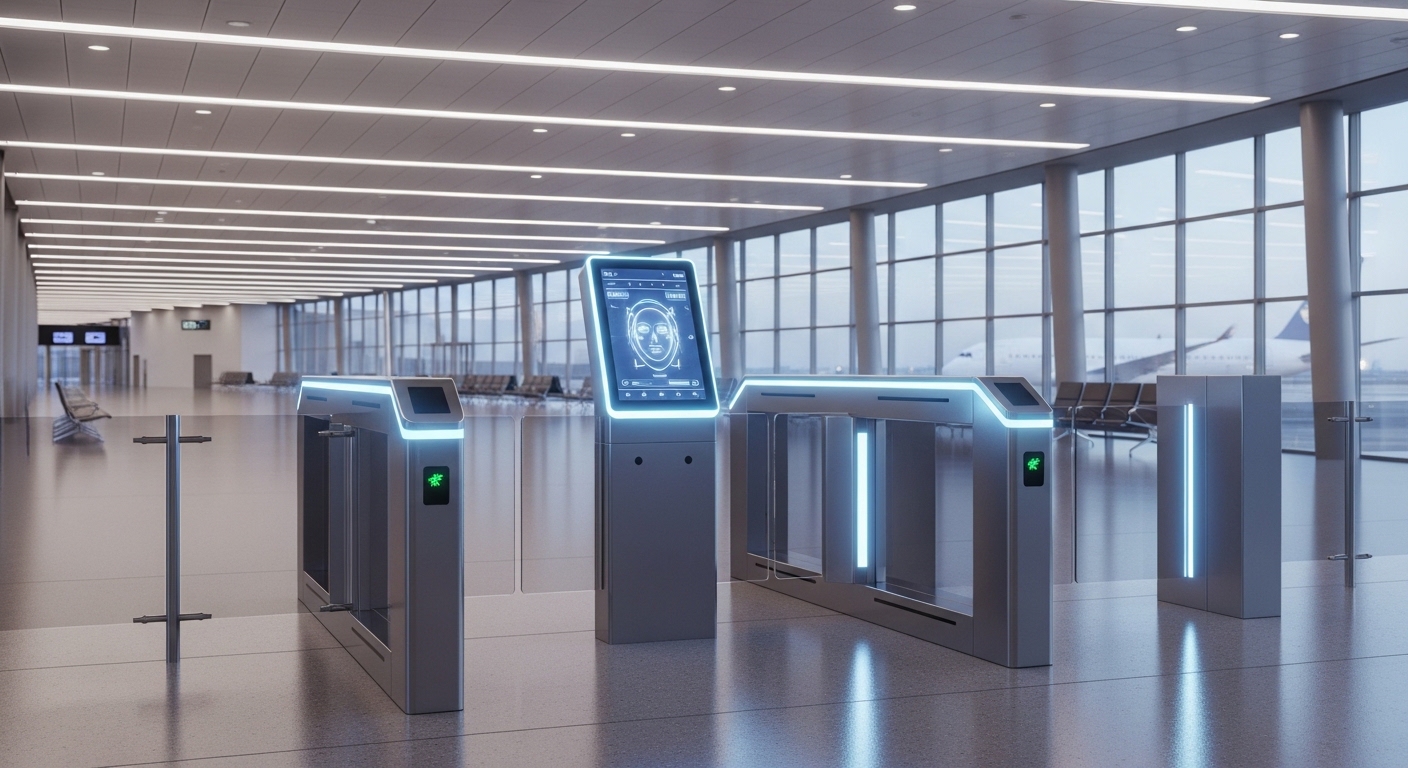
Airport e-gates in dozens of countries now use a live selfie captured at the gate matched against the chip data in your biometric passport. The whole check takes a few seconds. Anyone who has used one of these gates at a busy international hub knows the slightly uncanny feeling of a barrier opening before you've consciously registered that anything happened.
Ride-share platforms use a lighter version of the same technology — periodic 'Real-Time ID Checks' that ask drivers to take a selfie mid-shift to confirm the person behind the wheel matches the registered account holder.
Liveness detection is the arms race nobody talks about. As spoofing techniques improve, so do the detection models — and the gap between them determines how trustworthy the whole system is.
Why Selfie Verification Isn't Foolproof — and What That Means for You
The Accuracy Gap Across Demographics
Research — including well-publicized audits of commercial facial recognition systems — has consistently found that error rates are not uniform across demographic groups. Systems trained predominantly on certain populations tend to perform less accurately on others, particularly on darker skin tones and on older faces. For selfie verification specifically, a false rejection (the system incorrectly deciding you're not you) is more than an inconvenience — it can block access to banking, benefits, or travel.
The counterintuitive finding here is that higher overall accuracy doesn't guarantee equitable accuracy. A system that's 99% accurate on average can still fail one demographic group at rates several times higher than another.
Deepfakes and the Spoofing Problem
Generative AI has made high-quality face synthesis dramatically more accessible, and fraud attempts using synthetic faces or deepfake video injected into the camera stream are a documented and growing problem for verification providers. The response from the industry has been to move toward hardware-level attestation — verifying that the video stream is coming from a real, unmodified device camera rather than a software injection — and to use behavioral signals alongside the visual ones.
(Opinion: The deepfake arms race is one of those problems that gets solved incrementally and imperfectly, never cleanly. Expecting any single technical fix to close the gap permanently is probably naive — the more realistic outcome is a continuous cycle of attack and patch, with fraud losses absorbed somewhere in the system.)
Privacy and Data Retention
Where does your selfie go after the check? The answer varies enormously by provider and jurisdiction. Some systems process the image locally on-device and discard it immediately. Others send it to cloud servers where it may be retained for fraud investigation purposes. EU regulations under GDPR treat biometric data as a special category requiring explicit consent and strict handling rules, but enforcement is uneven and many users never read the terms they agree to.
Frequently Asked Questions
Can someone use a photo of me to pass selfie verification?
A basic printed photo or screen replay is unlikely to fool modern systems that include liveness detection. Passive liveness checks look for depth cues and skin texture that flat images lack, while active checks require real-time responses. That said, no system is perfectly spoofproof, and the quality of protection varies significantly between providers.
Does selfie verification store my face permanently?
It depends entirely on the provider and the applicable law. Some systems convert your face to a mathematical embedding and delete the original image immediately. Others retain the image for a defined period for fraud auditing. If you're in the EU, GDPR gives you the right to request deletion of biometric data. Outside regulated markets, your options are limited to what the provider's privacy policy allows.
Why does selfie verification sometimes fail even when I'm clearly the right person?
Several factors can cause false rejections: poor lighting, significant changes in appearance since the reference photo was taken (new glasses, facial hair, weight changes, aging), camera quality differences between the ID scan and the live selfie, and demographic-related accuracy gaps in the underlying model. Trying again in better lighting and removing accessories often resolves it — but persistent failures are worth escalating to the provider's human review process, which most reputable systems offer.
The deeper tension in selfie verification is that it asks you to trust a system you can't inspect, running on data you can't fully control, making decisions that can lock you out of essential services. The technology is genuinely impressive — and the gap between how it works in a lab and how it works for every face, in every lighting condition, in every country, is where the real story lives.


Comments
Post a Comment