The Great Mystery: How Did the Dinosaurs Go Extinct?
Sixty-six million years ago, an object roughly the size of a city slammed into what is now the Yucatán Peninsula in Mexico — and within a geologically instant timeframe, the dominant animals on Earth were gone. The extinction of non-avian dinosaurs is one of the most studied events in the history of life, yet scientists are still actively debating exactly how the killing happened. The broad strokes are settled. The details are not.
What Actually Wiped Out the Dinosaurs? The Short Answer
The Chicxulub Impact — The Smoking Gun
The leading explanation is the Chicxulub asteroid impact, named after the crater it left buried beneath the Gulf of Mexico. The impactor was estimated to be roughly 10 to 15 kilometers across — about the width of a mid-sized city. The energy released was orders of magnitude beyond any nuclear weapon ever built, triggering earthquakes, tsunamis, and wildfires across the globe within hours.
The crater itself wasn't discovered until the 1970s and 1980s, when geophysicists mapping oil deposits noticed an unusual circular structure. The connection to the mass extinction wasn't firmly established until later work confirmed the crater's age matched the Cretaceous-Paleogene boundary almost exactly. That alignment was the key piece of evidence that shifted scientific consensus.
But here's the part that surprises most people: the impact itself probably didn't kill most dinosaurs directly. The real killer was what came after.
The 'Impact Winter' — How the Sky Turned Off the Sun
When the asteroid hit, it vaporized rock and sent billions of tons of debris, soot, and sulfur compounds into the upper atmosphere. Sulfur aerosols in particular are highly reflective — they bounced incoming sunlight back into space. Research suggests global temperatures may have dropped dramatically within weeks, and the darkness lasted long enough to collapse photosynthesis across large portions of the planet.
No sunlight means no plant growth. No plant growth means herbivores starve. Herbivores dying means carnivores follow. The food chain didn't just break — it shattered from the bottom up. Large animals with high caloric needs were especially vulnerable, which explains why smaller creatures like early mammals, birds, and certain reptiles had a better shot at surviving.
The asteroid didn't kill the dinosaurs so much as it turned off the sun — and starvation did the rest.
How Do Scientists Know What Happened 66 Million Years Ago?
The Iridium Layer — A Chemical Fingerprint
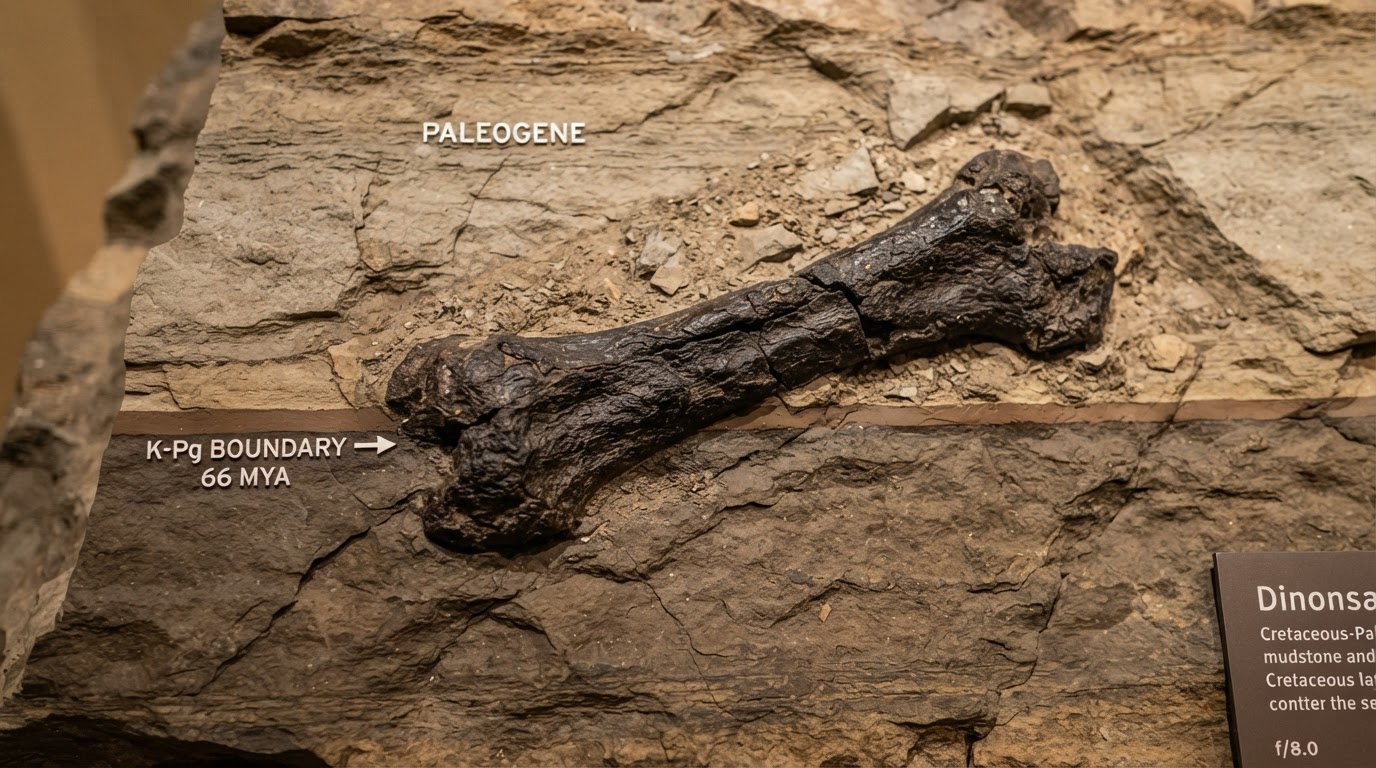
In the late 1970s, physicist Luis Alvarez and his geologist son Walter noticed something strange in rock samples from a site in Italy: a thin layer of iridium sitting right at the Cretaceous-Paleogene boundary. Iridium is rare on Earth's surface but relatively common in asteroids. The same iridium-rich layer was subsequently found at hundreds of sites around the world, all at the same geological moment.
That global iridium layer is essentially a chemical timestamp left by the impact. It's one of the most compelling pieces of physical evidence linking the extinction event to an extraterrestrial source. Finding the same chemical signature on every continent, at the exact same point in geological time, is not something that happens by coincidence.
Reading the Fossil Record
Paleontologists track extinction by looking at which species appear and disappear across rock layers. The non-avian dinosaur fossil record simply stops at the K-Pg boundary — the geological shorthand for the Cretaceous-Paleogene transition. Below the boundary, you find them. Above it, you don't. That abruptness is itself informative: it suggests a sudden catastrophic event rather than a slow decline.
Interestingly, some groups of animals show signs of stress even before the boundary, which has fueled debate about whether the impact was the sole cause or the final blow to ecosystems already under pressure. The fossil record is detailed, but it has gaps — and those gaps leave room for legitimate scientific disagreement.
Was the Asteroid the Only Cause? The Deccan Traps Debate
Massive Volcanic Eruptions Were Already Happening
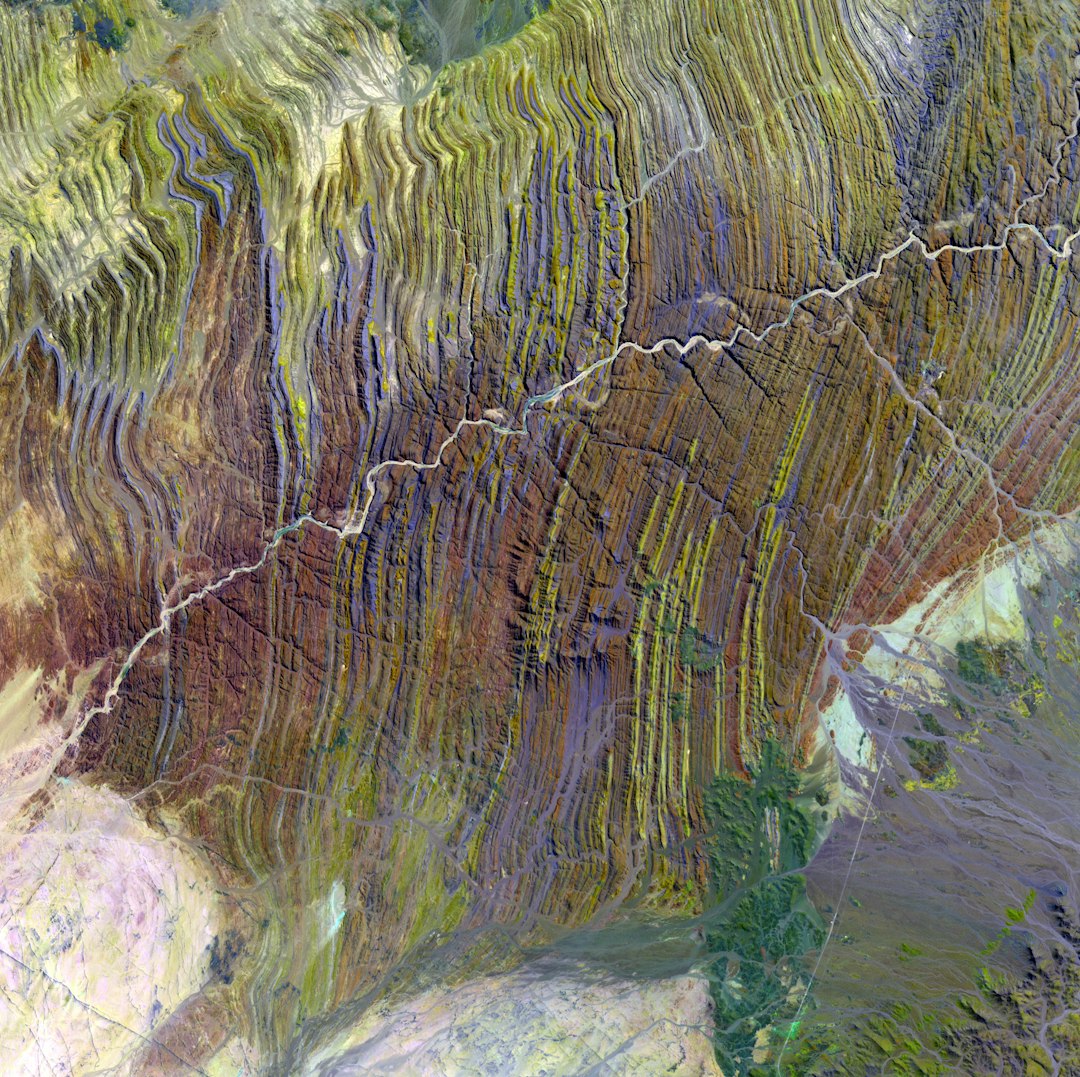
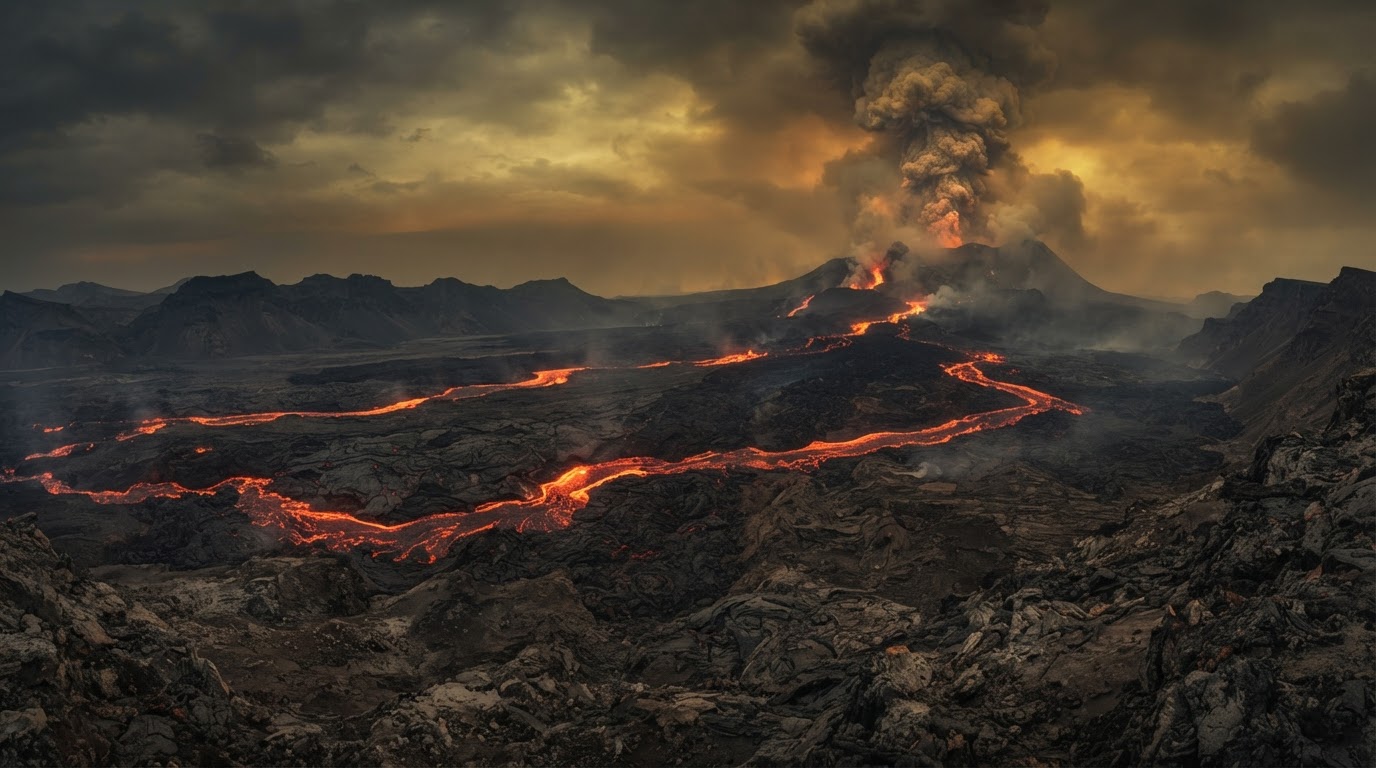
Around the same time as the Chicxulub impact — and for hundreds of thousands of years before and after it — a massive volcanic province in what is now India called the Deccan Traps was erupting on a scale that's hard to imagine. These weren't ordinary volcanoes. They were flood basalt eruptions that poured lava across an area roughly the size of modern-day India, releasing enormous quantities of carbon dioxide and sulfur dioxide into the atmosphere.
Some researchers argue that the Deccan Traps volcanism was already stressing global ecosystems before the asteroid hit — warming the climate, acidifying oceans, and disrupting food webs. A few go further and suggest the volcanic activity was the primary driver of the extinction, with the asteroid as a contributing factor. Most paleontologists don't accept that framing, but the debate keeps the field honest.
There's also a genuinely strange wrinkle: some evidence suggests the Chicxulub impact may have actually intensified Deccan Traps eruptions by triggering seismic activity on the other side of the planet. If true, the asteroid didn't just cause one catastrophe — it may have amplified another that was already underway.
The Deccan Traps remind us that Earth was already in trouble before the asteroid arrived — the impact may have been the decisive blow, not the only one.
Why Did Some Animals Survive When Dinosaurs Didn't?
Size, Diet, and Luck
The survivors of the K-Pg extinction weren't random. Small body size helped enormously — smaller animals need fewer calories, can hide more easily, and reproduce faster. Many of the mammals that survived were small, burrowing creatures that could shelter underground and subsist on seeds, insects, or decaying organic matter when fresh plant food disappeared.
Crocodilians survived, which often surprises people given how large some of them are. Their semi-aquatic lifestyle, ability to go months without eating, and opportunistic diet likely gave them an edge. Turtles, lizards, snakes, and certain birds also made it through. Birds, of course, are technically avian dinosaurs — so in a very real sense, dinosaurs didn't go entirely extinct. They're at your bird feeder right now.
The Ocean Wasn't Safe Either
The marine extinction was severe. Mosasaurs, plesiosaurs, and ammonites — the iconic coiled-shell cephalopods — all disappeared at the K-Pg boundary. The collapse of phytoplankton productivity in the darkened oceans cascaded through marine food webs just as it did on land. Some deep-sea communities fared better, likely because they were already adapted to low-energy environments and didn't depend on surface sunlight.
(Opinion: The survival of crocodilians while large dinosaurs perished is one of those outcomes that feels almost arbitrary in retrospect. It's a useful reminder that extinction events don't reward the 'best' animals — they reward the ones whose particular combination of traits happened to match the new conditions. Evolution has no foresight, and neither does catastrophe.)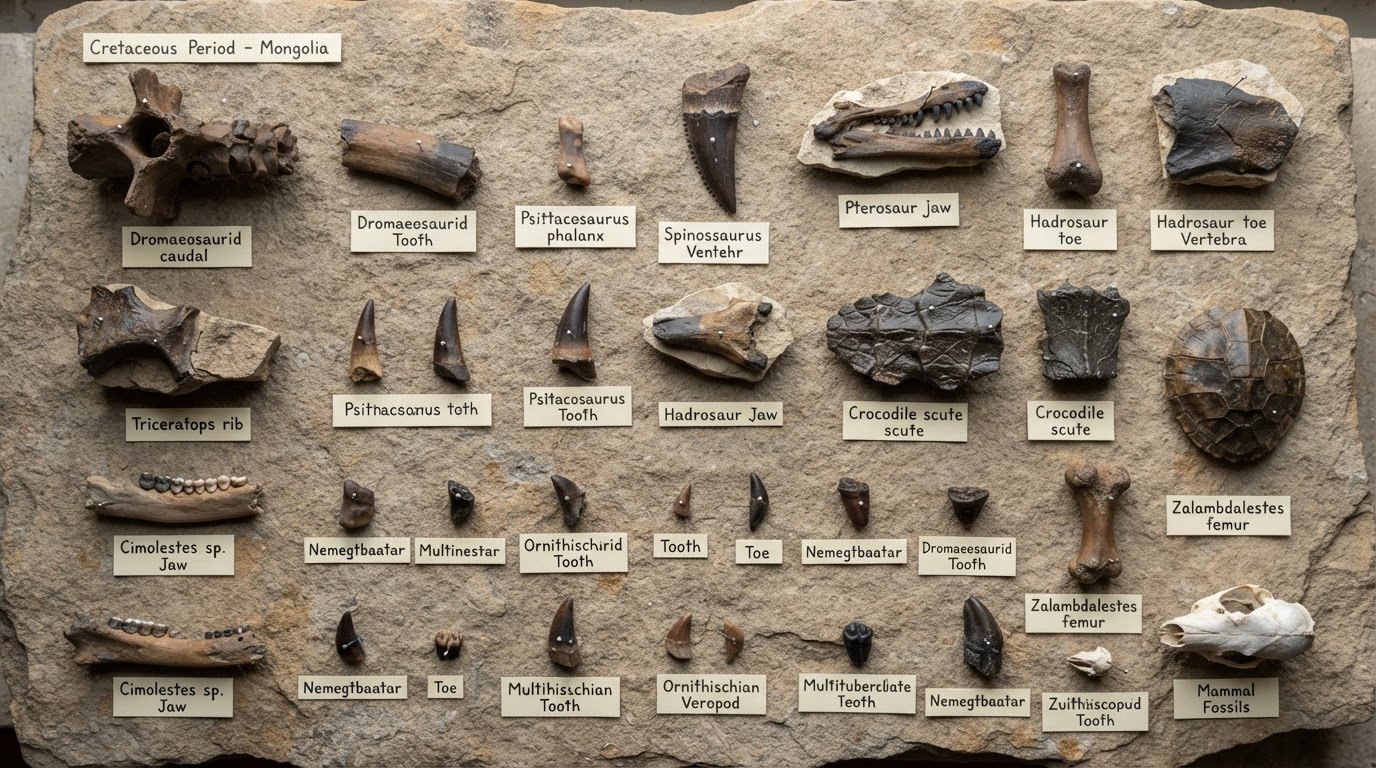
Frequently Asked Questions
Did all dinosaurs go extinct 66 million years ago?
Non-avian dinosaurs — the classic large dinosaurs most people picture — went extinct at the K-Pg boundary. But birds are classified as avian dinosaurs and survived. So technically, dinosaurs as a group did not go fully extinct. There are roughly 10,000 species of birds alive today, all descended from theropod dinosaurs.
How long did it take for dinosaurs to die off after the asteroid hit?
The timeline is still debated, but research suggests the most severe environmental effects — the impact winter, collapse of photosynthesis, and food chain disruption — played out over months to years. The full ecological recovery took millions of years. Some species may have lingered for tens of thousands of years after the impact, but the dominant megafauna were gone relatively quickly in geological terms.
Could a similar extinction event happen again?
Yes, in principle — large asteroid impacts are a real ongoing risk. However, space agencies and research programs now actively track near-Earth objects, and estimates suggest we have catalogued the vast majority of large impactors that could cause civilization-scale damage. Smaller, less-tracked objects remain a concern. In 2022, NASA's DART mission successfully demonstrated that a spacecraft could alter an asteroid's trajectory, marking the first real test of planetary defense technology.
The extinction of the dinosaurs is sometimes treated as a closed case — asteroid hits, dinosaurs die, mammals take over. But the more you look at the actual science, the messier and more contingent it becomes. Volcanic provinces, atmospheric chemistry, ocean acidification, the specific diets of specific lineages — all of it mattered. The asteroid was the trigger, but the gun had been loaded for a long time. And the animals that survived didn't 'win' anything. They just happened to be the right shape for a world that had suddenly, violently changed.



Comments
Post a Comment