How Does Motion Sickness Technology Work? The Science Behind the Fix
About one in three people gets motion sick under ordinary conditions — in a car, on a boat, or increasingly, inside a VR headset. That number climbs sharply when the motion becomes unpredictable or the visual field is fully enclosed. What's surprising is that the solution isn't just about making things smoother. The most effective motion sickness technologies work by tricking your brain rather than eliminating the movement itself.

What Actually Causes Motion Sickness — and Why Your Brain Is the Problem
The Sensory Conflict Theory
Motion sickness happens when your eyes and your vestibular system — the balance apparatus in your inner ear — send contradictory signals to your brain. Read a book in a moving car and your eyes say 'stationary,' while your inner ear detects acceleration and turns. Your brain, unable to reconcile the two, interprets the mismatch as a sign of poisoning. The nausea and vomiting response is essentially a toxin-purging reflex triggered by a false alarm.
This is why looking out the window helps. It re-synchronizes the visual signal with what your body is physically feeling. The brain stops getting confused, and the nausea fades. That same logic — closing the sensory gap — is the foundation for almost every piece of motion sickness technology developed since.
Why VR Made Everything Worse
Virtual reality introduced a new and particularly nasty version of the problem. In VR, your eyes see motion that your body isn't experiencing at all. Walk through a virtual corridor and your visual cortex is fully convinced you're moving, while your feet and inner ear report that you're standing still. The conflict runs in the opposite direction from car sickness, but the brain's response is identical: confusion, then nausea.
Early VR headsets in the 2010s had frame rates low enough that the image visibly lagged behind head movement — a phenomenon called 'latency.' Even 20 milliseconds of lag between moving your head and seeing the world update was enough to make many users sick within minutes. Anyone who tried a first-generation consumer headset probably remembers that particular unpleasantness.
How Display and Latency Technology Fights VR Sickness
The 20ms Rule and Why Frame Rate Matters So Much
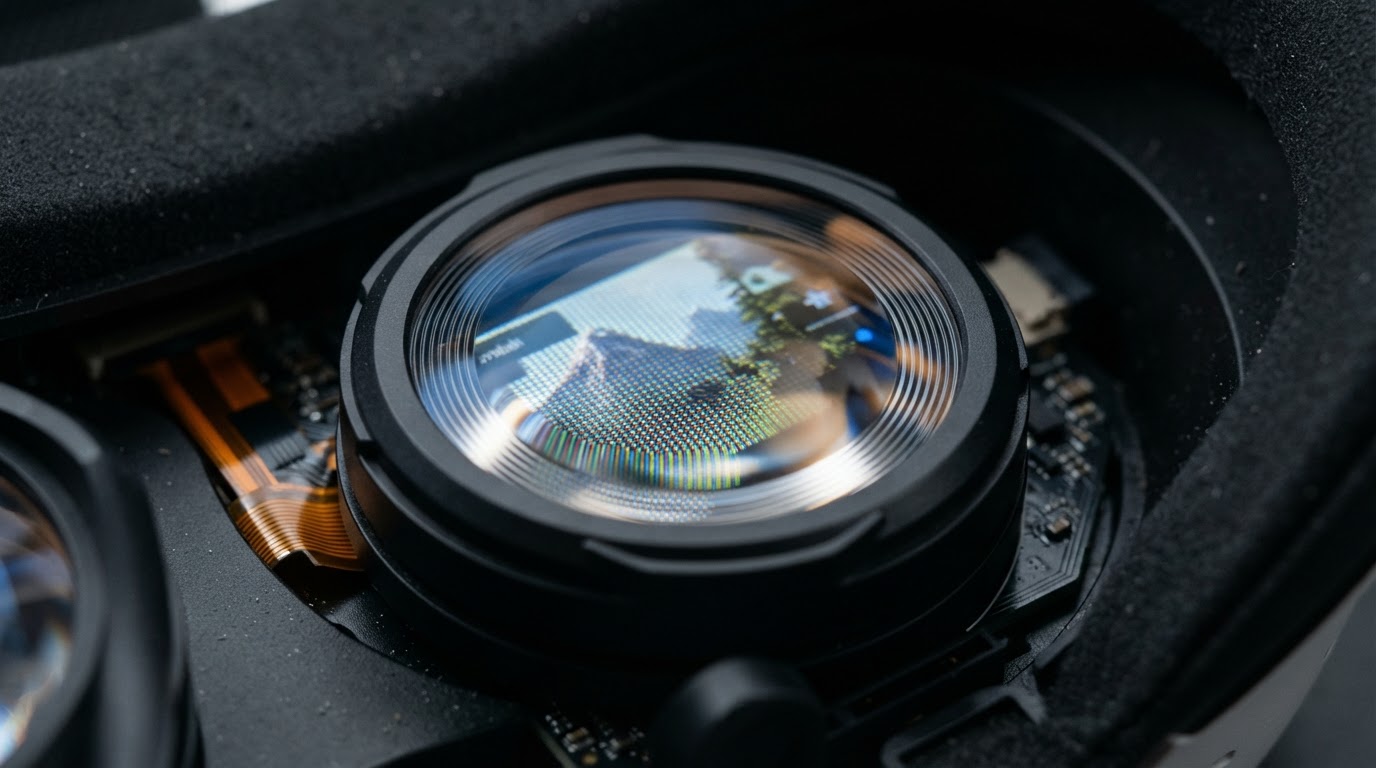
The VR industry converged on a rough threshold: motion-to-photon latency — the time between moving your head and seeing the updated image — needs to stay below roughly 20 milliseconds to avoid triggering nausea in most users. Getting there required overhauling nearly every layer of the rendering pipeline. Modern high-end headsets use techniques like 'asynchronous reprojection,' which generates synthetic in-between frames using the headset's rotational sensor data when the GPU can't render fast enough to keep up.
It's a clever workaround. Rather than waiting for a full rendered frame, the system takes the last complete frame and warps it slightly based on where your head has moved in the intervening milliseconds. The result isn't perfect — fast-moving objects can blur or ghost — but it keeps the latency low enough that the brain stays comfortable. This is one of those engineering solutions that sounds like a hack but became a permanent fixture of the technology.
Cutting motion-to-photon latency below 20 milliseconds doesn't just improve comfort — it's the difference between a usable product and one that makes people sick in under five minutes.
Field of View and Peripheral Vision Tricks
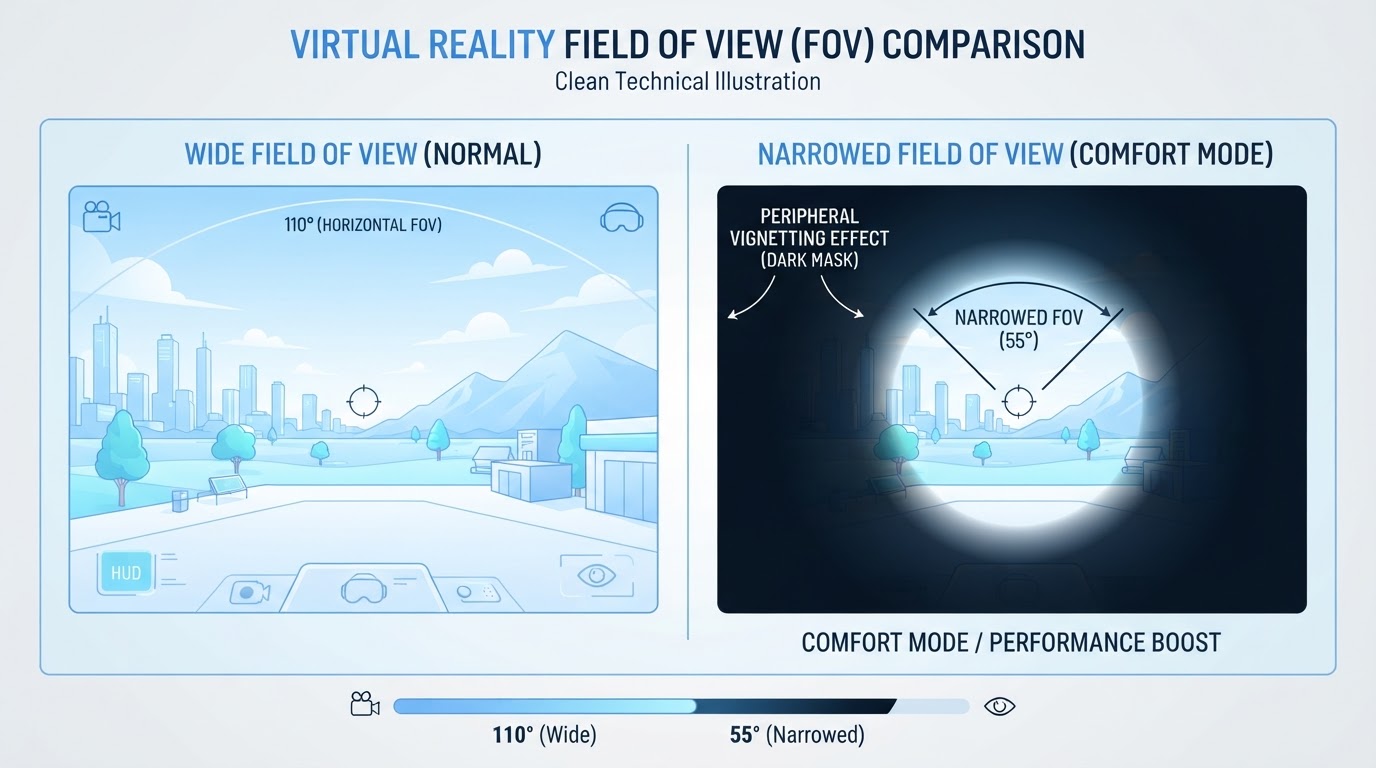
Peripheral vision is disproportionately sensitive to motion cues. Your central vision handles detail; your peripheral vision handles spatial orientation. Some VR systems dynamically narrow the field of view during fast movement — a technique called 'dynamic vignetting' or 'comfort vignetting.' It's essentially blacking out the edges of the image when you're accelerating or turning rapidly.
It feels slightly claustrophobic at first, but research suggests it significantly reduces nausea for susceptible users. The trade-off is immersion. Some developers offer it as an optional setting, knowing that experienced VR users often prefer to turn it off once they've built up tolerance.
How Wearable and Pharmaceutical Technology Addresses Motion Sickness
The Wristband That Actually Has Science Behind It
Acupressure wristbands — the kind with a small plastic stud pressed against the P6 point on the inner wrist — have been sold for decades. The evidence for them is mixed at best. But a newer category of wearable uses a different mechanism entirely: mild electrical nerve stimulation. Devices in this category send small electrical pulses through the skin to modulate the vagus nerve or the median nerve, both of which are involved in the nausea response. Some clinical trials have shown measurable reductions in nausea symptoms, though the effect size varies considerably between individuals.
The underlying idea is that you can interrupt the brain's nausea signaling pathway at the nerve level before it becomes a full-blown response. It's not suppressing the sensory conflict — it's dampening the alarm that the conflict triggers.
Scopolamine and the Patch That Outlasted Everything
Pharmaceutical options have been around far longer than any wearable. Scopolamine, delivered via a small adhesive patch worn behind the ear, remains one of the most effective treatments for motion sickness available. It works by blocking muscarinic acetylcholine receptors in the brain's vomiting center. The patch delivers the drug slowly over roughly three days, which is why it's popular for sea voyages and long flights.
The catch is side effects: dry mouth, blurred vision, and in some cases confusion — particularly in older adults. Antihistamines like dimenhydrinate (sold under various brand names) work through a related mechanism and are widely available over the counter, but they cause significant drowsiness. Neither approach addresses the root cause. They just lower the brain's sensitivity to the conflict signal.

How Automotive Technology Is Redesigning the Car Interior Around Motion Sickness
Predictive Seat Movement and Haptic Cues
As cars become more autonomous and passengers spend more time looking at screens instead of the road, the automotive industry has had to take motion sickness seriously as a design problem. One approach being developed by several manufacturers involves seats that tilt or shift slightly in anticipation of a turn — feeding the body a physical cue that matches what the car is about to do. The idea is to give the vestibular system advance warning, closing the sensory gap before it opens.
A related concept uses haptic feedback — vibrations in the seat or steering wheel — to signal upcoming maneuvers. These aren't just comfort features. They're attempts to pre-synchronize the body's expectations with the vehicle's actual motion, which is exactly what a driver experiences naturally by watching the road ahead.
The Transparent Hood Display Problem
Some newer vehicle concepts use augmented reality displays projected onto the windshield or even simulated 'transparent floor' displays to give rear passengers a sense of the road ahead. The logic is sound: if you can see where the car is going, your visual system can anticipate the motion rather than react to it. But the implementation is tricky. Too much visual information can itself become overwhelming, and passengers who aren't looking at the display still get sick.
The most elegant automotive solutions don't fight the sensory conflict — they prevent it from forming in the first place by giving the body information it would have had naturally if the passenger were driving.(Opinion: The most underrated development in this space isn't any single gadget — it's the growing recognition that motion sickness is an engineering problem, not a personal weakness. For decades, sufferers were essentially told to look out the window and stop complaining. The fact that major automotive and VR companies now have dedicated teams working on this suggests the attitude has finally shifted.)

Frequently Asked Questions
Does building up tolerance to motion sickness actually work?
Yes, and the effect is well-documented. Repeated exposure to the conflicting sensory signals gradually recalibrates the brain's response — a process called habituation. Sailors, pilots, and regular VR users often report significantly reduced susceptibility over time. The adaptation isn't permanent, though. Extended breaks can reset your tolerance, which is why even experienced sailors sometimes get sick after a long time on land.
Why do some people never get motion sick at all?
Susceptibility varies considerably between individuals, and the reasons aren't fully understood. Genetic factors appear to play a role, as does the sensitivity of the vestibular system. Children between roughly 2 and 12 years old are statistically the most susceptible group, while infants under 2 rarely get motion sick at all — possibly because their vestibular systems aren't yet calibrated to expect a stable world. Susceptibility tends to decrease in adulthood for most people, though it never disappears entirely.
Can you get motion sick from a flat screen — not just VR?
Yes, though it's less common. 'Simulator sickness' can occur with standard screens when the field of view is large and the motion is intense — think large-format cinema screens or racing simulators with wide monitors. The mechanism is the same as VR sickness: the visual system detects motion that the body isn't physically experiencing. The smaller the screen relative to your visual field, the less likely it is to trigger a response, which is why watching the same content on a phone rarely causes problems.
The deeper implication of all this technology is quietly unsettling: we are building environments — cars, headsets, aircraft — that increasingly separate the body from direct experience of the physical world. Motion sickness isn't a bug in those systems. It's the body's honest report that something about the arrangement is wrong. Every technological fix is, in a sense, a negotiation with that report — trying to convince the brain to accept a version of reality that the rest of the body isn't quite experiencing.



Comments
Post a Comment