The Life Cycle of Stars: From Birth to Supernova
A star the size of our Sun will spend roughly 10 billion years burning hydrogen before it ever becomes the bloated red giant that will eventually swallow Mercury and Venus whole. That single fact reframes everything — stars are not static lights pinned to the sky. They are engines running on borrowed time, and every stage of their existence is a negotiation between gravity trying to crush them and nuclear fire pushing back.
What Is a Star, Actually? A Plain-Language Definition
More Than Just a Ball of Fire
A star is a sphere of plasma held together by its own gravity, generating energy through nuclear fusion at its core. That distinction — fusion, not combustion — matters more than most people realize. Fire consumes fuel by combining it with oxygen. Fusion slams atomic nuclei together so hard they merge, releasing energy in the process. The Sun converts roughly 600 million tons of hydrogen into helium every single second.
The result of that process is a precise, dynamic balance called hydrostatic equilibrium. Gravity is always pulling inward. Radiation pressure from fusion is always pushing outward. A star is essentially a controlled explosion that has been running for billions of years. When that balance tips — in either direction — the star's fate is sealed.
Where Stars Come From
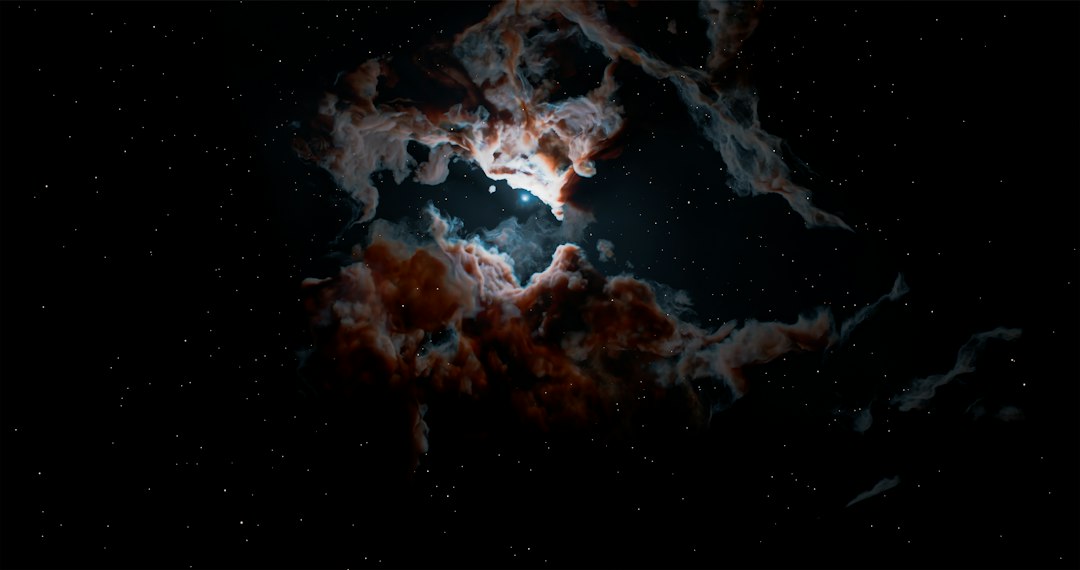
Stars are born inside molecular clouds: vast, cold regions of gas and dust drifting through galaxies. The Orion Nebula, visible to the naked eye as a fuzzy patch in Orion's sword, is one of the most active star-forming regions near Earth. When part of a molecular cloud becomes dense enough — triggered by a shockwave from a nearby supernova, a galactic collision, or simple gravitational instability — it begins to collapse inward.
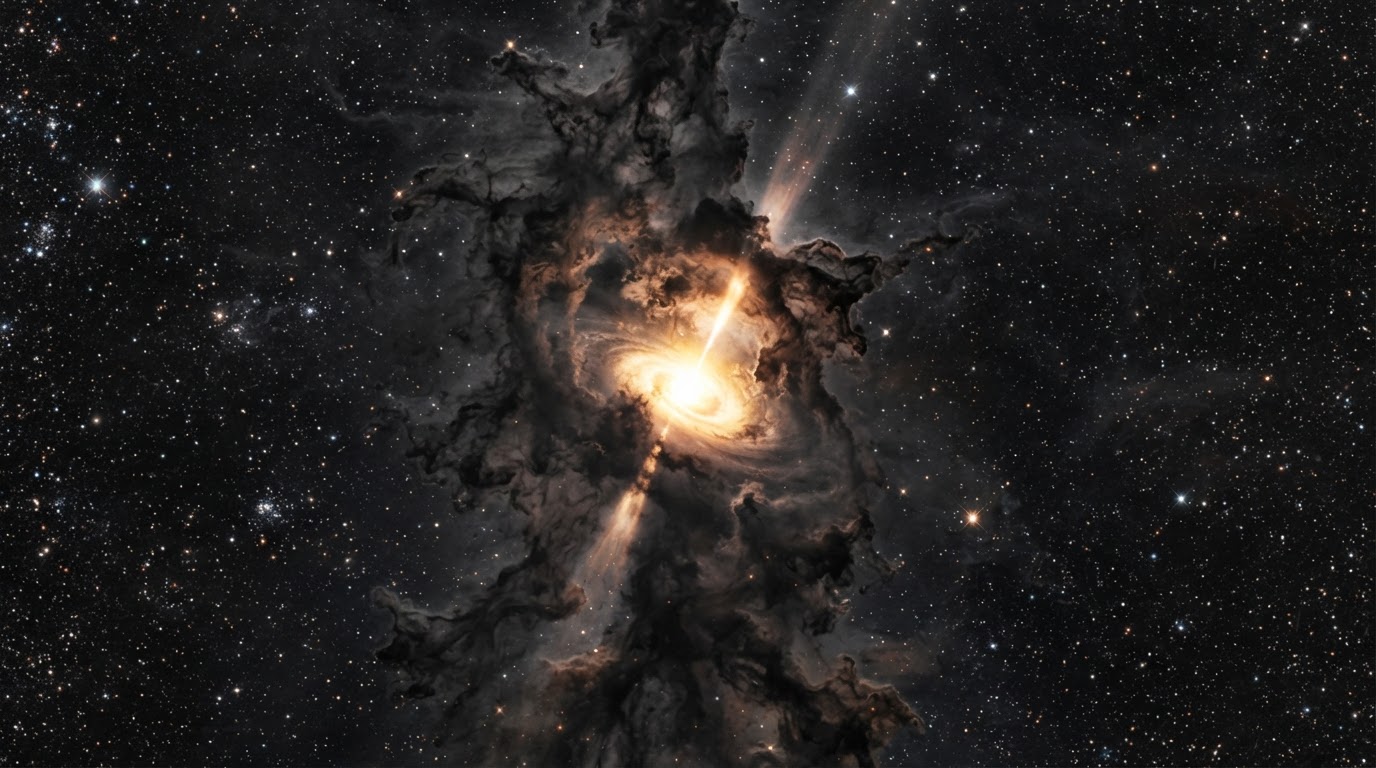
As the cloud contracts, it heats up. A rotating disk of material forms around the growing protostar at the center. When core temperatures reach roughly 10 million degrees Celsius, hydrogen fusion ignites. The star 'turns on.' What was once a cold dark cloud is now a main-sequence star, and it will stay that way for most of its life.
How Does a Star's Mass Determine Its Entire Life?
The Main Sequence — Where Stars Spend Most of Their Lives
The single most important variable in a star's biography is mass. It controls everything: how long the star lives, how brightly it burns, and how violently it dies. This is counterintuitive at first — you might assume a bigger star lives longer because it has more fuel. But a star ten times the mass of the Sun burns through its fuel roughly a thousand times faster. Massive stars live fast and die spectacularly. Small stars smolder for tens or even hundreds of billions of years.
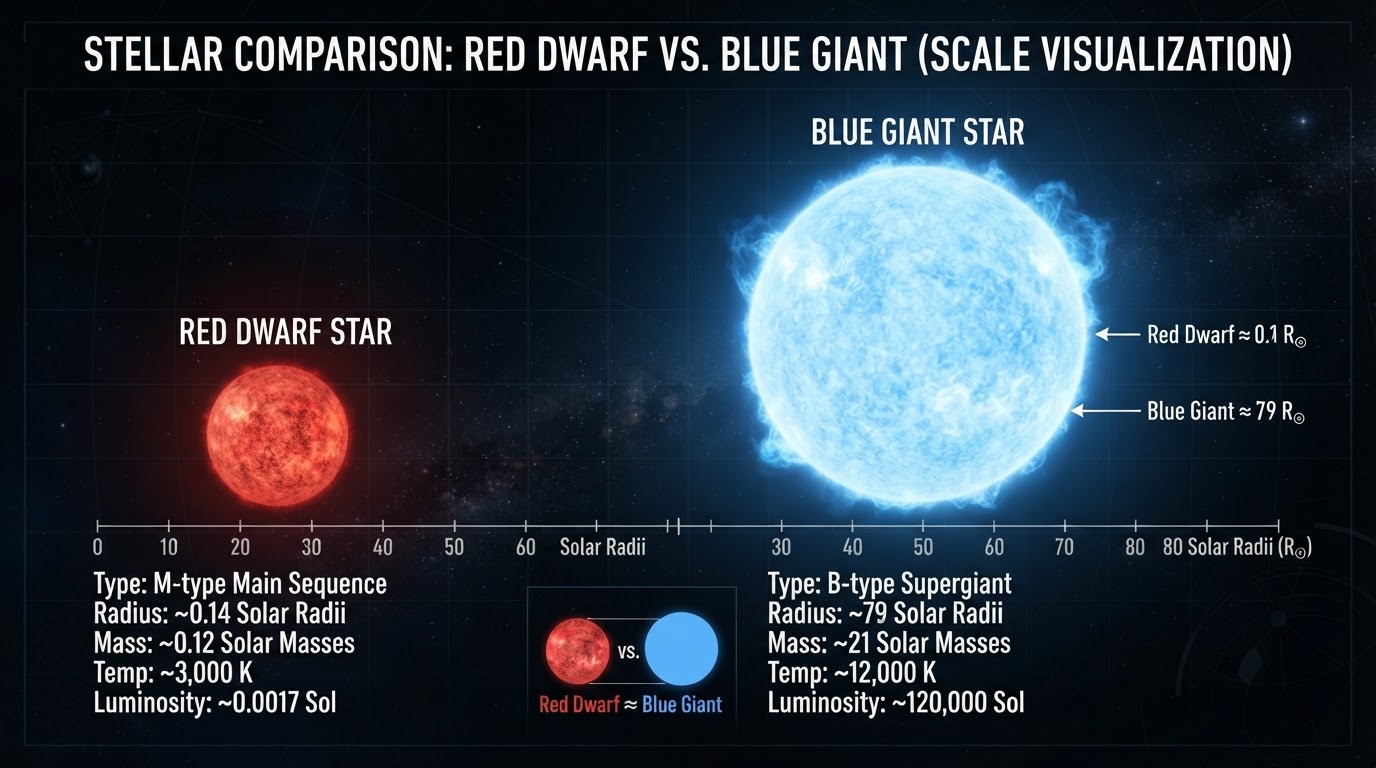
On what astronomers call the Hertzsprung-Russell diagram — a chart plotting stars by luminosity and temperature — most stars cluster along a diagonal band called the main sequence. Our Sun sits comfortably in the middle. Red dwarf stars like Proxima Centauri sit at the cool, dim end. Blue giants like Rigel blaze at the hot, luminous extreme. A star's position on that band is essentially its current life stage.
Why Massive Stars Are Surprisingly Wasteful
A star 25 times the mass of the Sun might only live for a few million years — a cosmic eyeblink compared to the Sun's 10-billion-year run. These stars burn so hot that their radiation pressure actually blows material off their outer layers in what's called a stellar wind. Some massive stars lose a significant fraction of their total mass this way before they ever explode. The star Eta Carinae, one of the most massive known stars in the Milky Way, has been observed ejecting enormous shells of material in dramatic outbursts — it's essentially shedding itself.
Mass is not just a star's size — it's its destiny. The same physics that makes a massive star shine a million times brighter than the Sun also guarantees it will die a million times more violently.
The Death Stages — What Happens When the Fuel Runs Out
Sun-Like Stars: The Red Giant Phase
When a Sun-like star exhausts the hydrogen in its core, fusion stops there — but continues in a shell around the core. The core contracts and heats up. The outer layers expand dramatically, sometimes to hundreds of times the star's original diameter. The star becomes a red giant: cooler on the surface but vastly larger. This is the fate waiting for our own Sun in roughly 5 billion years.
Eventually, the red giant's core gets hot enough to fuse helium into carbon and oxygen. When the helium runs out, the core contracts again, but for a Sun-like star, temperatures never get high enough to fuse carbon. The outer layers drift away, forming a beautiful expanding shell of glowing gas called a planetary nebula — a misleading name coined before astronomers understood what they were looking at. What remains at the center is a white dwarf: an Earth-sized, incredibly dense remnant that slowly cools over billions of years.
Massive Stars: Supernova and What Comes After
For stars significantly more massive than the Sun, the endgame is far more dramatic. These stars can fuse progressively heavier elements — carbon, neon, oxygen, silicon — each stage burning faster than the last. Silicon fusion to iron takes only a few days. Then everything stops. Iron is the end of the line because fusing iron actually requires energy rather than releasing it. The core, now made of iron, collapses in less than a second.
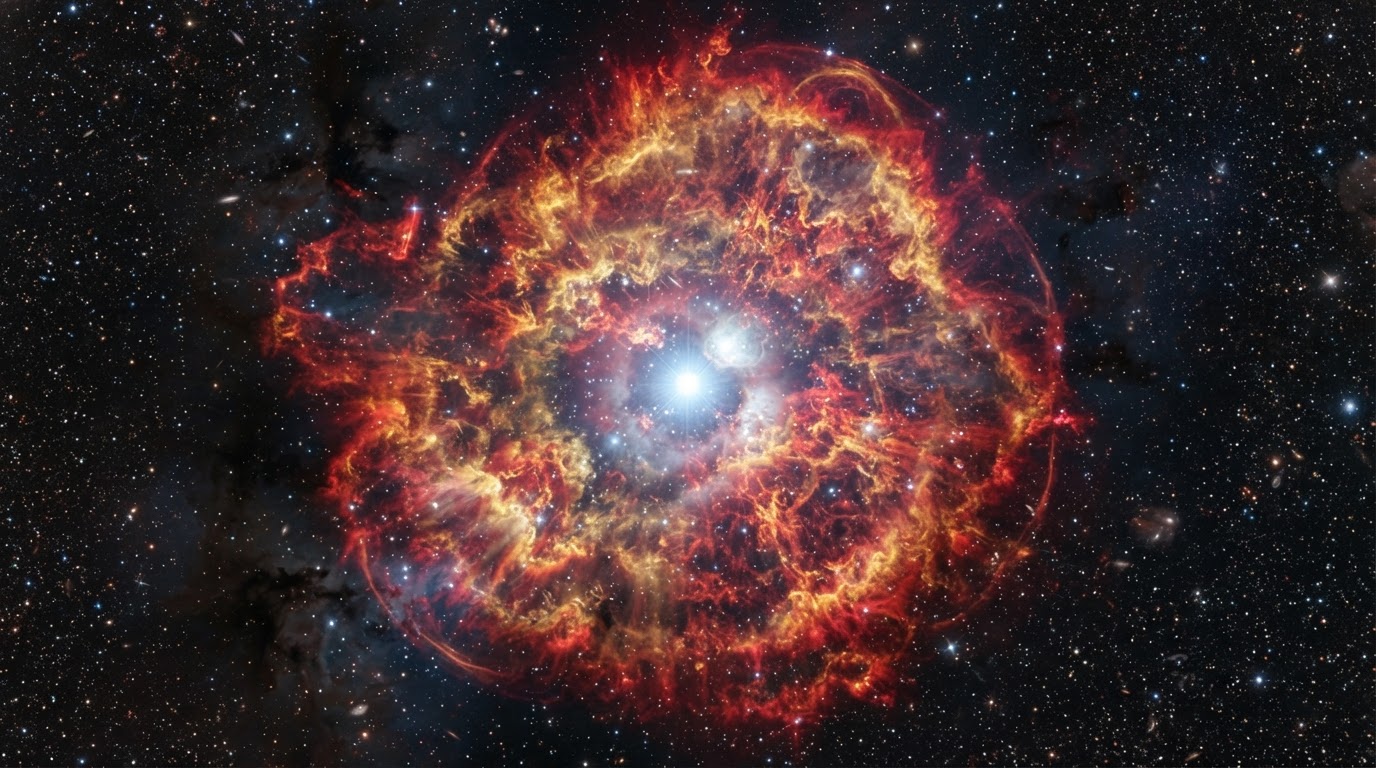
The collapse is so sudden and violent that the infalling outer layers bounce off the newly formed dense core and are blasted outward in a supernova explosion. For a brief period, a single supernova can outshine an entire galaxy of hundreds of billions of stars. The shockwave from the explosion also seeds the surrounding space with heavy elements — gold, uranium, iodine — that were forged in the star's final moments. Every atom of gold in a piece of jewelry was created in a stellar explosion.
A supernova does not just destroy a star — it manufactures the raw materials for planets, oceans, and living things, then scatters them across light-years of space.
Why the Life Cycle of Stars Matters to Everything on Earth
You Are Made of Dead Stars
This is not a poetic metaphor — it is a literal description of chemistry. The Big Bang produced hydrogen, helium, and trace amounts of lithium. Every other element heavier than that was forged inside stars. The carbon in your DNA, the calcium in your bones, the iron in your blood: all of it was cooked in stellar cores and distributed by stellar deaths across billions of years. Earth itself is built from the debris of stars that lived and died before the Sun was born.
The Sun is a second- or third-generation star, meaning it formed from material that had already been through at least one previous stellar life cycle. Without those earlier generations of stars living, burning, and exploding, the raw ingredients for rocky planets and biological chemistry simply would not exist.
What Studying Stellar Death Tells Us About the Universe
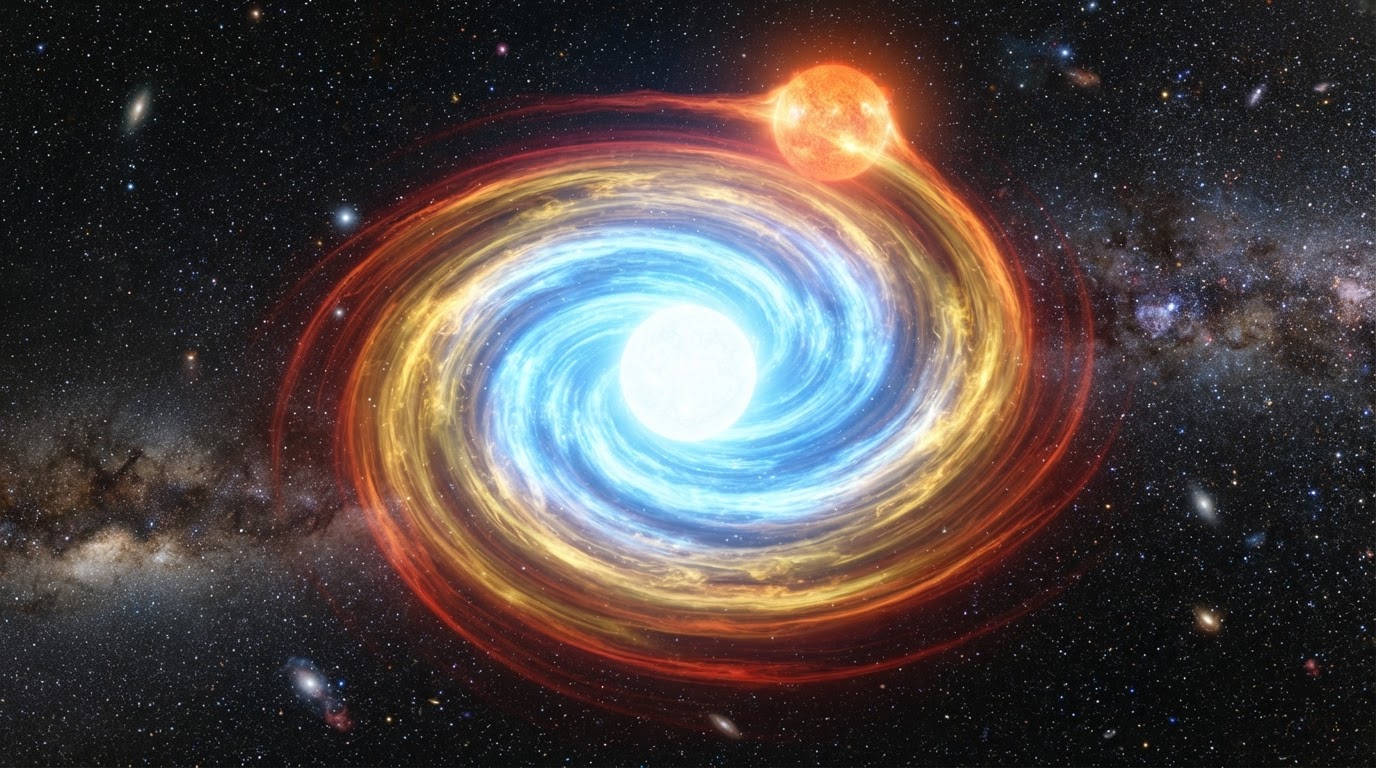
Type Ia supernovae — a specific category triggered when a white dwarf accretes enough mass from a companion star to reignite fusion catastrophically — burn with a remarkably consistent peak brightness. Astronomers use them as 'standard candles' to measure cosmic distances. It was precisely this technique that led to the discovery in the late 1990s that the universe's expansion is accelerating — one of the most surprising findings in modern cosmology, now attributed to what we call dark energy.
(Opinion: There is something quietly staggering about the fact that understanding how stars die gave us our best evidence that the universe's fate is not a Big Crunch but an endless, accelerating expansion. Stellar physics and cosmology are not separate disciplines — they are the same conversation.)
Frequently Asked Questions
How long does it take for a star to form from a nebula?
The timeline varies significantly by mass. A star like the Sun takes roughly 10 to 50 million years to go from collapsing cloud to main-sequence star. More massive stars form faster — sometimes in under a million years — because their stronger gravity accelerates the collapse. Smaller, low-mass stars can take longer to fully ignite.
Can a white dwarf ever 'come back to life' as a star?
Not exactly, but something dramatic can happen. If a white dwarf is in a binary system and pulls enough material from its companion star, it can reignite nuclear fusion on its surface in a runaway reaction called a nova — or, if it accretes enough mass to exceed a critical threshold, it can detonate entirely as a Type Ia supernova. So while it does not resume normal stellar life, it can go out with a spectacular second act.
What happens to stars smaller than the Sun when they die?
Red dwarf stars, which are far more common than Sun-like stars, burn so slowly and efficiently that none of them have had time to die yet — the universe is not old enough. Theoretical models suggest they will eventually exhaust their hydrogen and contract into white dwarfs, but without the red giant phase that Sun-like stars go through. The universe will need to be many times its current age before we can observe this directly.
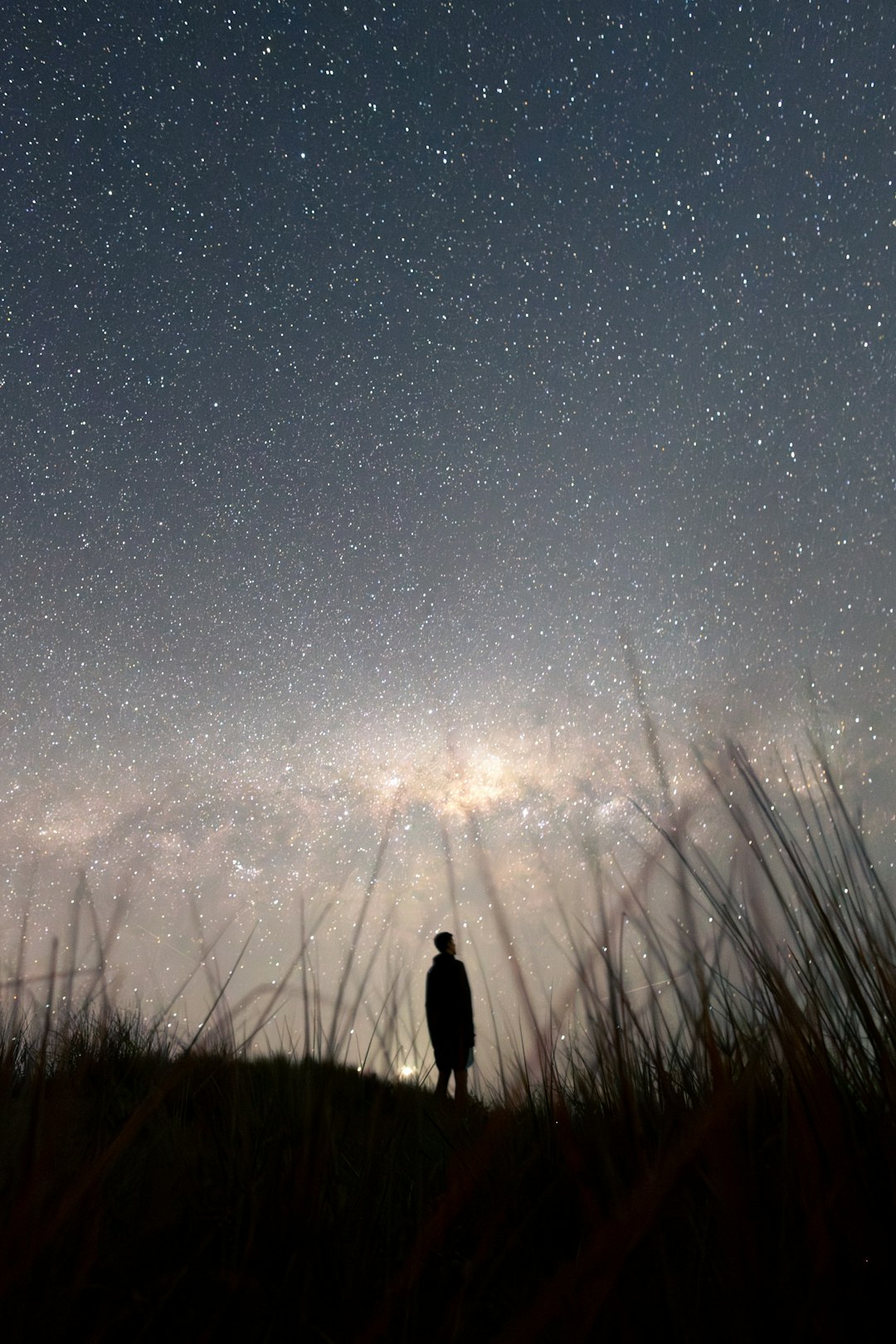
The next time you look at a clear night sky, you are looking at a graveyard and a nursery at the same time. Some of those points of light are already dead — their light simply has not finished the journey to your eyes. Others are in the middle of the same slow burn that will one day scatter the atoms of new worlds across the galaxy. The iron in your blood was forged in a star that exploded before the Sun existed, and somewhere out there, the same process is building the ingredients for something that does not exist yet.


Comments
Post a Comment