Beyond Humans: Surprising Animals That Use Tools and Why They Do It
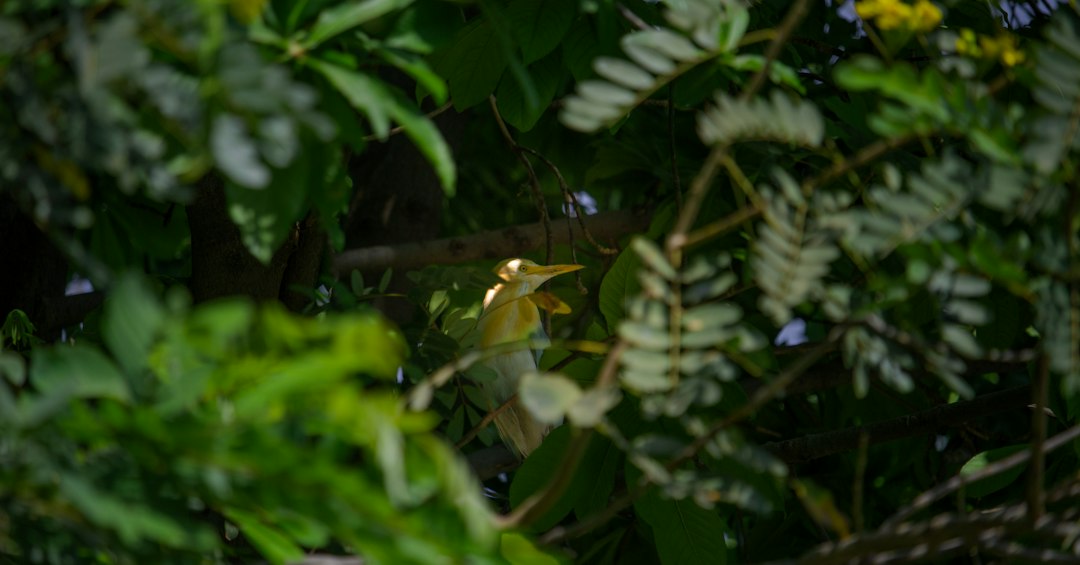
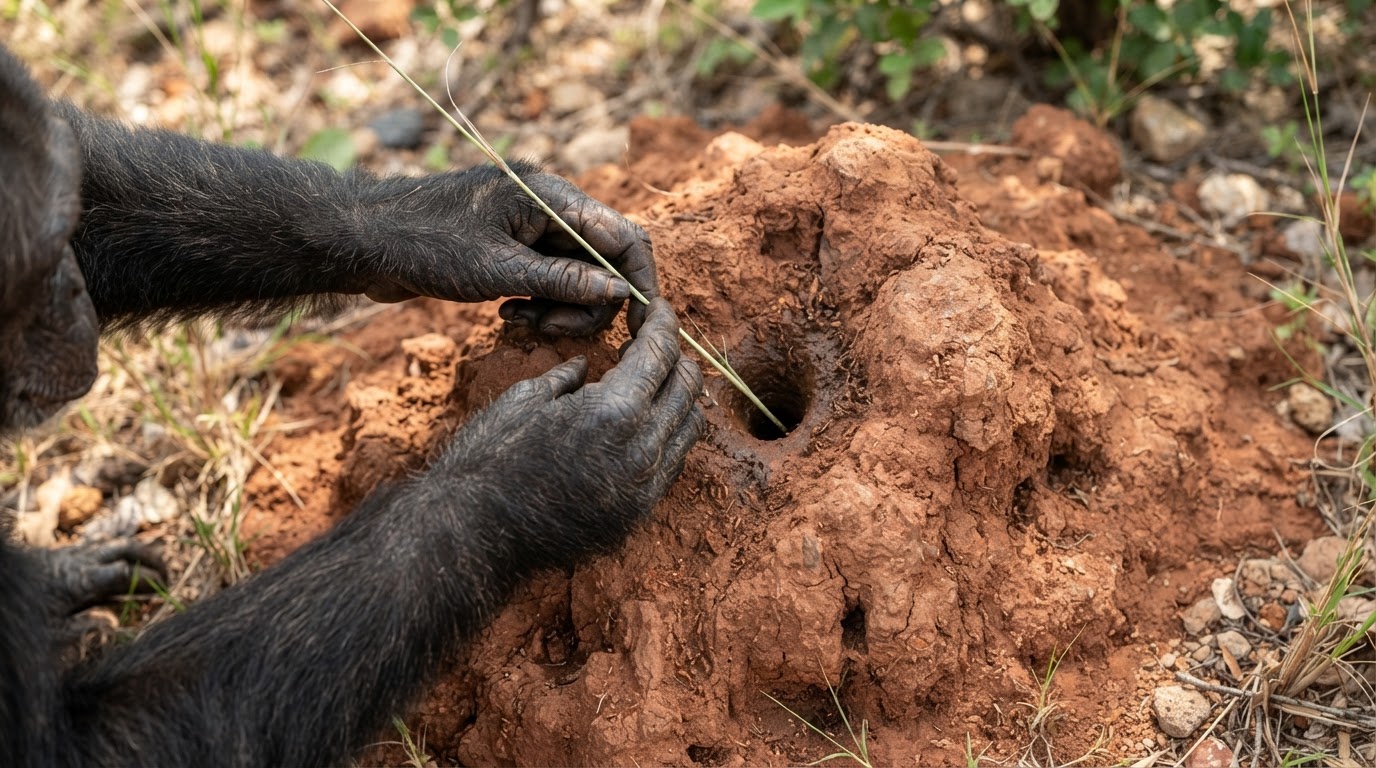
A crow in New Caledonia will snap a twig to a precise length, strip its leaves, and use it to hook grubs out of bark — adjusting the tool mid-task if it is not working. That is not instinct. That is problem-solving. For a long time, tool use was considered the defining line between humans and everything else. Then Jane Goodall watched chimpanzees in Tanzania strip leaves off grass stems to fish termites from mounds, and the line moved. It has been moving ever since.
What Counts as Tool Use in Animals?
The Definition Scientists Actually Use
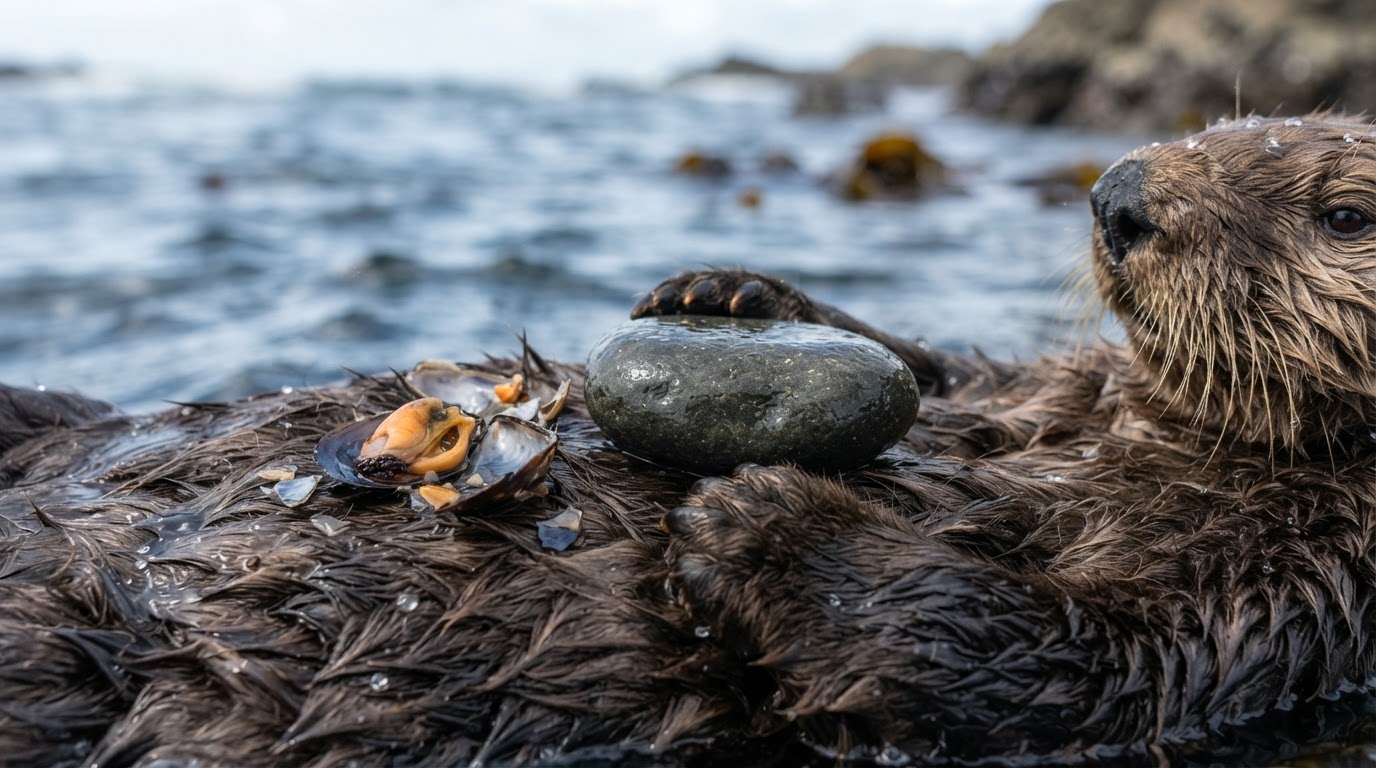
Biologists define tool use fairly precisely: an animal must use an external, detached object to achieve a goal — and the object must be held or carried, not just part of the environment. A bear scratching its back on a tree does not qualify. A sea otter cracking a clam open with a rock it selected, carried, and placed on its chest does.
That distinction matters because it filters out a lot of clever-looking behavior that is really just environmental manipulation. The tool has to be a tool — something the animal treats as an instrument separate from itself. And the more researchers tighten the definition, the more animals still make the cut.
There is also a subtler category called 'tool manufacture,' where an animal modifies an object before using it. That is rarer and considerably more impressive. New Caledonian crows do it. So do chimpanzees, and, in documented cases, orangutans.
How Do Different Animals Actually Use Tools?
Primates: The Obvious Starting Point
Chimpanzees remain the most documented tool users outside humans. Different chimp populations have developed distinct tool traditions — nut-cracking with stone hammers in West Africa, termite-fishing with grass stems in East Africa — and these traditions are passed down through observation, not genetics. That is cultural transmission, full stop.
Orangutans in Sumatra have been observed using leaves as gloves to handle spiny fruit and as cups to drink water. One population uses sticks to extract seeds from a fruit whose outer casing causes skin irritation. The fact that neighboring orangutan groups without the same food pressures do not use this tool strongly suggests it was learned, not hardwired.
Tool traditions that vary by population — not by species — are one of the clearest signs that an animal is learning behavior rather than running a genetic program.
Corvids: The Birds That Embarrass Expectations
New Caledonian crows are in a category of their own. In controlled experiments, they have solved multi-step puzzles requiring them to use a short tool to retrieve a longer tool, then use the longer tool to get food. They plan ahead. They also manufacture hooked tools from plant stems — bending, trimming, and testing them — which requires holding a mental model of what the finished tool should look like.
Rooks, a related corvid, have no known tradition of tool use in the wild, but in lab settings they spontaneously figured out how to use stones to raise water levels in a tube to reach floating food. They had apparently never encountered this problem before. The speed at which they solved it was unsettling to researchers expecting a longer learning curve.
Dolphins and the Sponge Trick
Bottlenose dolphins in Shark Bay, Australia, have been observed carrying marine sponges on their rostrums while foraging on the seafloor. The sponge protects their snouts from abrasive sand and stinging creatures while they probe for fish hiding beneath the surface. This behavior is passed almost exclusively from mothers to daughters, making it one of the clearest examples of matrilineal cultural transmission in a non-primate.
What makes this especially interesting is that 'sponging' dolphins spend significantly more time foraging alone than non-spongers. The tool gives them access to a food source others cannot reach — but it comes with a social cost. They are less integrated into the group. That trade-off looks almost uncomfortably familiar.

Why Do Animals Develop Tool Use at All?
The Ecological Pressure Argument
The short answer is: when the food is worth it and the hands — or beak, or rostrum — are capable enough. Tool use tends to emerge in species facing a specific combination of pressures: food that is hard to access, a body plan flexible enough to manipulate objects, and a brain large enough to hold a goal in mind while executing multiple steps.
Egyptian vultures crack open ostrich eggs by picking up rocks and hurling them at the shell. Ostrich eggs are enormous and nutritionally dense — worth the effort. The vultures do not use rocks on smaller eggs they can break with their beaks. That selectivity suggests genuine cost-benefit reasoning, not a fixed behavior pattern triggered by the sight of an egg.
Veined octopuses in Indonesia collect coconut shell halves from the seafloor, carry them awkwardly under their bodies while walking on two arms, and then assemble them into a shelter. The carrying phase is energetically costly and makes them more vulnerable to predators. They do it anyway, because the shelter payoff is worth it. An octopus planning for future shelter use is a genuinely strange thing to sit with.
An octopus has no centralized brain in the way vertebrates do — roughly two-thirds of its neurons are in its arms. Tool use in cephalopods forces a rethink of what 'intelligence' even requires structurally.
Social Learning vs. Independent Invention
One underappreciated question is how often tool use is independently invented versus copied. In chimpanzees, the geographic clustering of tool traditions — certain behaviors appearing in one forest but not another — points strongly to social learning. But in some species, individuals seem to stumble onto the same solution independently.
Researchers studying tool use in wild populations now use the term 'social diffusion' to describe how a new behavior spreads through a group after one individual discovers it. Tracking that spread — who learned from whom, how fast it moved, whether it changed along the way — has become one of the more productive areas in animal cognition research.
What Animal Tool Use Reveals About Intelligence and Evolution
The Convergence Problem
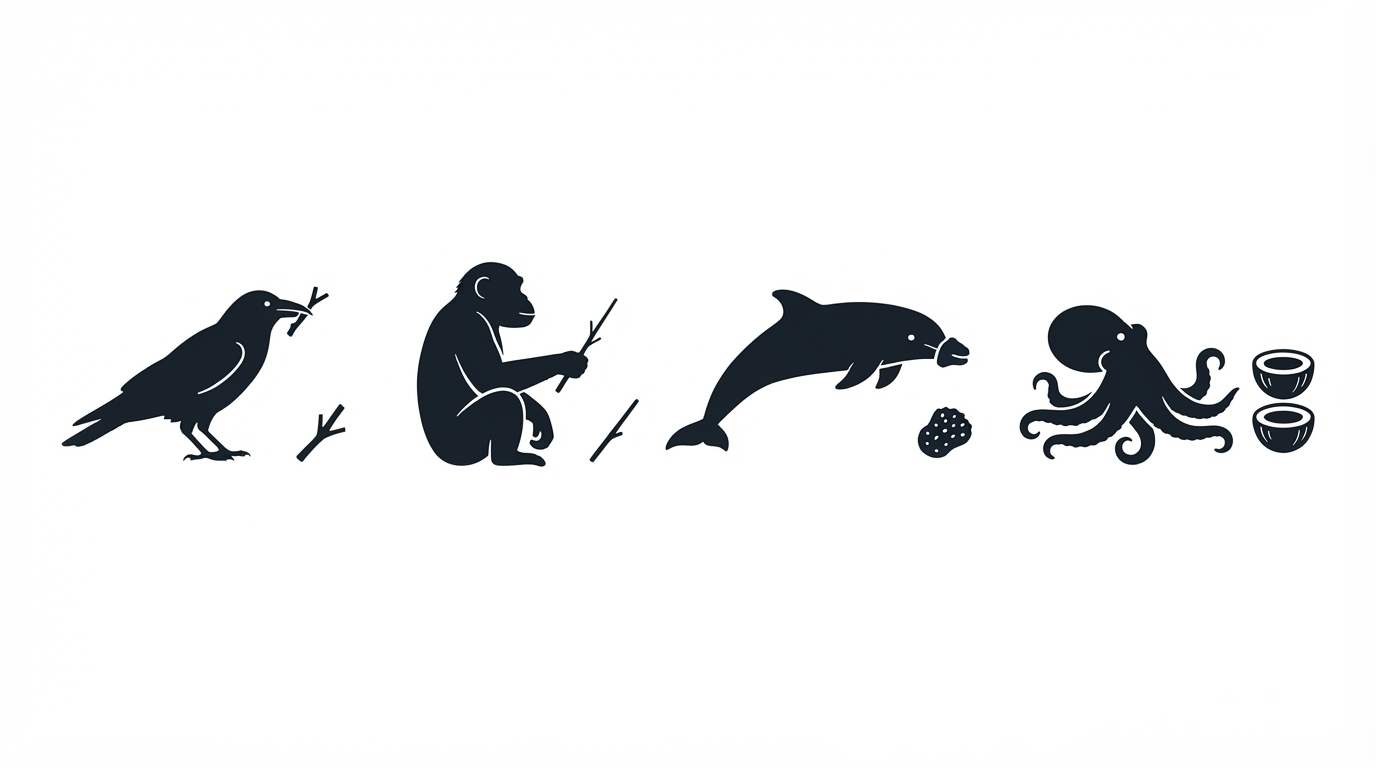
Tool use has evolved independently in primates, corvids, cetaceans, and cephalopods. These lineages diverged hundreds of millions of years ago and have radically different brain architectures. That convergence is the counterintuitive finding: there is no single 'tool-use brain.' Instead, the capacity seems to emerge whenever a species has sufficient cognitive flexibility, the right physical apparatus, and the right ecological pressure.
This is uncomfortable for any theory that ties intelligence too tightly to a specific neural structure. Corvids have no neocortex — the region long assumed to be the seat of higher cognition in mammals. Their tool-using abilities appear to emerge from a differently organized but functionally analogous brain region. Evolution found the same solution through a completely different architectural path.
Where the Human Difference Actually Lies
Humans do something most tool-using animals do not: we make tools to make other tools. A crow makes a hook to get food. A human makes a lathe to make a hook. That recursive, cumulative quality — technology building on technology — is what separates human material culture from animal tool use, not the basic capacity to pick up an object and use it.
(Opinion: The more we study animal tool use, the less 'uniquely human' starts to mean anything useful as a biological category. What we probably have is not a different kind of mind, but a quantitative advantage in recursion and cultural accumulation — which is genuinely remarkable, but it is a difference of degree, not of kind.)That said, the gap in degree is vast. No other species has built a radio telescope or a sewer system. The question is whether that gap is philosophically interesting or just a matter of time and selection pressure.
Frequently Asked Questions
Which animal uses tools most similarly to humans?
New Caledonian crows come closest in terms of tool manufacture and multi-step planning. They modify raw materials into specific shapes, use tools sequentially, and appear to hold a mental model of the finished product. Chimpanzees show more social complexity around tool use — including teaching — but the crows' spontaneous problem-solving in novel situations is arguably more striking.
Do animals ever teach tool use to their young?
Active teaching — where a knowledgeable individual modifies their behavior specifically to help a naive individual learn — is rare and debated even in chimpanzees. What is well-documented is 'opportunity provisioning,' where mothers allow young to observe and practice. Chimpanzee mothers have been observed leaving tools near termite mounds for their offspring to experiment with, which sits somewhere between passive modeling and active instruction.
Can tool use evolve in a species that has never shown it before?
In principle, yes — and there are documented cases of tool use appearing in captive populations of species that show no wild tool use, suggesting the cognitive capacity was latent. Whether this would persist and spread in a wild population depends on ecological pressure and social structure. A behavior that offers no survival advantage in the wild tends not to stick, regardless of whether the animal is capable of it.
The most unsettling implication of all this research is not that animals are smarter than we thought — it is that intelligence itself may be far more modular and convergent than we assumed. A crow with no neocortex and an octopus with a distributed nervous system are solving problems that, not long ago, we reserved for creatures with brains shaped like ours. Whatever tool use requires, it is apparently not a human brain. It just requires enough.



Comments
Post a Comment