Underwater Conversations: How Marine Animals Communicate
The ocean is not silent. It never was. Long before humans started dropping hydrophones into the deep, marine animals had already built one of the most sophisticated communication networks on the planet — using sound, electricity, color, chemistry, and pressure waves that travel thousands of miles through water. The idea of a quiet sea is one of the most persistent misconceptions in popular science.

What 'Marine Animal Communication' Actually Means
It Is Not Just Sound
When people think about animals talking underwater, they usually picture whale song. That is a reasonable starting point, but it covers maybe five percent of what is actually happening. Marine communication spans at least six distinct channels: acoustic signals, bioluminescence, electroreception, chemical signals (pheromones and alarm substances), tactile signals, and chromatic displays — rapid color changes in the skin.
The definition matters here. Communication, in the biological sense, means one animal producing a signal that changes the behavior of another animal. It does not require intent in the human sense. A sea cucumber releasing a chemical distress signal when attacked is communicating, even if it has no nervous system capable of 'deciding' to do so.
What makes marine communication especially interesting is that water is a fundamentally different medium than air. Sound travels roughly four to five times faster in seawater than in air, and it carries much farther with far less energy loss. That physics shapes everything about how ocean animals evolved to signal each other.
How Sound Travels — and Why Whales Can Hear Across Ocean Basins
The Physics Behind Long-Distance Whale Communication
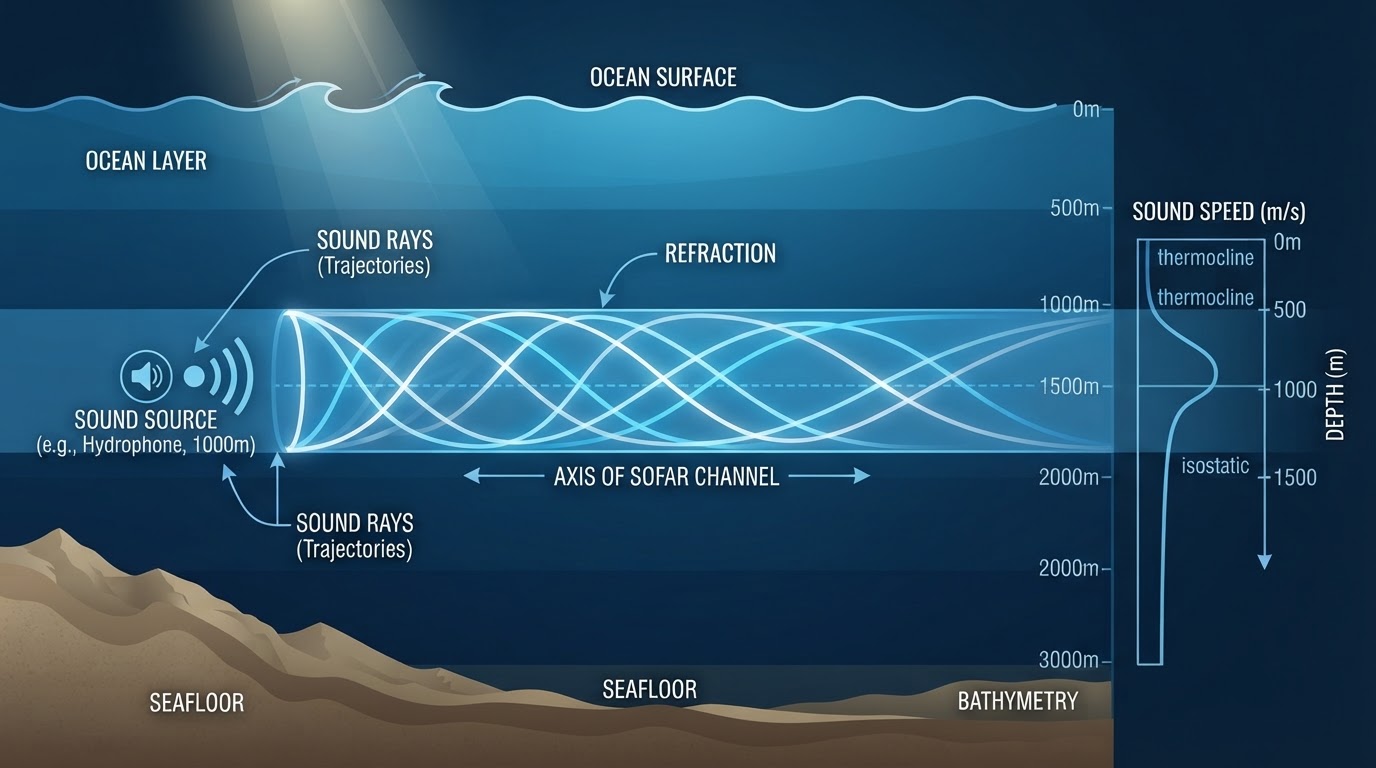
There is a layer in the ocean — roughly 600 to 1,200 meters deep depending on location — where temperature and pressure combine to create a channel that traps and guides sound waves horizontally across enormous distances. Oceanographers call it the SOFAR channel (Sound Fixing and Ranging channel). Blue whales, fin whales, and several other large cetaceans produce calls that fall right into the frequency range that propagates most efficiently through it.
Research suggests blue whale calls can travel over 1,000 kilometers under the right conditions. That is not a metaphor. A whale off the coast of one continent may be acoustically detectable near another. The practical implication is staggering: individuals separated by entire ocean basins may be in continuous acoustic contact.
Blue whale vocalizations can register below 20 Hz — below the threshold of human hearing — which is part of why we spent so long assuming the deep ocean was quiet.
Sperm whales use an entirely different system. They produce rapid clicks through a specialized organ called the spermaceti organ in their foreheads, which focuses sound into a directional beam. These clicks serve double duty: echolocation for hunting in total darkness, and communication through patterned sequences called codas. Different sperm whale clans use different coda dialects — a detail that took decades of patient research to confirm.
Dolphins and the Signature Whistle
Bottlenose dolphins develop individual 'signature whistles' within the first few months of life — unique acoustic labels that function roughly like names. Other dolphins learn and use these whistles to address specific individuals. This is one of the very few documented cases of animals using learned, arbitrary labels for other individuals outside of humans and some birds.
Anyone who has heard a tank of dolphins at an aquarium knows the sound is relentless and layered. What sounds like noise to us is a dense stream of overlapping individual calls, echolocation clicks, and social signals happening simultaneously.
Color, Light, and Electricity — The Non-Acoustic Channels
Cephalopod Chromatic Displays
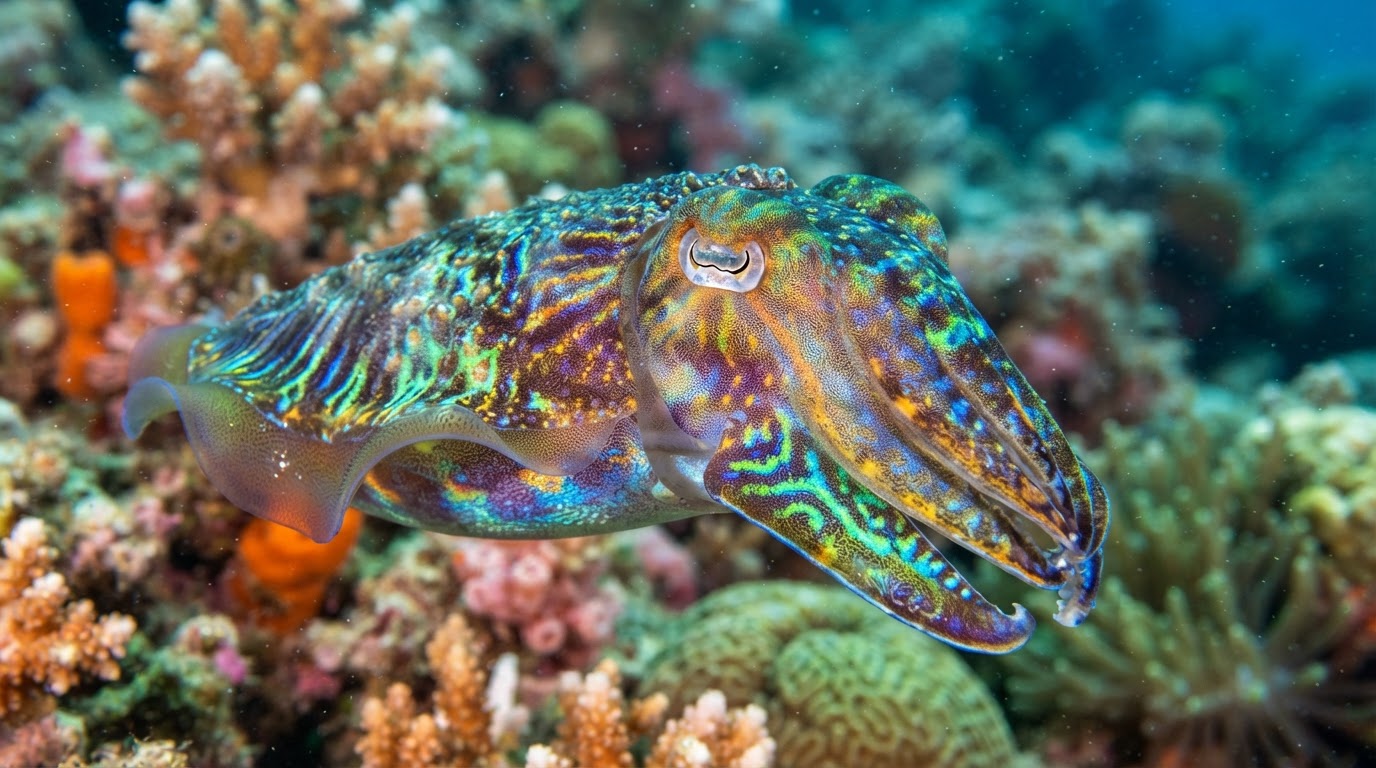
Cuttlefish and octopuses can change the color, pattern, and texture of their skin in under a second using specialized cells called chromatophores, iridophores, and papillae. They are colorblind — a fact that puzzled researchers for years — yet they produce extraordinarily precise color-matched camouflage and complex signaling displays. The leading hypothesis is that they read polarized light, which their eyes can detect even if they cannot distinguish wavelengths the way humans do.
Male cuttlefish have been documented running two simultaneous displays: a calm, mottled pattern on the side facing a female they are courting, and an aggressive threat display on the side facing a rival male. Split-screen signaling, essentially.
Bioluminescence as a Communication Tool
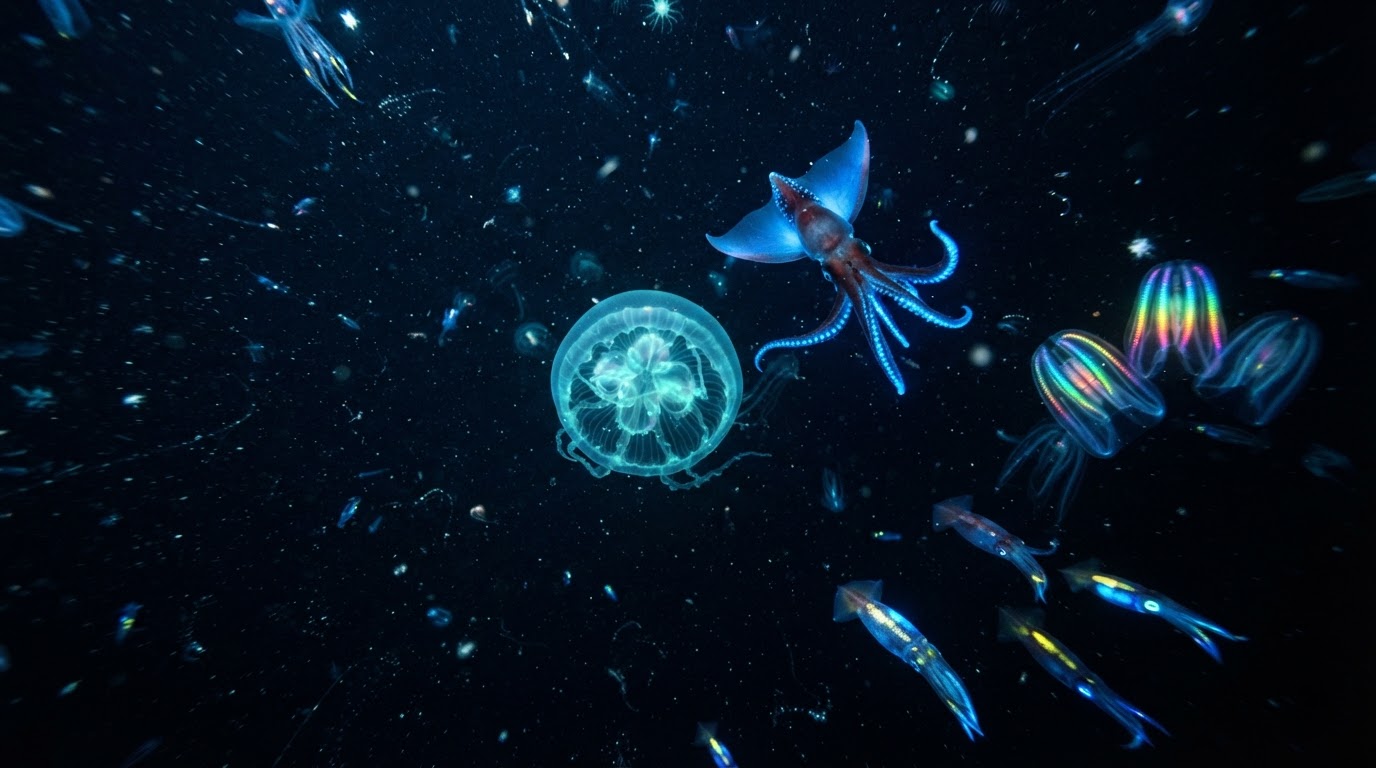
Below about 200 meters, sunlight disappears almost entirely. Down there, an estimated 76 percent of marine species produce their own light through bioluminescence — though that figure varies by source and depth zone. Some of this light is used for camouflage (counterillumination), some for luring prey, and some for communication.
Certain deep-sea squid species flash coordinated light patterns during mating. Firefly squid, found in the western Pacific, use photophores across their bodies to produce displays during spawning aggregations. The exact informational content of these displays is still being worked out.
The Electric Sense
Sharks, rays, and a handful of other fish detect electric fields through organs called the ampullae of Lorenzini — tiny pores filled with conductive gel that can sense the bioelectric fields produced by muscle contractions in nearby animals. Some weakly electric fish, like the black ghost knifefish found in South American rivers (technically freshwater, but the mechanism applies to marine relatives), generate their own electric fields and modulate them to communicate with other individuals. They can encode information about species, sex, and individual identity in the waveform.
Sharks can detect electric fields as weak as a few billionths of a volt per centimeter — sensitive enough to find a flatfish buried under sand by the electricity its heartbeat produces.
Why Marine Communication Matters Beyond Biology
Noise Pollution Is Scrambling the Signal
Commercial shipping, sonar, seismic surveys for oil and gas exploration — all of these pump enormous amounts of acoustic energy into the ocean. Low-frequency shipping noise has increased substantially over the past several decades, and it overlaps directly with the frequency ranges used by baleen whales for long-distance communication. Research suggests this has effectively compressed the 'communication range' of some whale species — the distance over which they can reliably detect each other's calls — by a significant fraction compared to pre-industrial baselines.
The consequences are not abstract. Reduced communication range means reduced ability to find mates, coordinate feeding, and maintain social bonds across large populations. For already-stressed species, that is a meaningful additional pressure.
There is also the sonar issue. Military mid-frequency active sonar has been linked to strandings of beaked whales in multiple documented incidents. The proposed mechanism involves the whales ascending too rapidly to escape the noise, causing decompression-like injuries — though the exact pathology is still debated among researchers.
What We Are Still Getting Wrong
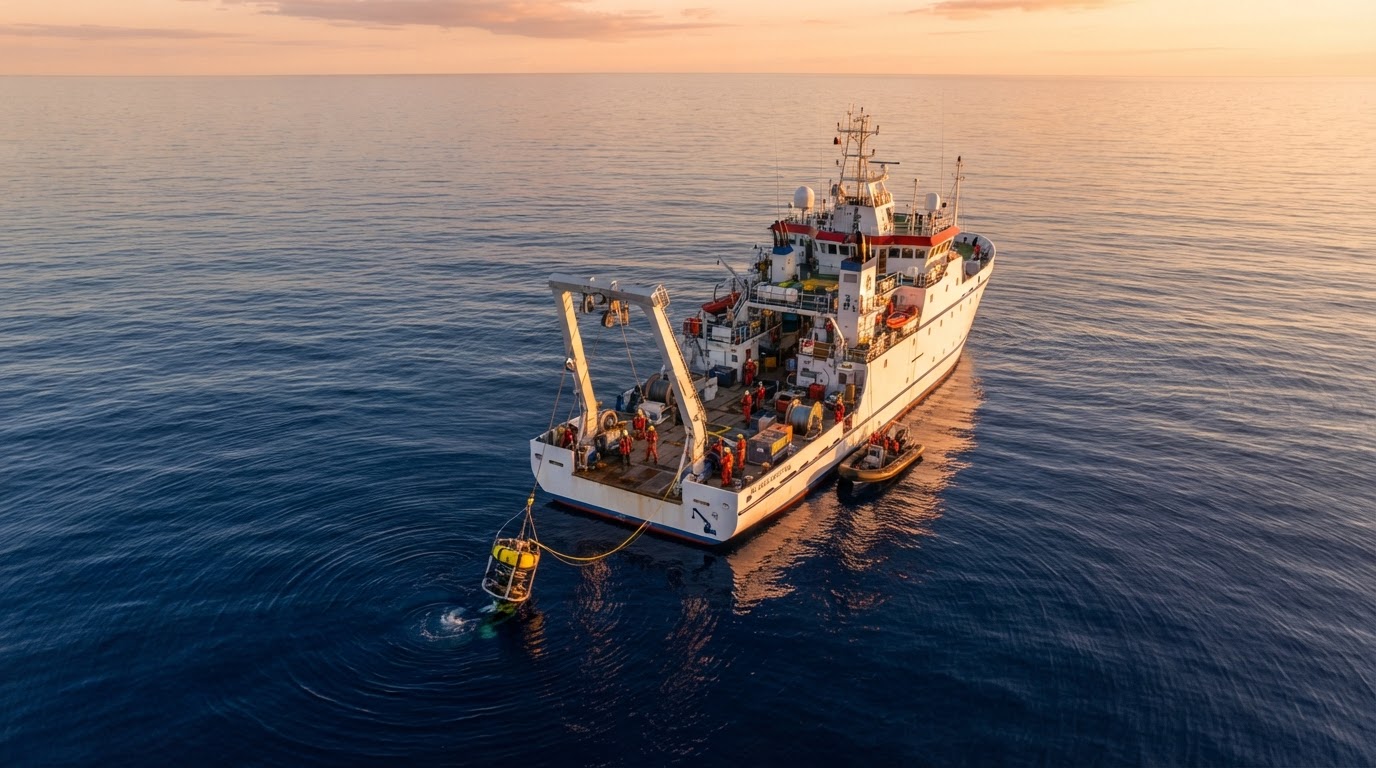
The field has a persistent problem: most research happens near the surface or in captivity, which skews the picture. Deep-sea communication is almost entirely unstudied in real time. We have hydrophone recordings and some ROV footage, but sitting with a population of deep-sea animals long enough to decode their communication system is currently beyond our technical reach.
(Opinion: The assumption that we have a reasonable handle on marine communication because we understand whale song and dolphin whistles is a bit like claiming you understand human language because you have studied English and Mandarin. The ocean is vast, and the species we know best are the ones that happen to come near boats.)
Frequently Asked Questions
Do fish communicate with each other?
Yes — and more than most people expect. Many fish produce sounds by vibrating their swim bladders, grinding their teeth, or rubbing fin spines together. Toadfish produce a foghorn-like hum during mating season loud enough to disturb people living on houseboats. Fish also use visual signals, chemical cues, and lateral line pressure detection to communicate threat, territory, and reproductive status.
Can marine animals communicate across species?
Sometimes, though 'communication' in this context usually means one species reading the signals of another rather than a shared language. Cleaner wrasses perform a distinctive 'dance' that signals their role to potential client fish of many different species — a cross-species signal that is widely understood on coral reefs. Alarm chemicals released by one prey species can trigger flight responses in nearby species that detect the same chemical.
Is whale song actually a language?
Researchers are careful about the word 'language' because it implies specific structural properties — syntax, semantics, arbitrary symbols — that have not been conclusively demonstrated in whale song. What humpback whale song does show is cultural transmission (males in a region learn and modify songs from each other over time), hierarchical structure, and long-range propagation. Whether it encodes referential meaning the way human words do remains an open and genuinely contested question.
The deeper you go into this subject, the more the boundary between 'communication' and 'cognition' starts to blur. A sperm whale clan maintaining a distinct coda dialect across generations is not just signaling — it is preserving cultural information. That puts marine animal communication in a category that most biology textbooks still do not quite know how to handle. The ocean has been running complex information networks for hundreds of millions of years. We have been listening seriously for about fifty.


Comments
Post a Comment