The Science of Staying Cool: How Wearable Cooling Devices Work
Your body is already a cooling machine — it sweats, dilates blood vessels, and redirects blood flow to shed heat. But when ambient temperature climbs past a certain threshold, those mechanisms start losing the fight. That gap between what your biology can do and what the environment demands is exactly where wearable cooling devices step in.

What Wearable Cooling Devices Actually Are
Beyond the Wet Towel
Wearable cooling devices are body-worn systems designed to actively or passively lower skin or core temperature. They range from simple phase-change vests — essentially packs of material that absorb heat as they melt — to sophisticated thermoelectric gadgets that use electricity to pump heat away from your skin. The category has expanded quickly, partly because heat stress is now a documented occupational and public health problem, not just an inconvenience.
The simplest versions have been around for decades. Military and industrial workers have used ice vests since at least the 1980s. What changed recently is miniaturization and battery technology, which made it possible to build something small enough to wear on a wrist or clip to a collar without looking like you're carrying a car battery.
The Main Types on the Market
There are three broad categories worth knowing: passive cooling (no power required), active thermoelectric cooling (uses electricity and the Peltier effect), and liquid-cooled garments (pump chilled water through tubes in fabric). Each works on a different physical principle, and each has a very different use case.
How the Physics of Wearable Cooling Actually Works
The Peltier Effect — the Heart of Active Devices
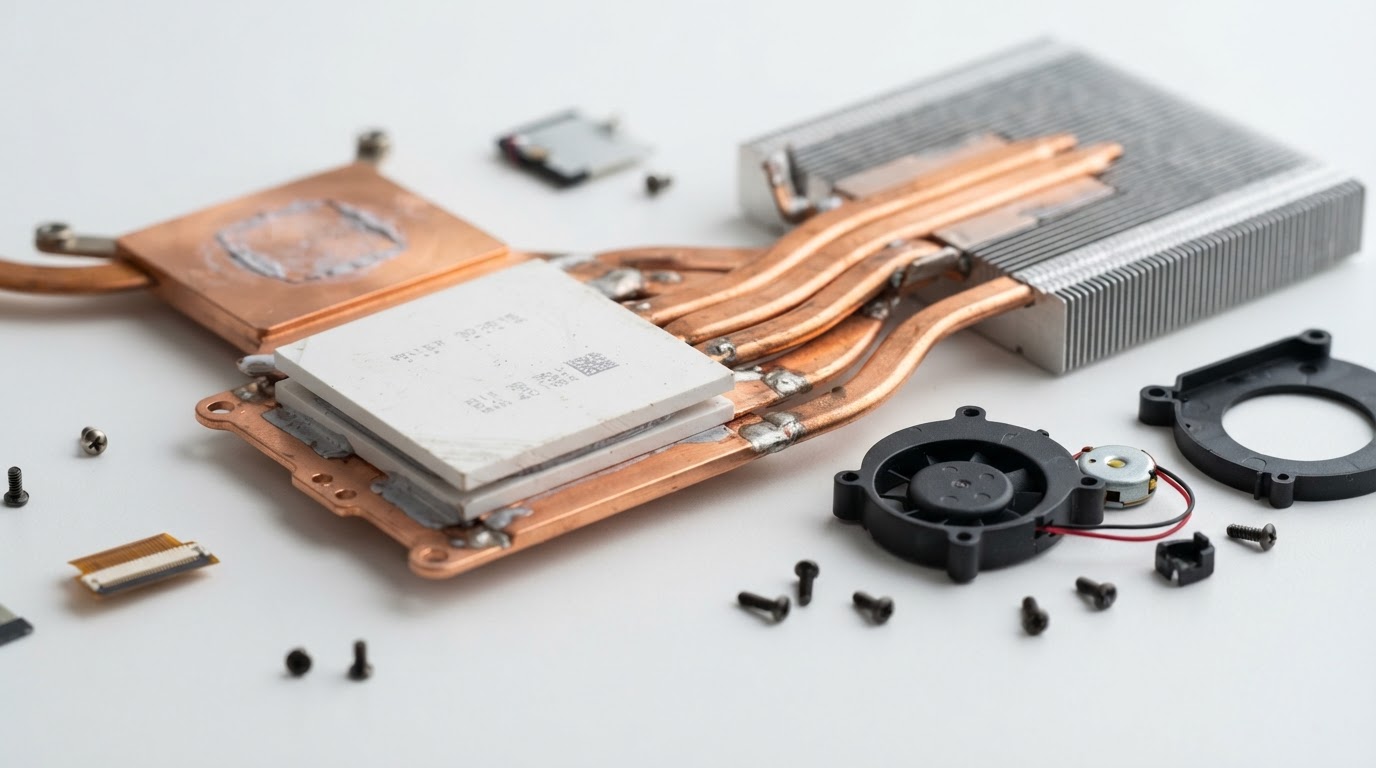
Most battery-powered wearable coolers rely on something called the Peltier effect, discovered in 1834 by French physicist Jean Charles Athanase Peltier. When electrical current passes through a junction of two different semiconductor materials, one side gets cold and the other gets hot. Flip the current, and you flip which side is cold. It's the same principle used in portable mini-fridges and some CPU coolers.
In a wearable device, the cold side presses against your skin. The hot side needs to dump that heat somewhere — usually into a small aluminum heatsink with a fan, or into the surrounding air. This is the engineering constraint that most people don't think about: the device isn't destroying heat, it's moving it. If the hot side can't shed heat fast enough, efficiency collapses and the cold side warms up.
A Peltier cooler doesn't eliminate heat — it relocates it. If the hot side is poorly ventilated, you're essentially wearing a small radiator against your skin.
Phase-Change Materials — Passive but Powerful
Phase-change materials, or PCMs, work on a simpler principle: melting absorbs energy. Water absorbs a significant amount of heat as it transitions from ice to liquid — this is called latent heat. PCM vests use materials engineered to melt at specific temperatures, often around 28°C (82°F), which is just below normal skin temperature. As the material melts, it pulls heat from your body without any power source at all.
The catch is duration. Once the material has fully melted, the cooling effect stops. Depending on the ambient temperature and activity level, a PCM vest might give you two to four hours of meaningful cooling before it needs to be 'recharged' in a freezer or cold water. For a construction worker on a 10-hour shift, that math doesn't work without multiple vest inserts.
Liquid-Cooled Garments — the Heavy-Duty Option
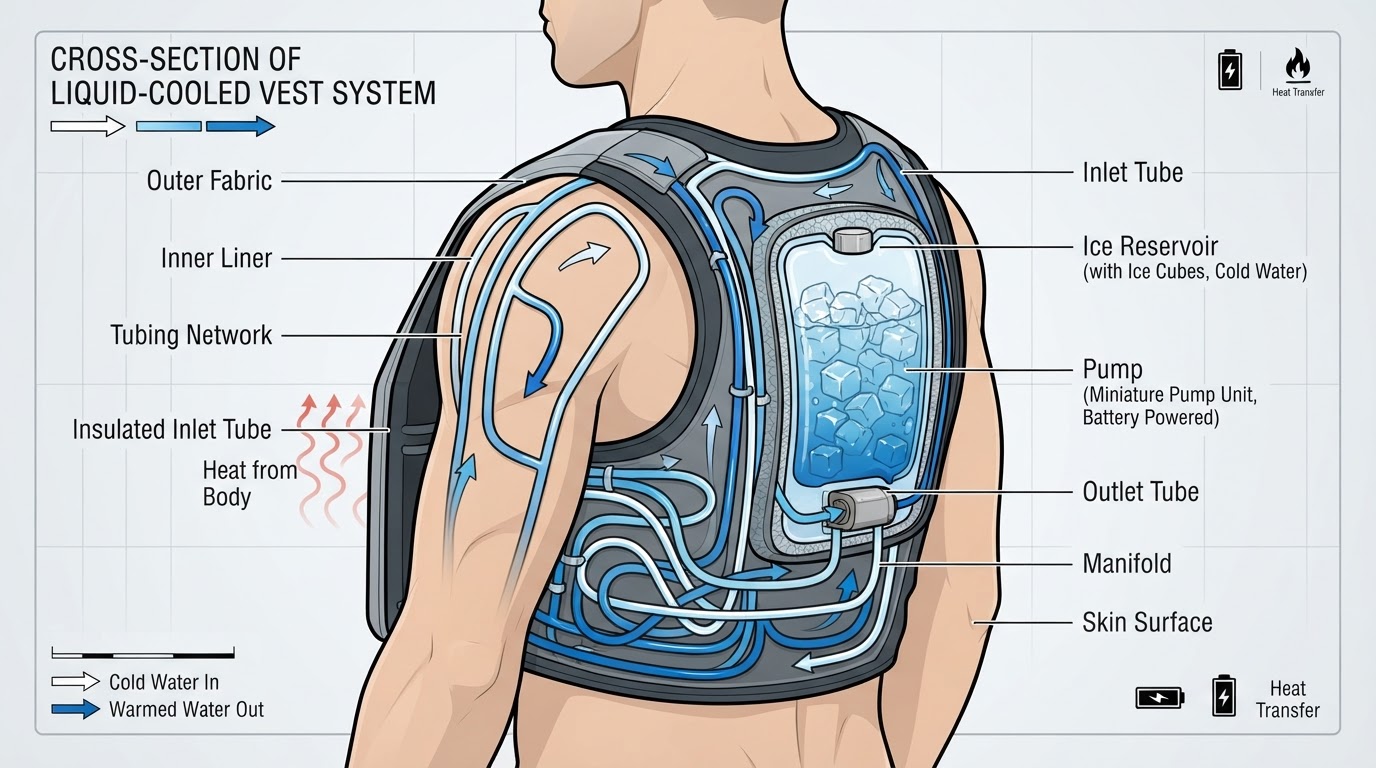
Liquid cooling systems circulate chilled water through thin tubes woven into a vest or suit. A small pump and an ice reservoir (or a thermoelectric chiller) keep the water cold. NASA has used versions of this technology in spacesuits since the Apollo era — astronauts generate substantial heat inside a pressurized suit with no convective airflow, and liquid cooling is the only practical solution at that scale.
These systems are bulky and tethered to a reservoir, which limits mobility. But they're also the most effective option for sustained, high-intensity heat exposure — think foundry workers, hazmat responders, or military personnel in full gear.
Where Wearable Cooling Devices Are Used in the Real World
Sports, Medicine, and the Factory Floor
Elite athletes have used cooling vests during warm-up phases before competition for years. Research suggests pre-cooling — lowering core temperature before intense exercise — can improve endurance performance in hot conditions. Some professional cycling and marathon teams have incorporated this into their pre-race routines, particularly for events held in high-humidity environments.
On the medical side, cooling garments are used for people with multiple sclerosis, whose symptoms can worsen significantly with even small increases in body temperature. This is called Uhthoff's phenomenon, and it's well-documented. A cooling vest doesn't treat the disease, but it can meaningfully reduce symptom flare-ups during warm weather or exercise.
Industrial applications are probably the largest market by volume. Workers in steel mills, glass factories, and outdoor construction face heat stress that causes thousands of documented injuries and deaths annually worldwide. Figures vary by region and reporting standards, but occupational heat illness is consistently ranked among the leading causes of weather-related worker fatalities in many countries.
Pre-cooling before athletic competition — not during — is where the performance evidence is strongest. The body's thermal buffer matters most before the race starts.
The Consumer Wearable Angle
The consumer market took a sharp turn toward neck-worn thermoelectric devices around the early 2020s. Several Japanese electronics companies released compact, rechargeable neck bands that use Peltier elements to cool the carotid artery area — a blood vessel close to the skin's surface. The logic is that cooling blood near the neck can influence perceived temperature faster than cooling a larger body surface area.
Whether these devices actually lower core temperature is debated. Most evidence suggests they improve thermal comfort and reduce perceived heat stress, which is genuinely useful, even if the physiological effect on core temperature is modest. Anyone who has sat through a humid summer commute knows that 'feeling cooler' has real value even when the thermometer hasn't moved.

Why Wearable Cooling Devices Matter More Than They Used To
The Heat Stress Problem Is Getting Harder to Ignore
Global average temperatures have been trending upward for decades, and urban heat island effects mean city dwellers often experience temperatures several degrees higher than surrounding rural areas. Outdoor workers, elderly populations, and people without reliable air conditioning are disproportionately affected. Wearable cooling isn't a replacement for systemic solutions, but it's a practical tool in the short term.
There's also a growing recognition that cognitive performance degrades in heat, not just physical performance. Research suggests that decision-making, reaction time, and sustained attention all decline at elevated core temperatures. For workers in high-stakes environments — emergency responders, pilots, surgeons — that's not a trivial concern.
The Engineering Challenges Still Being Solved
The biggest unsolved problem in wearable cooling is energy density. Peltier devices are notoriously inefficient compared to vapor-compression refrigeration (the kind in your home air conditioner). A typical Peltier element might have a coefficient of performance well below 1.0, meaning it consumes more energy than the heat it moves. Battery technology limits how long a portable device can run before needing a recharge.
Researchers are exploring alternatives: thermoionic cooling, magnetocaloric materials, and advanced PCMs with higher latent heat capacity. Some of these are promising at the lab scale but haven't translated to manufacturable consumer products yet. The gap between 'works in a paper' and 'works clipped to your collar on a Tuesday' remains wide.
(Opinion: The consumer neck-cooler category feels like it's solving the right problem with a slightly undersized tool. The devices are real, the physics is real, but the marketing often implies a level of core-temperature control that the engineering doesn't quite deliver yet. That gap will close — but buyers today should calibrate their expectations accordingly.)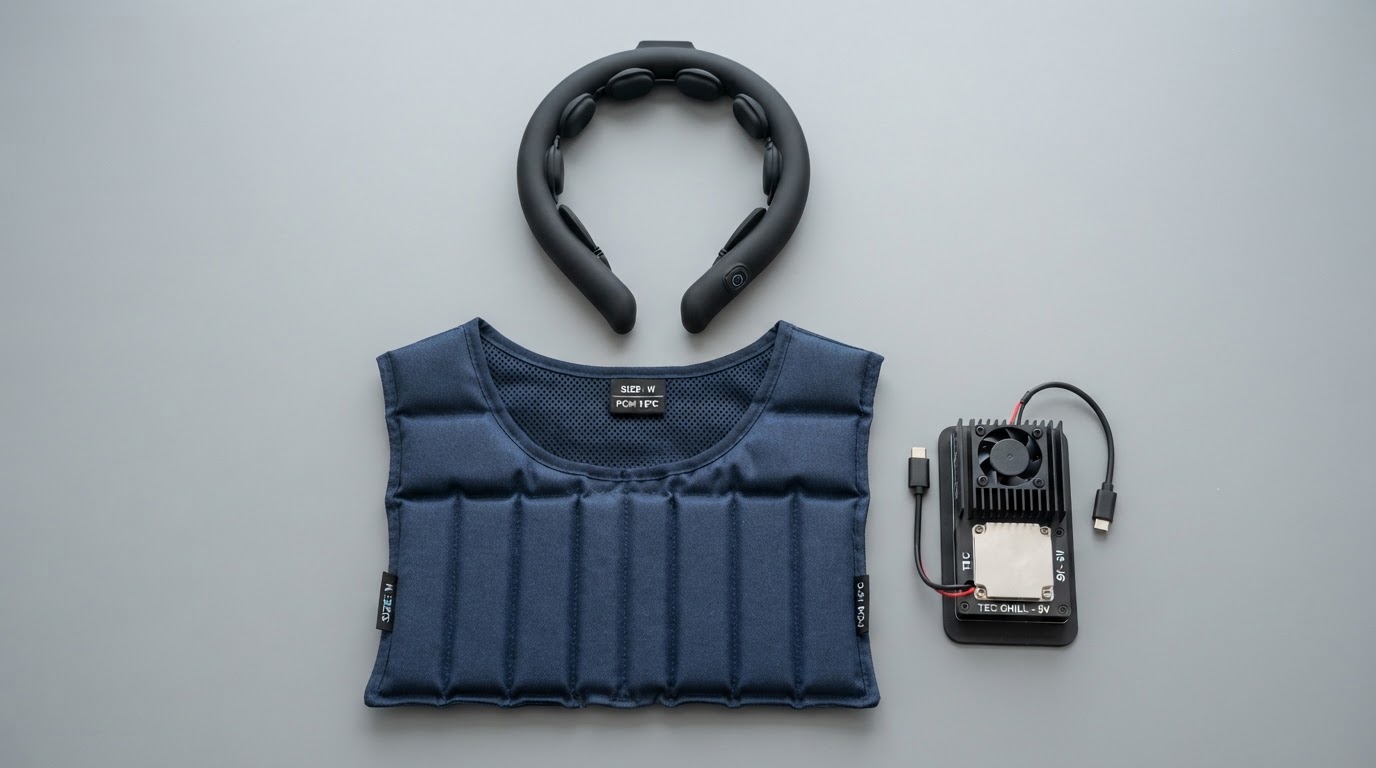
Frequently Asked Questions
Do wearable cooling devices actually lower your core body temperature?
It depends on the device and how it's used. Liquid-cooled garments and phase-change vests worn over large body surface areas can produce measurable reductions in core temperature during exercise or heat exposure. Smaller devices like neck coolers primarily affect perceived thermal comfort and skin temperature rather than core temperature. The distinction matters if you're using one for medical or occupational safety purposes rather than general comfort.
How long do wearable cooling devices last on a single charge or fill?
Battery-powered thermoelectric devices typically run between two and six hours depending on the cooling intensity setting and ambient temperature. Phase-change material inserts last roughly two to four hours before needing to be re-frozen or chilled. Liquid-cooled systems depend on ice reservoir size — a larger reservoir extends duration but adds weight. No current portable option provides all-day cooling without some form of recharging or refilling.
Can wearable cooling devices be dangerous?
For most healthy adults, the risks are low. The main concern with Peltier-based devices is skin irritation or minor cold burns if the cold plate is held at very low temperatures against skin for extended periods — most commercial devices include temperature limits to prevent this. People with circulatory conditions or reduced skin sensation should consult a doctor before using any active cooling device directly against the skin. PCM vests carry minimal risk but should not be used with inserts that are frozen solid, as hard ice against the body can cause localized cold injury.
The most counterintuitive thing about wearable cooling technology is that the human body is already doing most of the work — these devices are just buying it a little more time. As heat becomes a more persistent feature of daily life in more places, that extra window of thermal tolerance may matter in ways that are hard to fully anticipate right now.



Comments
Post a Comment