Rogue Planets: The Mysterious Worlds Wandering Through Space
There are planets out there with no star to orbit — no sunrise, no seasons, no gravitational anchor of any kind. They drift through interstellar space in complete darkness, and estimates suggest they may outnumber stars in the Milky Way. These are rogue planets, and they are stranger than almost anything else astronomers have found.
What Is a Rogue Planet, Exactly?
The Plain-Language Definition
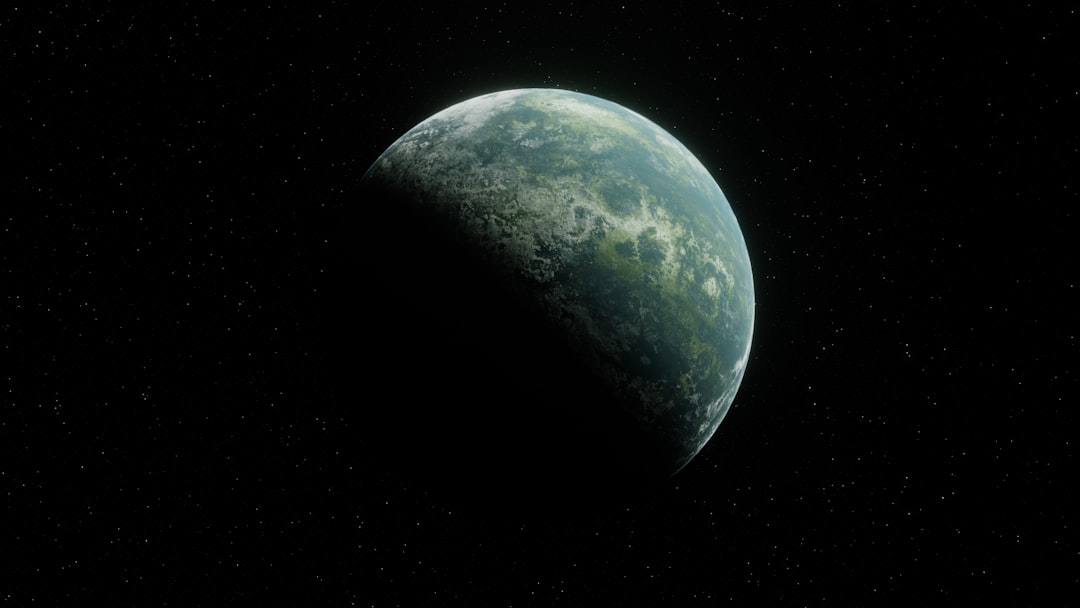
A rogue planet — sometimes called a free-floating planet, nomad planet, or orphan planet — is a planetary-mass object that travels through space without orbiting any star. It is gravitationally unbound from any solar system. That last part is the key distinction: it is not a distant planet in a very wide orbit, it is genuinely untethered.
The size threshold matters here. Astronomers generally define a rogue planet as an object with a mass somewhere between roughly that of Mars and about 13 times the mass of Jupiter. Below that lower bound, you are talking about a large asteroid or dwarf planet. Above the upper bound, nuclear fusion begins in the core and the object becomes a brown dwarf — a failed star. Rogue planets sit in the planetary-mass window but belong to no star.
Are They Really 'Planets' If They Don't Orbit a Star?
This is genuinely contested among astronomers. The International Astronomical Union's definition of a planet technically requires orbiting the Sun — which immediately disqualifies every rogue planet by definition. Some researchers prefer the term 'sub-brown dwarf' for the larger ones. The naming debate sounds pedantic, but it reflects a real question: does 'planet' describe a type of object, or a type of relationship?

How Do Rogue Planets Form — and End Up Alone?
Ejected From Their Home Systems
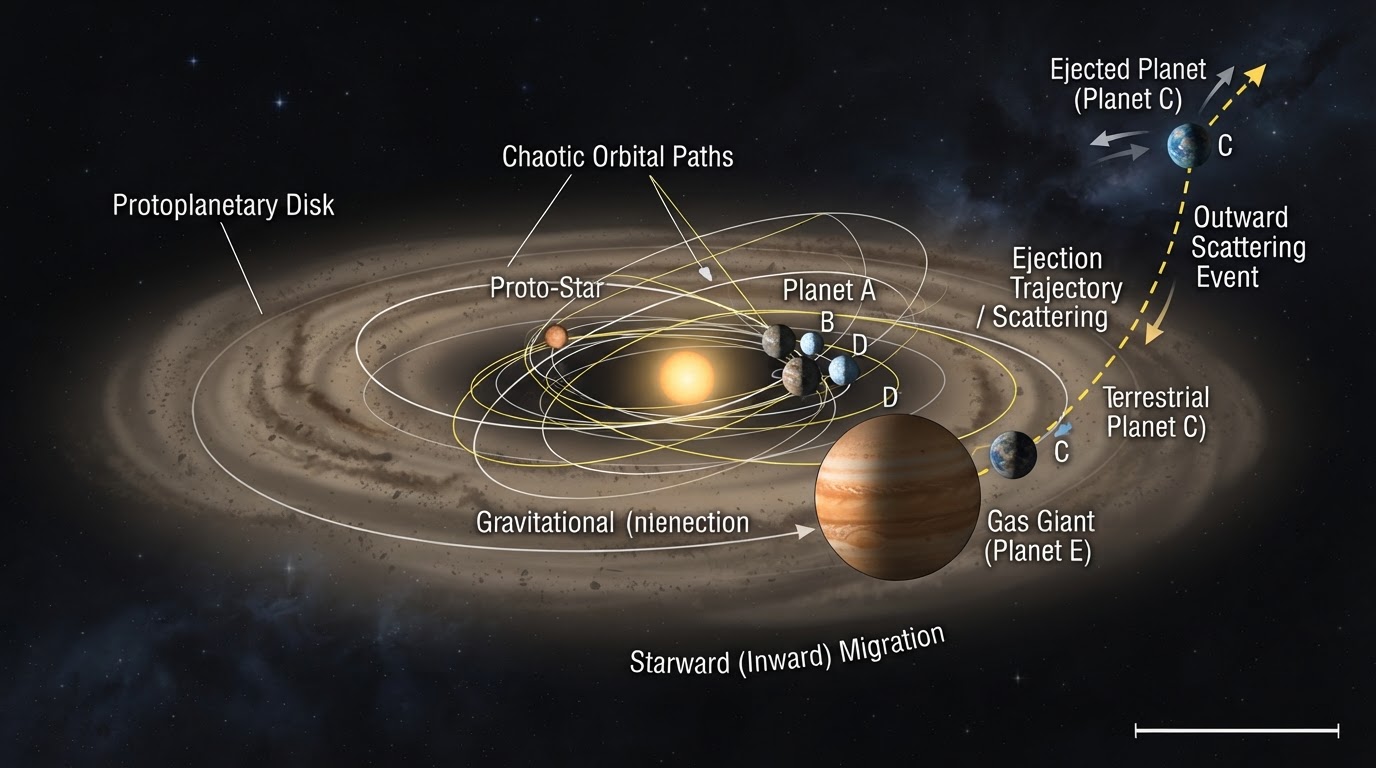
The most widely accepted explanation is gravitational ejection. During the chaotic early phase of a solar system's formation, planets interact with each other and with the young star through complex gravitational dynamics. If a planet gets too close to a larger neighbor — particularly a gas giant — it can be flung outward at escape velocity. Our own solar system may have ejected one or more planets during its early history; some models of the solar system's formation suggest a fifth giant planet was kicked out billions of years ago.
This is not a rare edge case. Computer simulations of planetary system formation consistently produce ejections. Some models suggest that for every planet that settles into a stable orbit, one or more may be thrown into interstellar space. The galaxy's rogue planet population could be enormous as a result.
Born Alone in the Dark
A second formation pathway skips the solar system entirely. Rogue planets can form the same way stars do — from the gravitational collapse of a gas cloud — but from a cloud too small to ignite fusion. These objects are essentially stillborn stars that never got hot enough. They condense, cool, and drift without ever having a parent star. Distinguishing between an ejected planet and one that formed in isolation is currently very difficult, which adds another layer of uncertainty to the whole field.
Gravitational ejection during early solar system formation may be the rule, not the exception — meaning most planetary systems probably shed worlds into interstellar space.
How Do Scientists Actually Detect Something With No Star?
The Problem of Finding Darkness in Darkness
Finding a rogue planet is genuinely hard. They emit no reflected starlight because there is no nearby star to reflect. They are cold, dark, and small relative to the distances involved. For most of astronomy's history, they were entirely theoretical. The detection methods that work for normal exoplanets — transit photometry, radial velocity measurements — are useless here because there is no host star to monitor.
Gravitational Microlensing: The Main Tool
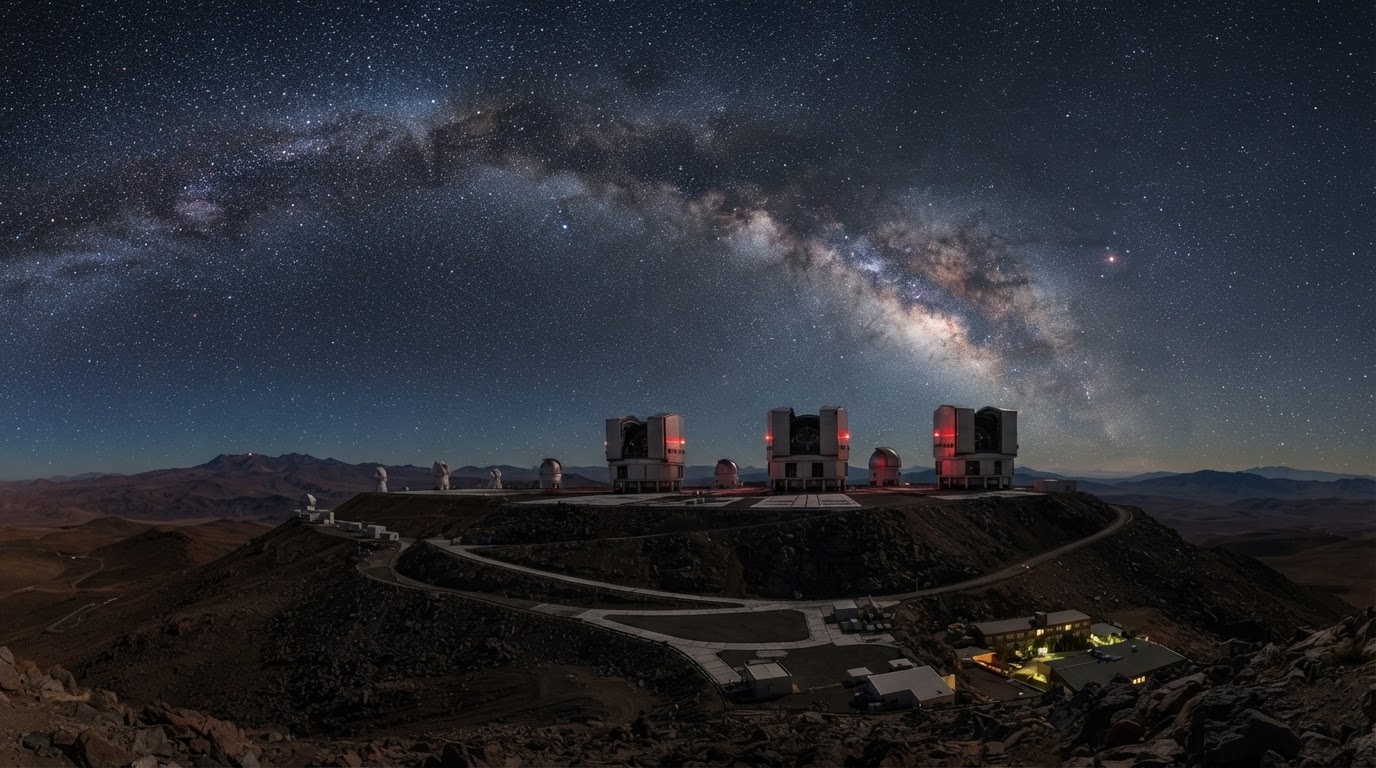
The primary detection method is gravitational microlensing. When a massive object passes between Earth and a distant background star, its gravity bends and briefly amplifies the star's light. The resulting brightness spike lasts anywhere from hours to days depending on the mass of the lensing object. Short spikes with no associated star signal are the fingerprint of a rogue planet. The Korea Microlensing Telescope Network (KMTNet) and surveys like OGLE (Optical Gravitational Lensing Experiment) have detected dozens of strong rogue planet candidates using this method.
The counterintuitive thing about microlensing is that it works better for distant objects than nearby ones, which is the opposite of most astronomical detection methods. A rogue planet thousands of light-years away can still lens a background star perfectly well. The catch is that the event is never repeatable — once the alignment passes, it is gone forever, and you cannot go back to study the same object again.
Infrared Imaging for the Youngest Ones
Very young rogue planets — those formed within the last few million years — still retain heat from their formation and glow faintly in infrared. This makes them detectable by infrared telescopes in young stellar clusters. The James Webb Space Telescope has already identified dozens of candidate free-floating planetary-mass objects in the Orion Nebula cluster, some of which appear to be in pairs — two rogue planets orbiting each other, which was not predicted by most formation models and remains unexplained.
The James Webb Space Telescope found rogue planets apparently orbiting each other in pairs — a discovery that current formation models struggle to explain.
Could a Rogue Planet Support Life?
The Case for Subsurface Oceans
This is where things get genuinely surprising. The conventional assumption is that a planet without a star is a frozen, lifeless rock. But that assumption depends on a planet's only heat source being sunlight. Rogue planets can have internal heat sources — radioactive decay in the core and, for larger ones, residual heat from formation — that could persist for billions of years. A planet with a thick hydrogen atmosphere could trap enough of this internal heat to maintain liquid water beneath the surface.
Research suggests that a rogue planet with the right mass and atmospheric composition could theoretically sustain subsurface liquid water for geological timescales. This is not wildly different from the situation on Europa or Enceladus, moons in our own solar system that maintain liquid oceans under ice shells with no direct sunlight involved. The energy source is different, but the principle holds.
The Limits of This Optimism
The surface of a rogue planet would still be extraordinarily hostile — temperatures near absolute zero, no photosynthesis possible, no UV-driven chemistry. Any life would need to be chemosynthetic, drawing energy from chemical reactions rather than light. Whether that is plausible over billions of years of isolation is unknown. It is a fascinating thought experiment, but the honest answer is that nobody knows.
(Opinion: The possibility of life on rogue planets tends to get either dismissed too quickly or hyped beyond what the evidence supports. The subsurface ocean argument is scientifically coherent — it deserves serious investigation rather than being filed under 'science fiction.')
Frequently Asked Questions
How many rogue planets are there in the Milky Way?
Estimates vary considerably, but some models suggest there could be more rogue planets than stars in the galaxy — potentially hundreds of billions. These are rough figures based on microlensing survey data and planetary formation simulations, not a direct census. The true number remains one of the bigger open questions in planetary science.
Could a rogue planet ever enter our solar system?
Technically yes, though the probability over any human timescale is extremely low. Interstellar space is vast, and even with enormous numbers of rogue planets drifting around, the chance of one passing through our solar system in the next million years is small. The interstellar object 'Oumuamua, detected in 2017, showed that objects from outside our solar system do pass through — though it was likely a comet or asteroid fragment, not a planetary-mass body.
Why are some rogue planets found in pairs?
This is genuinely puzzling. The James Webb Space Telescope identified what appear to be pairs of planetary-mass objects orbiting each other in the Orion Nebula. One hypothesis is that they formed together from the same collapsing gas cloud, similar to binary star systems but at much lower mass. Another is that they were ejected from the same system simultaneously and became gravitationally bound afterward — though that scenario requires very specific conditions to work.
Rogue planets quietly dismantle one of the most intuitive assumptions in astronomy — that planets and stars are inseparable. For most of human history, a 'planet' was defined by its relationship to the Sun. The existence of billions of worlds drifting alone through the dark suggests that planetary formation is far more prolific and far messier than any tidy model predicted. The galaxy is full of worlds that never got a star, and some of them may have been wandering longer than our solar system has existed.


Comments
Post a Comment