How Do Streaming Platforms Handle Millions of Concurrent Viewers?
During the 2022 FIFA World Cup final, estimates suggest peak streaming demand briefly exceeded 10 million concurrent viewers on a single platform. No single server on earth can handle that. What actually happens behind the scenes is a layered engineering feat that most people never think about — and it's more counterintuitive than you'd expect.
What Is a Content Delivery Network — and Why Streaming Can't Survive Without One?
The Core Problem With Sending Video From One Place
Video files are enormous. A single hour of 4K HDR content can weigh in at 20–30 GB depending on compression. If every viewer in Tokyo, Toronto, and Toulouse had to pull that data from a single origin server in, say, Virginia, the latency would be brutal and the bandwidth cost would be catastrophic. That's why streaming platforms don't actually work that way.
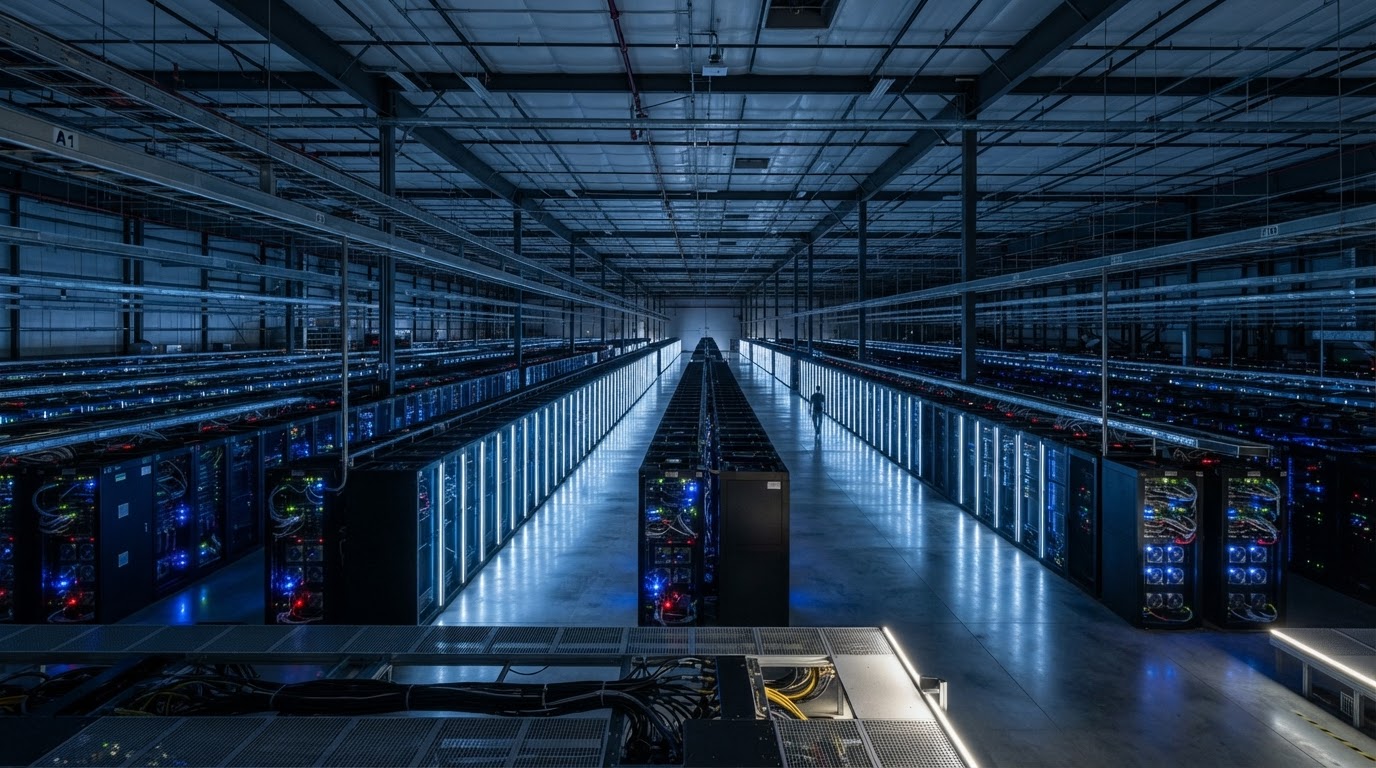
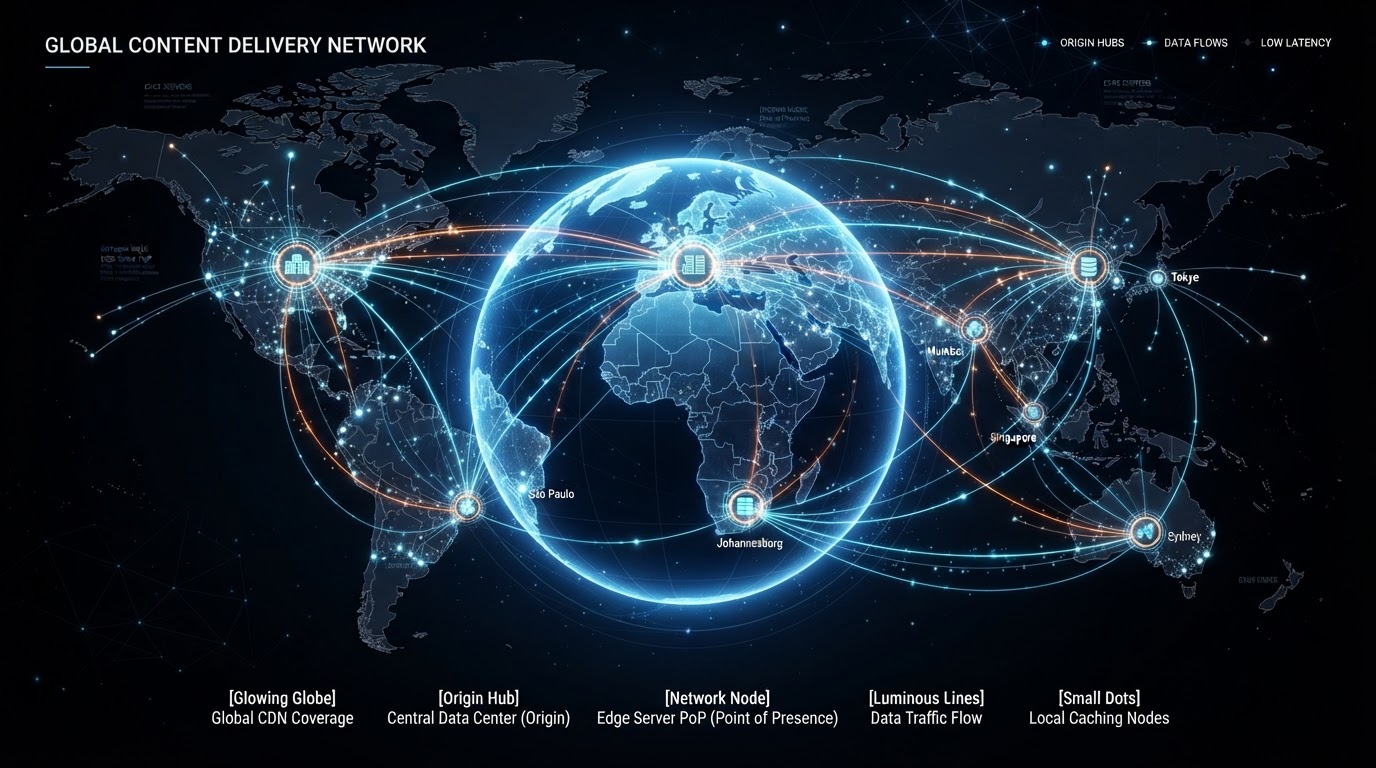
The solution is a Content Delivery Network, or CDN. A CDN is a globally distributed network of servers — called edge nodes or points of presence — that store copies of popular content physically close to viewers. When you hit play on a show, you're almost certainly not talking to the platform's main servers. You're talking to a node that might be a few hundred kilometers away, or even inside your internet service provider's own infrastructure.
Netflix, for example, built its own CDN called Open Connect specifically because third-party CDNs couldn't meet its scale requirements. Open Connect appliances sit inside ISP data centers around the world, pre-loaded with popular content during off-peak hours. By the time you press play, the file is already nearby — sometimes literally in the same building as your ISP's local exchange.
How Edge Caching Actually Works
Edge caching is the mechanism that makes this possible. The CDN predicts which content will be popular — using viewing history, trending data, and scheduled release times — and pushes copies out to edge nodes before demand spikes. When a new season drops and millions of people hit play simultaneously, they're each pulling from their nearest edge node, not hammering a central server.
The tricky part is cache invalidation: what happens when content changes, gets removed, or has a rights issue in a specific region? The platform has to propagate updates across potentially thousands of edge nodes quickly and accurately. Get it wrong and viewers in one country see content they shouldn't, or get a 404 on content they should be able to access.
How Adaptive Bitrate Streaming Keeps Video Playing When Your Connection Drops
The Problem With Fixed-Quality Video
Early internet video was simple: one file, one quality. If your connection couldn't keep up, the video buffered. Anyone who streamed video in the mid-2000s remembers staring at that spinning wheel for what felt like geological epochs. The industry needed a smarter approach.
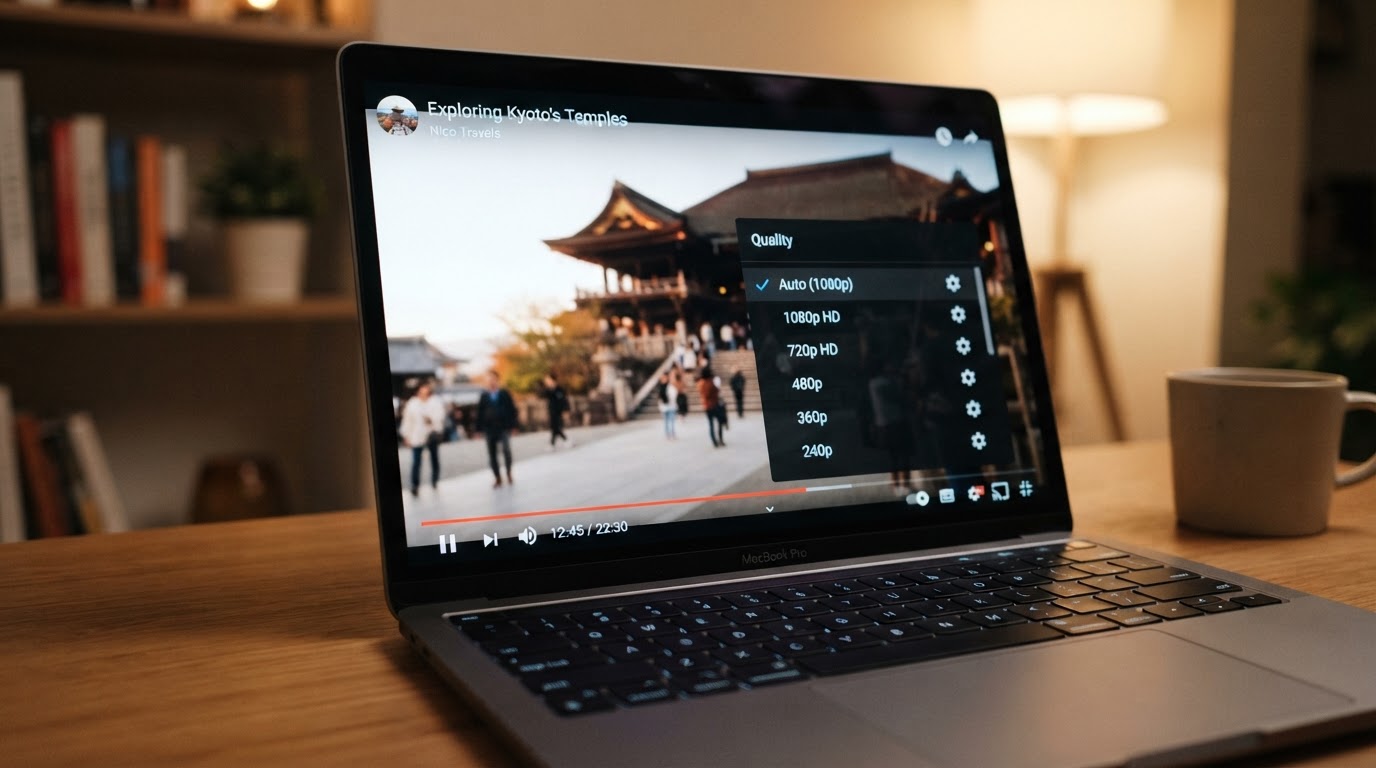
The answer is Adaptive Bitrate Streaming, or ABR. Instead of encoding a single video file, platforms encode the same content at multiple quality levels — typically anywhere from 240p up to 4K — and chop each version into short segments, usually 2–10 seconds long. Your video player constantly monitors your available bandwidth and switches between quality levels segment by segment, in real time.
Adaptive bitrate streaming means the video you're watching right now might be assembled from dozens of quality-level switches you never noticed — each one a silent negotiation between your device and the nearest edge server.
The Engineering Behind the Segments
The two dominant protocols for this are HLS (HTTP Live Streaming, developed by Apple) and MPEG-DASH (Dynamic Adaptive Streaming over HTTP, an open standard). Both work on the same principle but differ in implementation details. HLS has historically dominated on Apple devices; DASH is more common in browser-based and Android environments. Many platforms run both simultaneously depending on the client device.
The player's ABR algorithm is where things get genuinely complex. A naive algorithm just looks at current download speed. Smarter ones — and platforms invest heavily in these — also consider buffer health, historical throughput, packet loss rates, and even time of day. The goal is to maximize quality without ever letting the buffer run dry, because a single rebuffering event measurably increases the chance a viewer abandons the stream entirely.
How Streaming Platforms Scale Infrastructure for Live Events
Live vs. On-Demand — A Completely Different Beast
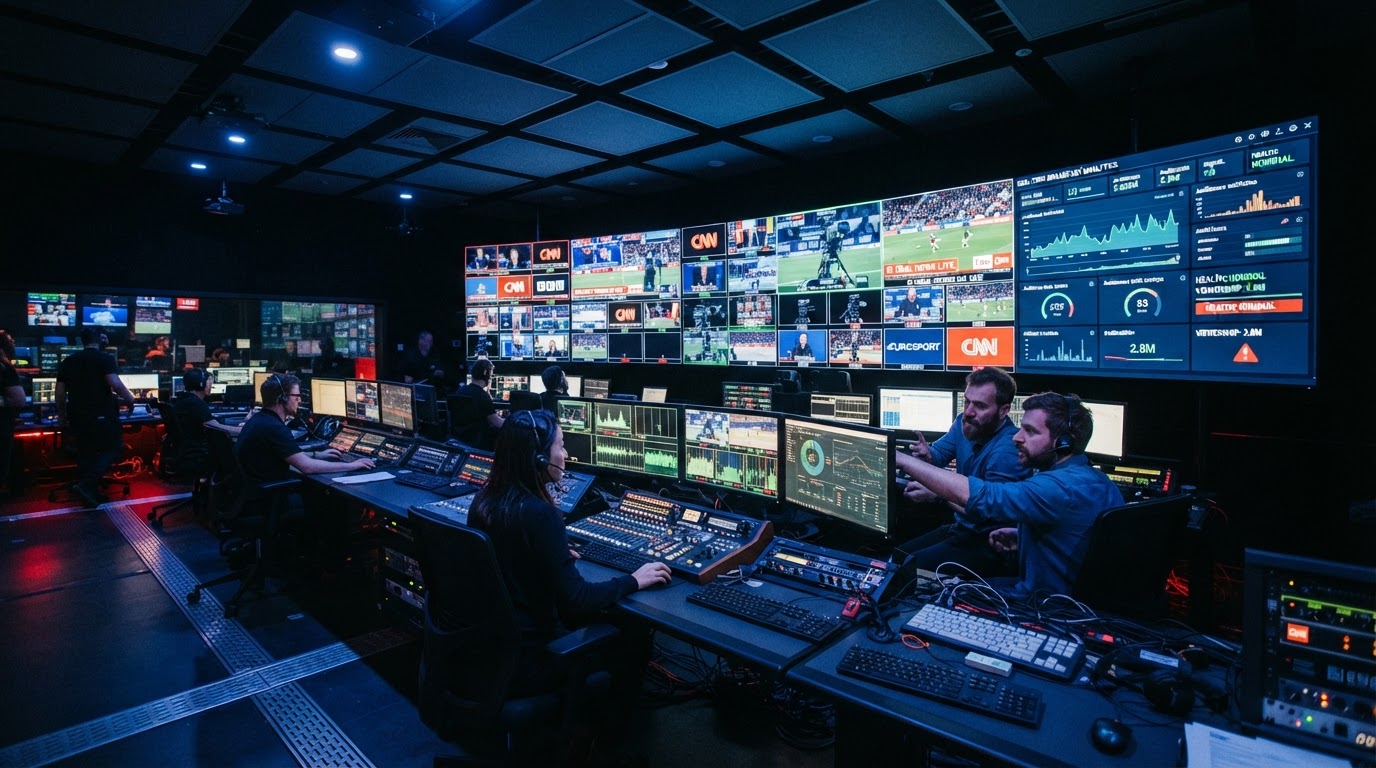
On-demand streaming is relatively forgiving. Content is pre-encoded, pre-cached, and the demand curve is somewhat predictable. Live streaming is a different problem entirely. Everyone wants the same content at the same moment, which means you can't pre-cache it — it doesn't exist yet. And demand can spike from zero to millions in seconds when a goal is scored or a major announcement drops.
For live events, platforms rely on a combination of real-time encoding pipelines, cloud auto-scaling, and aggressive CDN pre-warming. The encoding pipeline ingests the raw broadcast feed, encodes it simultaneously at multiple bitrates, and pushes segments to edge nodes with latency measured in seconds. The latency target for 'live' streaming is typically 3–30 seconds behind real time, depending on the platform and protocol — which is why you might see a sports score notification on your phone before the play happens on your stream.
Cloud Auto-Scaling in Practice
Major platforms run on cloud infrastructure — AWS, Google Cloud, Azure, or their own private clouds — that can spin up additional compute capacity within minutes. For a known event like a championship game, engineers pre-scale capacity hours in advance. For unexpected spikes — a celebrity death, a breaking news event — auto-scaling systems detect the surge and provision new instances automatically.
The counterintuitive part: over-provisioning is intentional and budgeted for. It's cheaper to pay for unused compute capacity during a live event than to suffer the reputational damage of a high-profile outage. The 2012 Super Bowl streaming failure — which caused widespread buffering for millions of viewers — is still cited internally at media companies as a cautionary case study in under-provisioning.
For a major live event, the cost of over-provisioning servers is almost always less than the cost of one high-profile failure. Redundancy isn't waste — it's the product.
Why Video Compression Is the Unsung Hero of Streaming at Scale
The Codec Wars and Why They Matter to Your Buffer
Every streaming platform encodes video using a codec — a compression algorithm that reduces file size while preserving visual quality. For years, H.264 (also called AVC) was the universal standard. It's still widely used because virtually every device on earth can decode it in hardware, which saves battery and processing power.
Newer codecs like H.265 (HEVC), AV1, and VP9 offer significantly better compression — roughly 30–50% smaller file sizes at equivalent quality, though exact figures vary by content type. That matters enormously at scale. If a platform can reduce average bitrate by 30% without degrading perceived quality, it cuts CDN bandwidth costs by a similar margin across billions of streams. AV1, developed by the Alliance for Open Media and supported by Google, Mozilla, and others, is now increasingly deployed by YouTube and Netflix for this reason.
The Device Compatibility Trap
Here's the operational headache: not every device supports every codec in hardware. A smart TV from 2018 might not have an AV1 hardware decoder. Forcing software decoding on older devices drains batteries and causes frame drops. So platforms maintain multiple encoding ladders — sometimes encoding the same content in three or four different codecs — and serve the right one based on device capability detection at session start.
This means a single piece of content might exist in dozens of encoded variants across the CDN. Managing that storage footprint, keeping all variants in sync, and routing each viewer to the right one without adding perceptible latency is a non-trivial systems engineering problem that runs quietly in the background every time you press play.
(Opinion: The codec fragmentation problem is one of the most underappreciated costs in the streaming industry. The push toward AV1 is genuinely exciting, but the transition period — where platforms have to maintain parallel encoding pipelines for years — is expensive and messy in ways that rarely make headlines.)
Frequently Asked Questions
How much data does streaming actually use per hour?
It depends heavily on quality. Standard definition streaming typically uses roughly 1 GB per hour, HD uses 3–5 GB, and 4K HDR can use 15–25 GB or more. These figures vary by platform and codec efficiency — newer codecs like AV1 can reduce consumption noticeably compared to older H.264 streams at the same visual quality.
Why does streaming sometimes fail during major live events even on paid platforms?
Live events create simultaneous demand spikes that are fundamentally harder to handle than on-demand viewing. Even well-prepared platforms can be overwhelmed if actual viewership significantly exceeds projections, or if a cascading failure hits a key CDN node at the wrong moment. Pre-scaling helps, but it can't eliminate the risk entirely — which is why even major platforms have experienced high-profile outages during championship events.
Is the video I'm watching stored somewhere nearby, or does it come from far away?
For popular on-demand content, it's almost certainly stored at a CDN edge node relatively close to you — sometimes inside your ISP's own infrastructure. For niche or recently added content that hasn't been widely requested yet, your stream might travel further to a regional or origin server. The platform's CDN logic decides this routing automatically based on content popularity and your location.
The next time a massive live event streams without a hitch — millions of people watching the same moment simultaneously, each getting a smooth picture — it's worth pausing on how improbable that actually is. Every clean stream represents a real-time negotiation between your device, a nearby edge server, an encoding pipeline, and a cloud infrastructure that's actively reshaping itself around demand. The part that should give you pause: all of that complexity is invisible by design, and the moment it becomes visible is the moment something has gone wrong.



Comments
Post a Comment